

Garage Door Won't Open or Close? 12 Common Causes and What You Can Check Safely
You press the button and the opener hums, but the door barely moves. Or the door reaches the floor, hesitates, and heads straight back up. Those two failures feel alike, but they come from different parts of the system, and only one of them is a good candidate for a quick look on your own.
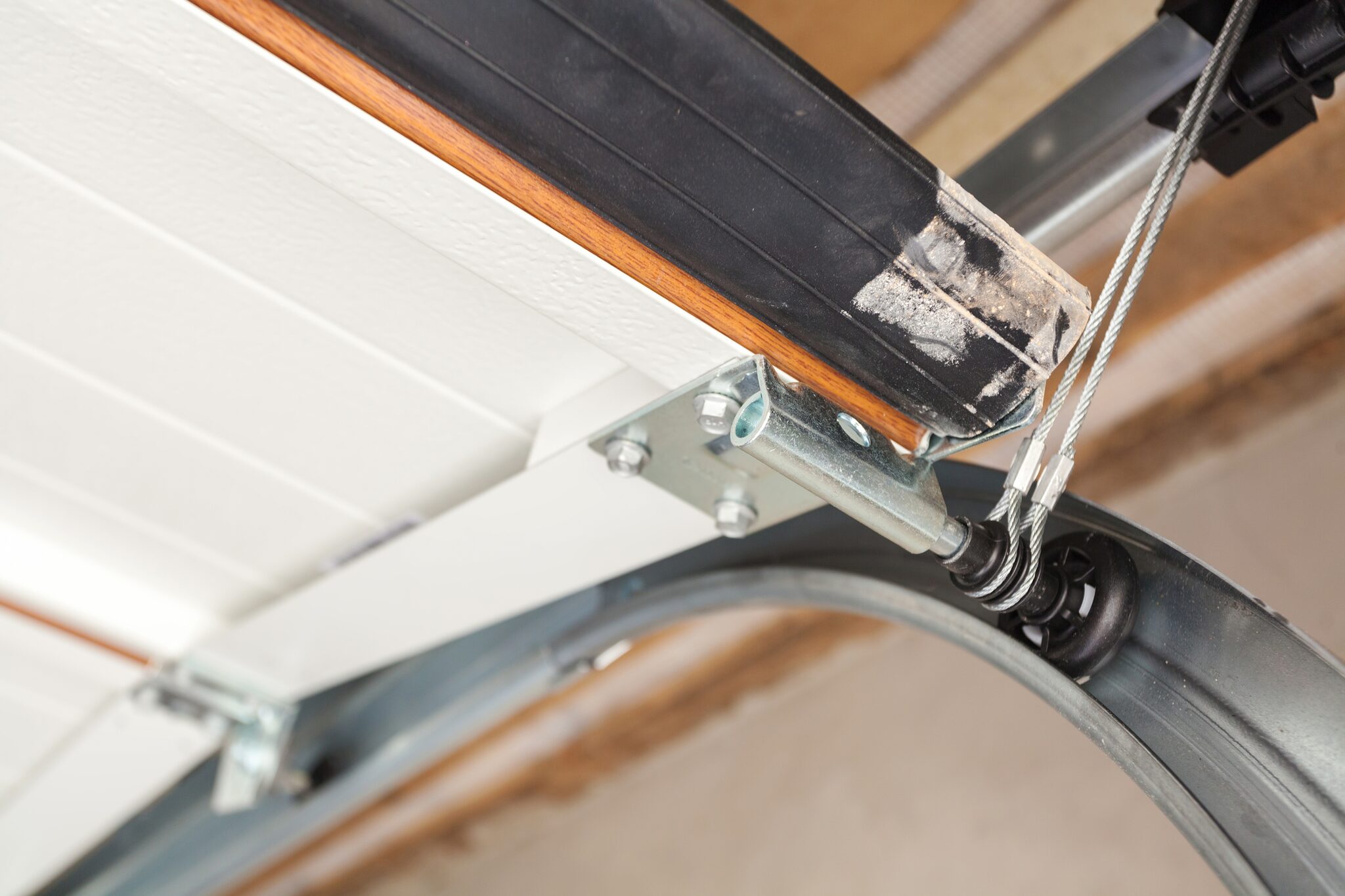
A garage door splits its work between two machines. The springs carry most of the door's weight. The opener is a modest motor on a rail that guides a door that is already balanced. DASMA, the trade association for garage door and opener manufacturers, says openers are designed to move properly balanced doors and that a heavy door is not fixed by fitting a stronger motor. So when a door won't cooperate, the first question is which side gave up: the electronics that issue the command, or the door hardware that has to obey it.
Here are twelve places to look, roughly in the order worth checking them:
- The opener has no power.
- The remote or keypad battery is weak.
- Lock mode is switched on at the wall control.
- The door is manually locked.
- The opener has been disconnected from the door.
- The safety sensors are blocked, dirty or out of line.
- The travel or force settings have drifted.
- The door is frozen to the floor.
- Something is jamming the track, or a roller has come out.
- A spring has broken.
- A lift cable has snapped or slipped.
- The opener itself has worn out.
The first eight are mostly safe to check. The last four are where you stop and call someone.
Nothing happens when you press the button
Start with the dull answers, because they are the common ones. Is the opener plugged in? A lamp in the same outlet tells you in ten seconds whether the outlet is live. Garage outlets can be on a circuit with a ground-fault breaker that trips after a wet week or a power blip. Resetting it once is reasonable. If it trips again, that is an electrician's problem, not a garage door problem.
Try the wall button and the remote separately. If the wall button works and the remote doesn't, the battery is the usual reason, and cold does batteries no favours. If the remote still refuses after a fresh battery, the opener may have lost its programming, or lock mode may be on.
Lock mode deserves its own mention. Chamberlain, whose group also makes LiftMaster, describes a LOCK button on many wall controls. With it on, the opener answers the wall control but ignores every remote, and the opener light flashes twice. Pressing the lock button again turns it off. It is a common cause of "the remote died" calls that are nothing of the sort.
Also look at the door itself. Some doors have a slide bolt or lock bar on the inside, and some people padlock the track for winter or holidays. The opener runs, the door doesn't move, and everybody blames the motor.
The opener runs, but the door doesn't go anywhere
Two quite different causes sit behind this symptom, and the way to tell them apart is how the door feels.
The first is a disconnection. Every opener has a trolley on its rail with a red release cord hanging from it. Pulling the cord frees the door from the opener, which is what you want in a power outage. If somebody pulled it, or a ladder or bumper snagged it, the motor runs happily while the door sits there. Your manual shows how your model reconnects. On most, that is done with the door closed.
The second cause is a door that has become far too heavy for the opener. If a spring has broken, the opener is suddenly trying to lift most of the door's weight, which it was never built to do. The motor strains, the door rises a few inches or not at all, and the gears inside the opener take the punishment. Clopay, a door manufacturer, lists a door that opens only a few inches and stops as a classic sign of a broken spring. Pressing the button again makes the damage worse, so stop after the first try.
Suppose the door is closed, you've released it from the opener, and it lifts easily by hand. Suppose the motor runs but nothing travels along the rail, or the chain hangs slack. Then the opener's drive is the suspect, likely a worn gear or a belt that has slipped. That kind of failure is ordinary garage door opener repair. If the door instead feels heavy, or you can see a gap in the coil above it, it's a spring, and the opener is only the messenger.
The door closes partway, or hits the floor and reverses
This is the safety reversing system doing its job. Two sensors, usually called photo eyes, sit on either side of the door no more than six inches off the floor. One sends an invisible beam, the other receives it. If the beam is broken while the door is closing, the door reverses or refuses to close. The opener can't tell a snow shovel from a child's foot, so it treats every break in the beam as a person.
Look at the two indicator lights. On Chamberlain and LiftMaster sensors, steady lights on both mean the beam is arriving. A light that blinks or stays dark points to misalignment, a blockage, or a wiring problem. Many openers also flash the main light ten times when the sensors are the trouble, though the codes differ by model, so check your manual instead of trusting a chart from a stranger.
The safe checks are simple. Wipe both lenses with a soft dry cloth. Move whatever has been leaned or stored in the beam's path. Look at whether one sensor has been bumped and now points at the wall. Chamberlain's own instructions call for loosening the wing nut, aiming the lenses at each other until the light glows steadily, and tightening it again. Sunlight can interfere too. Chamberlain notes that sun shining directly into the receiving sensor can drown out the beam, so a door that misbehaves only at certain hours is a clue.
If the door closes fully and bounces off the floor, the sensors may be innocent. The close limit or force setting may be off, or ice or debris may sit at the threshold. Chamberlain warns that adjusting travel and force incorrectly interferes with the reversing system and could seriously injure someone. DASMA recommends a trained technician make those adjustments. If you do go into the manual, test the reversal afterwards with a 2x4 laid flat in the door's path. Both organizations describe this test, and the door must stop and go back up when it touches the board. We'd leave the adjustment itself alone.
One more warning. Some older openers will close the door only while you hold the wall button down. That works, and it is not a fix. It means the safety system is telling you something. DASMA also advises watching the door until it is fully closed whenever you use a remote or wall button, and holding it down doesn't change that.
When the door is frozen to the floor
In Ottawa the routine is familiar. Slush drips off the car, collects along the bottom seal, and freezes overnight. In the morning the opener is pulling against a door glued to the slab.
Clopay's advice on this is sensible and worth repeating. Don't force it. Breaking the ice by brute force can tear the weather seal, which trades a temporary problem for a permanent one. Don't use ice melt on a metal door. Gently chip the ice or use warm water, raise the door, and dry the area so it doesn't freeze again. The opener isn't meant to break ice either. If the door strains, stops, or reverses each time, pressing the button repeatedly only strains a panel or a cable.
Cold causes a second, quieter problem. Clopay points out that lubricant thickens and gets gummy in low temperatures, so a door that ran fine in October can drag by January. Frost on sensor lenses does the same job as a real obstruction.
The door sticks, stops halfway, or goes up crooked
Now you're looking at the hardware. The door rides on rollers set into steel tracks, and anything that interferes with that path can stop it. Look at the lower track with a flashlight for packed ice, stones, or a lump of debris. Look for a roller that has popped out of the track, or a track that is visibly bent or pulling away from the wall.
If one side of the door sits lower than the other, suspect a lift cable. Two cables run from the bottom corners of the door up to drums at the spring system, and they share the load. If one snaps or slips off its drum, that side drops and the door twists as it moves. DASMA is direct about cables and bottom brackets: they're connected to the spring system and under extreme tension, and only a trained technician should adjust or loosen them. Look, don't touch. Garage door cable repair puts the cable back on a drum that is true; off-track garage door repair reseats rollers that have jumped the rail.
A broken spring, and how to check for one from the floor
A broken spring is the most common mechanical reason for a door that won't lift, and it often announces itself. You hear a loud bang from the garage. Afterwards the door feels very heavy, or won't go up more than a few inches. With a torsion spring, the coil above the door may show a visible gap where it has separated. With extension springs, one side may be stretched or hanging.
Look at it from the floor and go no closer. Don't run the opener to see what happens. Don't try to lift a door you suspect has lost a spring; it can be too heavy to control and may drop. And if the door is open, don't pull the release cord, because with no spring helping, the door can fall. If the spring has separated or the door suddenly feels extremely heavy, stop using the opener — garage door spring repair should be handled carefully because the spring system stores significant tension. The usual warning signs and causes of a broken spring are worth knowing before you go any closer.
There is a manual balance check described by DASMA and Clopay for doors that are working normally. With the door closed, you disconnect it from the opener, lift it by the handles, and see whether it moves freely and stays put when it's part-way open, around three or four feet off the floor. A balanced door stays where you leave it. A door that wants to slam down or shoot up is out of balance, and the springs are the reason. Only try this when nothing looks wrong: no gap, no loose cable, no crooked side. If the door feels heavy at all, let go and call. Keep your fingers out of the joints between sections.
When the opener itself has worn out
The last cause is the simplest. Openers wear. Many use a plastic or nylon drive gear that strips over the years, and a strained opener strips it sooner, which is one reason a bad spring often ends up costing an opener too. A motor that runs with nothing moving, an opener that clicks and does nothing, or a door that only closes while you hold the button are all reasons to have it looked at. DASMA also notes that openers made for the U.S. market since 1993 have to include a second reversing safeguard such as photo eyes, and that an opener without one should be replaced. That date applies to the U.S. market, so check your opener's manual for what applies to yours. If it has no sensors at all, it's due for replacement.
What stays with a trained technician
- Springs: replacing, winding, adjusting, or loosening anything on the spring system
- Lift cables, drums, and the bottom brackets at the corners of the door
- Track alignment and reseating a door that has come off its track
- Travel and force adjustments that change how the door reverses
- Anything inside the opener housing
Stop using the door, keep people and vehicles clear, and call if you see any of these: a loud bang followed by a heavy door, a loose or frayed cable, a door that hangs crooked, rollers out of the track, a gap in a torsion spring, or a door that closes faster than it should.
If the garage door is crooked, a spring has broken, or the opener is struggling to lift the door, stop operating it and have the system inspected. You can call Fix My Door Now Ottawa at 613-265-3667 or send us a photo of the problem. If the door is stuck open or shut right now, emergency garage door repair can get it secured while you wait. Across Ottawa and nearby towns we repair springs, cables, tracks, rollers and openers as part of everyday garage door repair.
Need garage door repair today?
We work across Ottawa and the Valley with same-day service, flat-rate pricing, and guaranteed workmanship. Call 613-265-3667 or request a free quote and we will tell you exactly what the fix costs before any work starts.
Call 613-265-3667 Get a Free Quote