

Garage Door Making Noise? What Squeaking, Grinding, Banging and Popping Can Mean
At 6:40 on a January morning the garage door announces itself to the whole street. It squeals on the way up, or growls, or bangs once near the top, and everyone in the house knows you've left. Some of that is harmless. Some of it is the door telling you, in advance, which part is about to go.
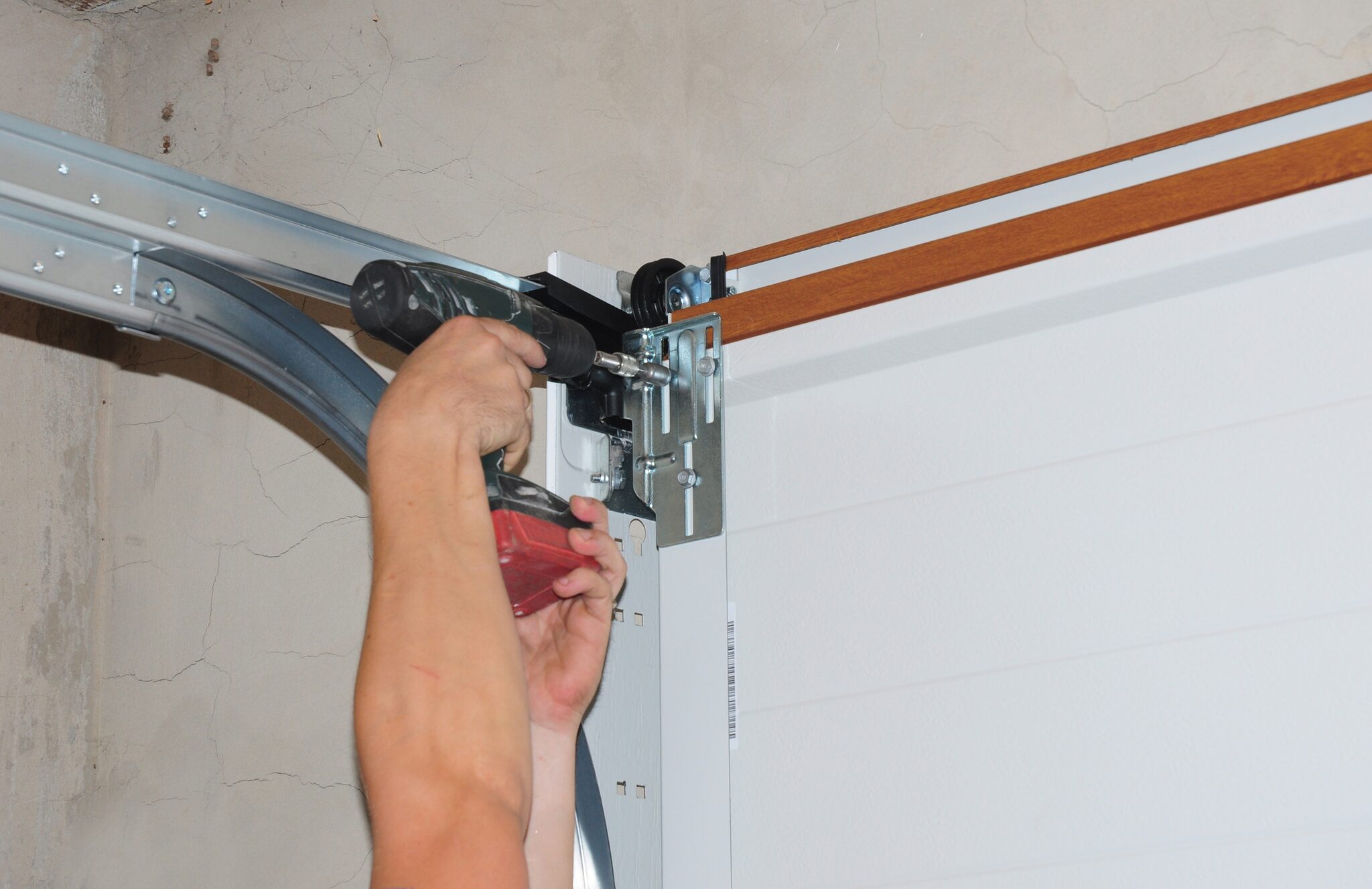
Sound is a clue, not a diagnosis. The same noise can come from a dry hinge or a failing part, and two different problems can sound identical. What a sound can do is point you toward the part of the system to look at and tell you how quickly to act. Chamberlain, which makes the Chamberlain and LiftMaster openers, opens its own noise guide by admitting the garage door is the largest door in the house, so some noise is inevitable. The goal isn't silence. It's noticing what has changed.
First, decide whether it's the door or the opener
Two machines are making noise at once, and most of the confusion comes from blaming the wrong one. Chamberlain's troubleshooting method splits them apart. With the door closed, you pull the manual release and move the door by hand, listening. The door should move smoothly and feel balanced. Then, with the door still disconnected, you run the opener alone with the remote and listen to it by itself.
Only try this on a door that has been working normally. If there has been a bang, the door feels heavy, or something looks off, leave the door alone — those are often signs of a broken spring, and forcing the door can make it worse. When you do move the door by hand, use the handles, not the gaps between sections, and stop the moment it feels wrong.
What you hear tells you where to look. Noise only when the door moves points to hinges, rollers, tracks, or springs. Noise when the opener runs by itself points to the drive, the gears, or how the unit is mounted. If both are quiet on their own and loud together, the trouble is often in how the opener is mounted and connected to the door, and Chamberlain's guide suggests reviewing the installation brackets and the angle of the rail.
Squeaking and screeching
A squeak is the friendliest noise a garage door makes. It nearly always means metal moving on metal without enough lubricant. The usual suspects are the hinges between sections, the rollers, and the coils of a torsion spring rubbing on each other. DASMA says spring squeaks are a normal result of use and don't necessarily mean anything is wrong, and that a spray-on lubricant made for garage doors is worth trying before you call for service.
The details count here, because the wrong product makes it worse. Clopay says to skip WD-40 and other penetrating oils, which attract dirt, and to use a silicone-based lubricant or white lithium grease instead. Put it on hinge pins and on steel rollers, working it into the bearings. Nylon rollers, usually black or white, shouldn't be lubricated at all. Wipe off the excess so nothing drips, then run the door a few times. Clopay suggests repeating this every three to six months, depending on use.
A squeal is the same problem turned up. A screech that arrives with a jerky lift, or that doesn't go away after lubricating, means something is worn: a roller bearing that has failed, a hinge that has stretched, or a dry drive chain or belt on the opener. If the noise stays after a proper lubricating, book a look.
Grinding and scraping
A grind is a different sound. Clopay says it usually points to the door's fundamental components: tracks that are misaligned so the rollers have to fight their way along, or worn gears in the opener. Both start small and escalate.
The disconnect test earns its keep here. A grind that follows the door, even with the opener disconnected, lives in the door, and often means a roller that is worn or dragging, a bent or shifted track, or a panel rubbing on something. A grind that comes from the ceiling unit and continues with the door disconnected is the opener's gears. A grind while the motor hums and the door barely rises is a strained opener working against a door that's too heavy for it.
Scraping, especially on one side, is worth attention. It can mean debris in the track, a roller that has slipped, or a door that is no longer square in its opening. Don't force it. Worn rollers and bent tracks are common causes, and roller and track repair puts the door back in line.
Rattling and vibration
A rattle is looseness. Bolts work free over thousands of cycles. Hinges and panel hardware loosen, and mounting brackets holding the opener to the ceiling shake. A chain that has gone slack rattles against its rail. Clopay's advice is to work around the door checking every nut, bolt and bracket, snugging what is loose without over-tightening, which can strip the threads.
There's a line to respect. DASMA's maintenance guide warns not to loosen or adjust the bottom brackets, red-coloured fasteners, cables, or supports, because the spring system is under high tension. Leave anything connected to the springs and cables to a trained technician. And if a track is loose or pulling away from the wall, that's a repair, not a tightening job.
Vibration through the ceiling is often the opener. Chamberlain's guide points first to drive tension: chain and belt drives need the correct tension, and a screw drive needs its screw lubricated. If the unit still shakes once the door and drive are sorted, Chamberlain sells a vibration reduction kit and an isolator for exactly that purpose. It counts most in an attached garage with a bedroom above.
Banging, popping, and the one loud bang
Take these one at a time.
A single loud bang, followed by a door that feels heavy or won't lift, is the classic sound of a broken spring. Clopay says a broken spring announces itself with a loud noise like a car backfiring. If that fits what you heard, stop using the door. Garage door spring repair replaces the failed spring and resets the balance safely.
Popping is harder. Clopay treats popping as a reason for a prompt call, since springs and cables can make noise before they fail. A pop that repeats at the same point in the door's travel, or comes with a heavier lift or a door that moves unevenly, deserves a quick inspection. Metal parts also tick and pop as temperatures swing, and an occasional pop on a door that otherwise runs smoothly after a hard freeze is less worrying. But the sound alone can't tell you which you have, so if it repeats or worsens, have someone look.
A bang when the door reaches the floor can come from the opener's close settings, from a slack chain, or from springs that no longer control the door's descent. A bang from the ceiling unit as it starts can come from a loose drive. Those are opener and balance questions — garage door opener repair sorts the motor, drive and limits.
Clicking
Clicking has more than one meaning, and sources aren't unanimous. A rhythmic click as the door travels, in step with its movement, is often a roller passing a track joint or a flat spot on a worn roller, a hinge, or a link in the chain. A click from the opener when you press the button, followed by no movement, is described by some technicians as a relay or circuit board problem inside the opener. We can't confirm that from a description of the sound. What's safe to say is that a click with nothing moving, or a click that keeps repeating, is a reason to stop pressing the button and have the opener checked.
Humming and buzzing
A hum is normal while the motor runs, and different openers hum differently. A hum that isn't followed by movement isn't normal. The motor is running, or trying to, with nothing happening at the door. The likely explanations are a disconnected trolley, a stripped gear, or a door that has become too heavy because of a broken spring. Repeated attempts won't help and can wear the opener. Stop after one press and look at the door: is it heavy, is a spring gapped, is the release cord dangling? Those checks line up with the common reasons a garage door won't open or close.
Why the opener itself can be loud
Part of the noise is built in. A chain drive uses a metal chain on a rail, and the chain is a big source of the running noise, a metallic clatter that can travel through shared walls. Belt drives replace it with a reinforced belt, and Genie describes belt drives as very quiet because there's no metal-on-metal contact in the rail. Screw drives use a threaded rod and few parts. Chain drives are usually the most affordable type.
If the opener is loud and the door is quiet, the drive may be old, its tension off, or the unit poorly mounted. Sometimes replacing a chain-drive opener with a belt drive makes a real difference, but it won't quiet a door with dry rollers and loose hardware. Fix the door first, then decide about the opener.
Winter noise in Ottawa
Cold changes what the door sounds like. Clopay notes that lubricant hardens and turns gummy as temperatures fall, so a door that ran quietly in October can complain by January. Rubber seals stiffen. Ice at the bottom seal can crackle or tear as the door breaks free. The first cycle on a cold morning is often the loudest, and it quiets as parts warm up. A noise that fades after a cycle or two points to stiff lubricant. A noise that stays is worth a look. Clopay also warns that WD-40 causes problems for garage doors in cold weather in particular.
A rough way to sort what you hear
Usually minor: a light squeak that goes away after proper lubrication, a chain or belt whir during normal travel, ticking on a cold morning from a door that moves smoothly.
Get it looked at soon: grinding, scraping on one side, a rattle that returns after tightening, popping that repeats, new clicking, shaking through the ceiling, or any noise that is growing.
Stop using the door: a loud bang followed by a heavy door, a door that hangs crooked or has a loose cable, grinding with jerky movement, or a motor hum with no movement.
None of these lists is a diagnosis. Sound gives you a direction, and a trained technician confirms what's behind it.
If the noise is changing, or the door is heavy, uneven or jerky, have the door inspected before it fails. You can call Fix My Door Now Ottawa at 613-265-3667 or send us a short video with the sound and a photo of the door and rollers. We repair rollers, tracks, springs and openers across Ottawa — ordinary garage door repair when a noise turns into a failure.
Need garage door repair today?
We work across Ottawa and the Valley with same-day service, flat-rate pricing, and guaranteed workmanship. Call 613-265-3667 or request a free quote and we will tell you exactly what the fix costs before any work starts.
Call 613-265-3667 Get a Free Quote