

Garage Door Cable Broke or Came Off? What to Do Before Anyone Touches It
The door went up crooked and stopped. Now there's a steel cable hanging in a loop beside the track, or lying on the floor in a coil, and one bottom corner of the door sits a few inches higher than the other. The first instinct is to press the button again and see if it sorts itself out. Don't.
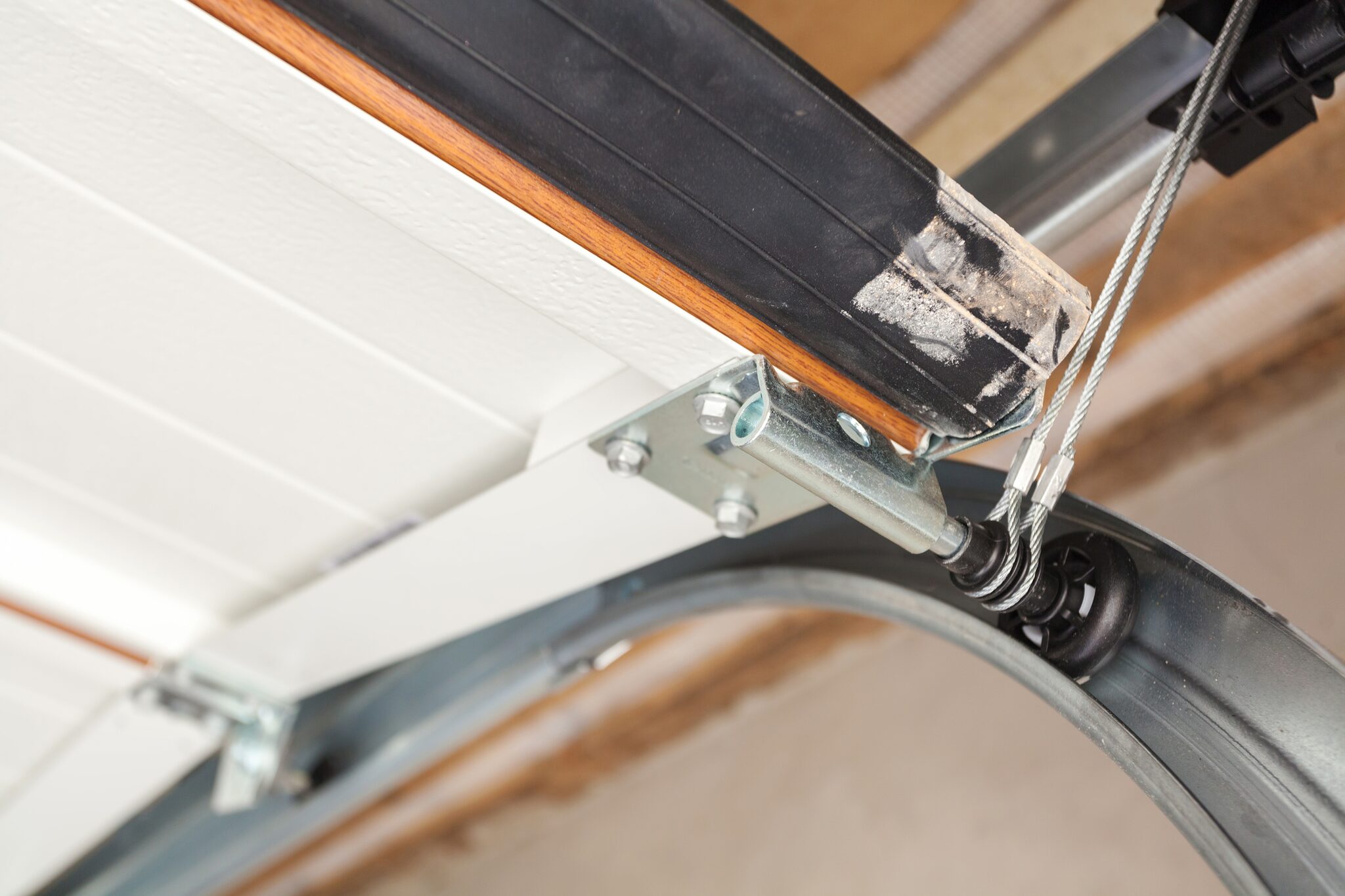
A garage door has two lift cables, one at each bottom corner, and they share the job of raising it. When one lets go, the door is being lifted from one side. Everything you do in the next few minutes decides whether this stays a cable repair or becomes a cable, track and panel repair.
The first ten minutes
- Stop using the opener. Unplug it if you can reach the plug without standing under the door.
- Leave the door where it is. Don't try to push it up, pull it down or straighten it by hand.
- If the door is open, don't pull the red release cord. The opener may be the only thing holding the door in place. Released, it can drop.
- Keep people, pets and cars clear of the opening. If a car is inside and the door is closed, call before you try anything.
- Take photos from the floor. One of the whole door, one of each bottom corner, and one of the drums or pulleys at the top if you can see them.
That's the whole list. Nothing in it involves touching the cable, the drum or the bracket the cable attaches to.
What the cables actually do
The springs store the force that lifts the door. The cables deliver it. On a torsion system, the cables wind around drums at each end of the spring shaft above the door and run down to the bottom corners. On an extension system, they run over pulleys and connect to springs stretched along the horizontal tracks.
Either way, the cables are under the same tension as the springs. That's why the door association DASMA says frayed or worn cables should be replaced only by a trained technician. It also warns that the bottom brackets the cables attach to are under extreme tension and shouldn't be adjusted or loosened by anyone else. Many manufacturers now fit tamper-resistant brackets for that reason.
One point of confusion: extension-spring doors also have safety cables threaded through each spring. Those are there to contain a spring if it breaks, and they don't lift anything. If the loose cable you're looking at runs through the middle of a spring, that's the safety cable, and the spring it guards needs looking at.
Snapped, slipped or slack?
How the cable looks tells you a lot about what happened.
A snapped cable
The cable is in two pieces, often with a frayed, brush-like end. Cables usually break at the bottom, where they loop onto the bracket, because that's where moisture, salt and rust collect. Road salt carried in on the car all winter works on that spot every day.
A cable off the drum
The cable is in one piece but has jumped off its drum or unwound into a tangle beside it. You'll often see it hanging in a loop from the top of the door, or wrapped around the shaft instead of sitting in the drum's grooves.
A slack cable
The cable is still attached at both ends but hangs loose instead of running taut. Slack means tension has gone somewhere. The most common reason is a broken torsion spring. When the spring lets go, the shaft stops holding the cables tight and they can slump off their drums.
Signs you might not have connected to the cable
Sometimes the cable isn't the obvious thing. These are all worth a look at the bottom corners.
- One side of the door hangs lower than the other when it's closed.
- The door opens at an angle, with one side rising ahead of the other.
- The door stopped partway and sits tilted in the opening.
- A new twang or snap from the garage, followed by the door behaving strangely.
- Fraying or rust where the cable meets the bottom bracket.
- A cable sitting off-centre on its drum, riding up the edge instead of in the grooves.
A crooked door can also come from a spring or track problem. If you can't see anything wrong with the cables, our guide to telling a spring problem from a cable problem covers the other causes.
Why cables come off or break
Cables rarely fail for no reason. When we replace one, we look for what caused it, because a new cable on the same fault fails the same way.
- Rust and fraying at the bottom bracket. The most common cause in garages that see a lot of slush. The strands break one at a time until the rest can't hold.
- A spring failure. A broken torsion spring drops the tension, the cables go slack, and they can unwind or jump their drums.
- The door coming down on something. If the bottom of the door lands on a bin, a bike wheel or a ridge of ice, the cable on that side goes slack for a moment. When the door lifts again, the slack cable can wind on crooked or miss the drum entirely.
- Worn or damaged drums. A cracked drum or one that has shifted on the shaft stops guiding the cable properly.
- Track or roller trouble. A door that binds on one side puts uneven load on the cables. A roller out of the track can do the same.
- Age. Cables are steel wire rope, and every cycle flexes them. On an older door that has never had them changed, fraying is expected.
Why running the door makes it worse
With one cable gone, one side of the door is being lifted by the spring system and the other side isn't. The door twists in the opening as it moves. That puts sideways load on the rollers, which can climb out of the tracks. The sections flex at angles they weren't built for, and steel panels crease. The remaining cable carries the full load on a door that's now pulling crooked.
Openers are built to move a balanced door, not to lift a crooked one. An opener pulling on a racked door can strip its drive gear, bend the door arm, or pull the arm's bracket out of the top section. A cable repair is one of the more contained garage door jobs. Keep running the door and it can turn into off-track repair, a panel section and an opener on top.
Cables and springs fail together
This comes up often enough to spell out. When a torsion spring breaks, the cables often come off as a result. When a cable snaps, the spring on that side can be damaged when the load releases suddenly. So when you call about a cable, expect us to check the springs, and when you call about a spring, expect us to check the cables.
If you can see a gap in the coil above the door, the spring broke first, and the loose cable is a symptom. That repair usually starts with professional spring replacement, then the cables are reset or replaced. Our article on broken garage door spring signs explains what to look for.
What the repair involves
This isn't a how-to. Unwinding and rewinding cables under spring tension is how people get hurt. What we can tell you is what a proper cable repair covers, so you know what to expect and what to ask.
- Secure the door in place so it can't drop or shift while the system is unloaded.
- Take the tension off the spring system in a controlled way.
- Inspect the rest: drums, bottom brackets, springs, rollers, tracks and the opener connection.
- Replace the damaged parts. The cable, plus any drum or bracket that's worn, cracked or rusted.
- Set both cables evenly so each side of the door lifts the same.
- Restore the spring tension and check the door's balance by hand.
- Run the door through full cycles and test the opener's reversing function.
When one cable has frayed from age, the other has done the same number of cycles. We'll usually suggest replacing both, and we'll tell you if the second one still looks sound.
The cable repair service page has more on how we handle these calls.
Keeping it from happening again
Most cable failures give some warning. A short look from the floor once a month catches most of them. DASMA recommends a monthly visual check by the owner and a yearly visit from a technician.
- Look at the bottom corners for frayed strands, rust or a cable that seems thinner at the loop.
- Look at the drums from the floor for a cable riding off the grooves.
- Watch the door close. Both bottom corners should touch the floor at the same time.
- Keep the threshold clear of ice ridges, bins and toys, so the door never lands on something.
- Listen for new sounds. A cable that's starting to slip can make a scraping or ticking noise at the top.
- Rinse off salt. In winter, hosing salty slush off the slab and the bottom of the door now and then slows corrosion at the brackets.
If you spot fraying, have it replaced before it breaks. A frayed cable is a scheduled repair. A snapped one is often an urgent call.
Common questions
Can I drive the car out if the door is partly open?
Only if there's plenty of clearance and the door isn't moving or shifting. If it's tilted or low, leave the car where it is. A door that drops onto a car is a much bigger bill than a cab ride.
Is the door safe to leave closed until the repair?
A closed door with a broken cable is usually stable if nobody operates it. Unplug the opener and use another entrance. If the door is stuck open, the house isn't secure. Tell us that when you call, because it changes how quickly we need to get there.
Can I just hook the cable back on the drum?
No. The cable is part of a system under spring tension, and getting it back on correctly means controlling that tension. It's also the step where hands get caught. Leave it for a technician.
Will the door need new springs too?
Not always. If the spring is intact and the cable failed from wear or a door that landed on something, the springs may be fine. If a spring broke and took the cable with it, the spring is the main repair.
Get the cable looked at
If one side of the door is hanging low or a cable has come loose, stop operating the door until the system is inspected. Send us a photo of the bottom corners and the drums and we'll tell you what we see. Call 613-265-3667. If the door is stuck open or unsafe right now, start with emergency garage door service. Everyday garage door repair covers the rest of the door.
Call 613-265-3667 Get a Free Quote