Fix My Door Now OttawaA Can-Lock Security Company
Services Before & After Service Areas About Blog FAQ Contact
📞 613-265-DOORRequest a Free Quote
Residential • Commercial • Industrial Ottawa Same-Day Door Repair — Call 613-265-DOOR OPEN 24 HOURS / 7 DAYS A WEEK ✓
Home  /  Before & After Gallery  /  Rotted Exterior Door Frame Replacement

Rotted Exterior Door Frame and Sill Replacement in Bells Corners

The sill and lower frame of this brick-faced Bells Corners entry were water-damaged in the recent flooding. The old frame was removed, the sill and header rebuilt and waterproofed, and a new exterior door and frame installed.

Door Frame Replacement New white half-glass exterior door with keypad deadbolt installed in a brick-faced Bells Corners entry
The finished entry: a new frame, sill and exterior door, with the brick and siding around the opening kept in place.
Project: Rotted exterior door frame and sill replacement Location: Bells Corners, Ottawa Property: Residential Work: Frame removal, sill and header repair, waterproofing, new door and frame

From the street this entry looked fine: a navy half-glass door set between brick and siding. But the recent flooding had soaked the sill and the lower frame, and underneath the threshold and inside the jambs the wood had gone soft and started to rot. This project shows what was found and how the opening was rebuilt before a new door went in.

The door before the work

The door still opened and closed, and nothing about it looked like an emergency. That is typical of water damage in a door frame: the slab and the paint hide what is happening at the sill, and the first signs are a soft spot at the bottom corner, trim that will not hold caulk, or a draft at the threshold.

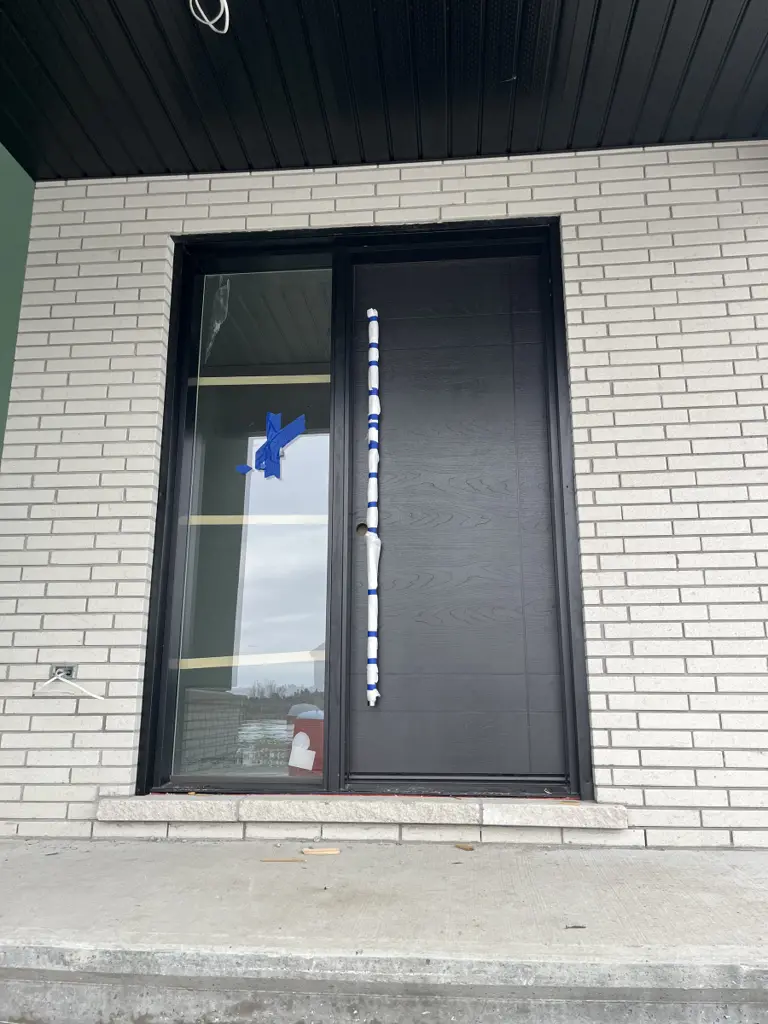
Navy half-glass exterior door between brick and siding before frame replacement
The original door. From the outside, the rot underneath was not visible.

What the rot looked like

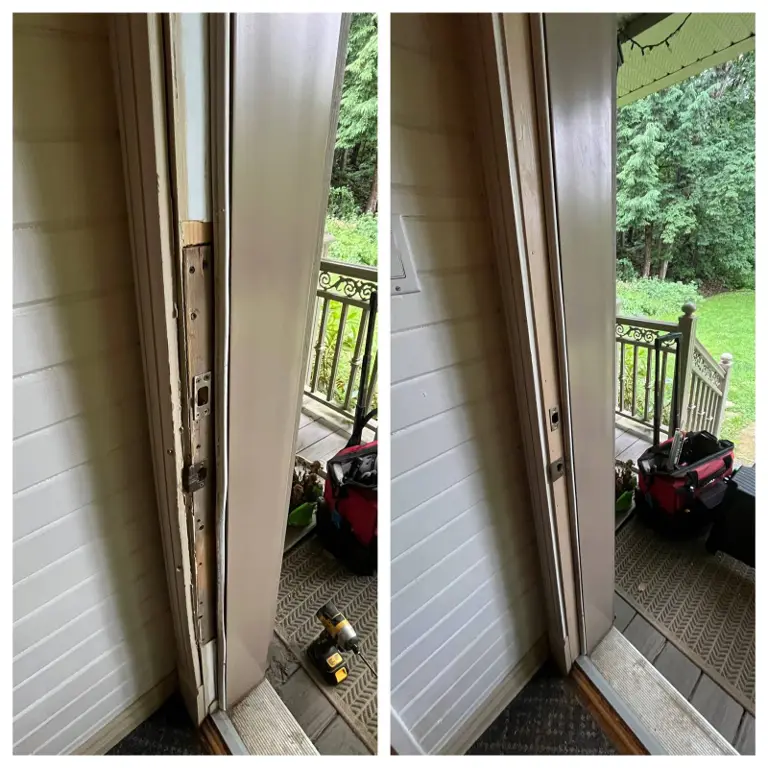
Once the threshold trim came off, the sill was soft and broken down along its length, with wet, crumbling wood under the old weatherstrip. The lower jamb corner had rotted through to the framing, and the side jamb was split and soft where flood water had soaked in behind the casing.

Rotted exterior door sill with broken-down wood under the threshold
The sill, rotted along its length under the threshold.
Close-up of crumbling rotted wood in an exterior door sill
Close-up: the wood had broken down enough to crumble.
Rotted lower corner of an exterior door jamb open to the framing
The lower jamb corner, rotted through to the framing.
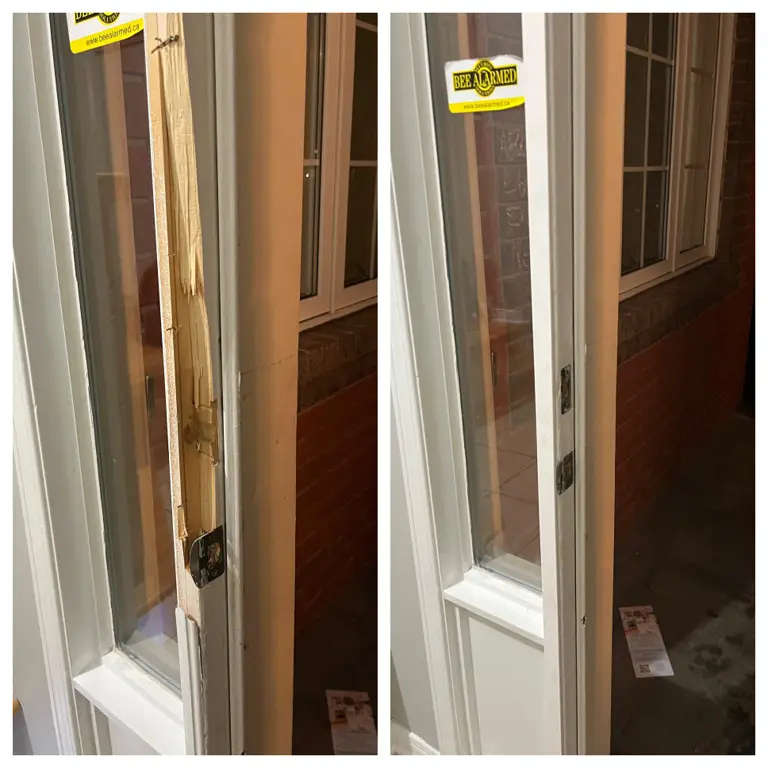
Split and rotted side jamb of an exterior door frame
The side jamb, split and soft where water ran behind the casing.

Removing the old frame

With that much damage, patching was not an option: a new door hung in a rotted frame would have the same problem within a few seasons. The old door and frame were removed and the opening was stripped back so the condition of the framing underneath could be checked properly.

Technician removing the old exterior door frame from a brick opening
Taking out the old frame.
Exterior door opening stripped back to the rough framing
The opening stripped back to the rough framing.

Repairing the sill and header

Stripping the opening exposed rotted wood in the sill framing itself. The damaged material was cut out and the sill rebuilt on solid wood. Before the new frame went in, a self-adhering waterproofing membrane was applied across the sill so that any water that gets past the threshold drains out instead of soaking into the structure. The header framing was also repaired so the new frame would sit square and solid.

Rotted sill framing exposed under an exterior door opening
Rot in the sill framing, exposed once the frame was out.
Blue self-adhering waterproofing membrane applied to a rebuilt door sill
Waterproofing membrane applied across the rebuilt sill.
Technician repairing the header framing above an exterior door opening
Header framing repaired before the new frame went in.

Installing the new frame and door

The new frame was set into the rebuilt opening, shimmed square and fastened to the structure, then the new exterior door was hung and adjusted so it closes evenly against its weatherstripping. The finished entry has a white half-glass door with a keypad deadbolt, sealed to the existing brick and siding.

Technician installing a new exterior door frame on a waterproofed sill
Fitting the new frame on the waterproofed sill.
Finished white half-glass exterior door with keypad deadbolt in a brick entry
The finished entry.

Signs your door frame may be rotting

  • Soft or spongy wood at the bottom of the jamb or along the sill
  • Paint that bubbles, flakes or will not stay on the lower frame
  • Caulking that keeps failing at the threshold
  • A draft or water at the bottom of the door
  • A door that has started to rub or drop as the frame softens

Caught early, a rotting frame can often be repaired in place; see rotting door frame repair. When the sill and framing have gone, the opening needs to be rebuilt as it was here.

Soft wood at the bottom of your door frame?

Send a few photos of the sill and lower jambs, or request a quote. We will tell you whether the frame can be repaired or needs to be rebuilt, and confirm a flat-rate price before any work starts.

← Back to the full Before & After Gallery
FAQ

Rotted Door Frame Replacement FAQs

Common questions about rotted door frames, sills and this Bells Corners project.

Yes. Wood that sits in water soaks it up through the end grain at the sill and the bottom of the jambs, and it can stay wet inside long after the surface looks dry. That is when it softens and starts to rot, which is what happened here. If your entry sat in flood water, have the sill and lower jambs checked even if the door still opens and closes normally.
It depends on how far the rot goes. If the damage is limited to a short section of jamb or the bottom of the casing, the sound wood can often be kept and the bad section spliced. When the sill, both lower jamb corners and the framing underneath have softened, as they had here, the frame has lost its strength and the reliable fix is to remove it and rebuild the opening.
The sill and the bottom of the jambs are where water collects. Rain and melting snow run down the door and frame, sit on the threshold, and get into end grain and any gap in the caulking. Freeze-thaw cycles open those gaps further each winter, so the wood stays wet longer and breaks down from the bottom up.
It is a self-adhering waterproofing membrane applied to the rough sill before the new frame goes in. It forms a pan that keeps any water that gets past the threshold from reaching the framing, which is the step that stops the same rot from coming back.
The old frame was removed from inside the existing opening, so the brick and siding around it stayed in place. The new frame was fitted to that opening and sealed to it.
Yes. Our repairs and installations are backed by our written parts and labour warranty, and we confirm a flat-rate price before any work starts.
📞 613-265-DOOR