Ottawa door frame rot is not a cosmetic problem. By the time the surface of an exterior door frame feels soft, the rot has been working inward through the wood for years — and the structural function of the frame, the security function of the deadbolt strike, and the weather performance of the threshold seal are all compromised. We repair rotting door frames across Ottawa correctly: finding the full extent before committing to a repair depth, and closing the moisture source so the repair doesn’t become the next failure.

By the time the surface feels soft, rot has been working for years — we find the full extent and close the moisture source. Tap for door frame repair.
Ottawa’s climate is uniquely effective at producing door frame rot. Over 150 freeze-thaw cycles per year work moisture into wood grain through every gap in the paint and caulk that protects the frame. The Ottawa summer’s humidity swells the wood fibres open. The Ottawa winter’s freeze expands any moisture that has entered the wood structure. Over years, this cycling deteriorates wood at the cellular level even before visible rot appears. By the time an Ottawa homeowner notices soft wood, dark staining, or a spongy surface at the base of their exterior door frame, the rot has typically been developing for three to five years — and the surface condition understates what is present deeper in the material.
Soft, rotting wood at the base of your Ottawa door frame? Call 613-265-3667 for same-day service — or request a free quote online.
The relationship between visible surface rot and actual rot depth in an Ottawa exterior door frame is consistently misleading. The surface of a painted wood frame holds moisture against the wood beneath it rather than shedding it the way a dry unpainted surface would, which means the wood under a painted surface deteriorates faster than the surface itself. By the time paint begins to bubble, crack, or separate from the underlying wood — which is the first visible indicator of moisture damage — the wood underneath has typically been soft for a season or two already.
Probe testing is the only way to establish the actual depth of rot in an Ottawa door frame. We probe every rotting door frame repair we assess, inserting a sharp probe into the wood at and below the visible damage area, to find where sound wood resumes. In most Ottawa exterior door frames with visible sill rot, the probe tells us that the deterioration extends from the sill level upward into the lower jamb section by 150 to 300mm — a repair extent that is two to three times what the visible surface damage would suggest. In cases where the rot has been present for many seasons without attention, we sometimes find that the deterioration has extended into the rough framing behind the jamb — the jack stud that anchors the frame to the wall structure — which requires a more extensive repair that addresses the structural framing rather than just the finished jamb. A recent Bells Corners example is this water-damaged door replacement, where the door had to come out so the damaged sill and jamb could be rebuilt before a new unit went in.
 Failed threshold seals are the most common moisture path into a frame base. See weatherstripping & threshold sealing.
Rotting door frame repair that doesn’t address the moisture source is a repair that sets itself up to fail. The same conditions that produced the rot in the existing frame will produce rot in the replacement material — unless the way that moisture enters the frame is changed. The most common moisture sources we identify and address in Ottawa rotting door frame repairs are:
Failed threshold seals — the most consistent moisture path into the base of an Ottawa exterior door frame. A threshold seal that has compressed flat, torn, or separated from the door bottom allows water to pool against the base of the jamb on every rain event. The threshold itself may also be improperly sloped, holding water against the frame base rather than draining it away. We replace threshold seals and assess threshold drainage slope as part of every base-of-frame rot repair.
Cracked exterior caulking — the joint between the exterior door frame casing and the adjacent wall surface. This joint must be fully sealed with a caulking product that maintains elasticity through Ottawa’s temperature range. When the caulk cracks or pulls away from the substrate, water infiltrates behind the casing on every rain event and works down to the base of the frame. We re-caulk the full exterior frame perimeter with elastomeric products on every rotting frame repair.
Grade and drainage — the ground level adjacent to the door sill. An Ottawa door sill that is at or below the adjacent ground level receives ground splash on every rain event and has no drainage away from the frame base. Where grade has built up against a door sill over years of landscaping or frost heave, we advise on grade correction as part of the rot repair assessment.
The material used to repair a rotting Ottawa exterior door frame at the sill and base level matters more than the repair technique. Standard kiln-dried dimensional lumber at the base of an exterior frame in Ottawa will deteriorate at the same rate as the original material if the moisture source has been correctly addressed, and faster if it hasn’t. We use materials appropriate for ground-contact and moisture-exposure conditions at the sill level:
Cellular PVC trim at the sill and lower jamb sections provides a material that is dimensionally stable, paintable to match the existing frame, and completely resistant to rot regardless of moisture exposure. PVC trim can be machined and shaped to match the original jamb profile and accepts paint finishes that are indistinguishable from painted wood.
Composite lumber products that combine wood fibre with polymer binders provide rot resistance with a texture and working characteristic closer to wood — useful in Ottawa applications where the frame repair requires a material that accepts screws and nails in ways that PVC trim doesn’t.
Treated lumber where the repair is in a location that will be covered by finished trim and won’t be visible — the rough framing area behind the jamb, for example — where the rot resistance of the treatment is more important than the appearance of the material.
Ottawa’s heritage homes — the Victorian and Edwardian properties in The Glebe, Sandy Hill, Westboro, and Rockcliffe Park — have exterior door frames whose wood is old-growth softwood or hardwood from the late 1800s and early 1900s. This original material is denser and more rot-resistant than modern dimensional lumber, but it isn’t immortal. When rot has established itself in a heritage Ottawa door frame, we repair with materials that match the profile of the original framing — preserving the character of the heritage entry rather than replacing original material with materials that don’t match it. Where the original frame profile is a custom moulding that isn’t available from current suppliers, we mill matching profiles from appropriate material.
Real door repairs, installations, and security work completed by our Ottawa and Ottawa Valley team.
Tell us what's wrong and we'll get you a fast, honest price for the fix.
Same crew, same flat-rate pricing — explore frame, threshold and entry door services across Ottawa.
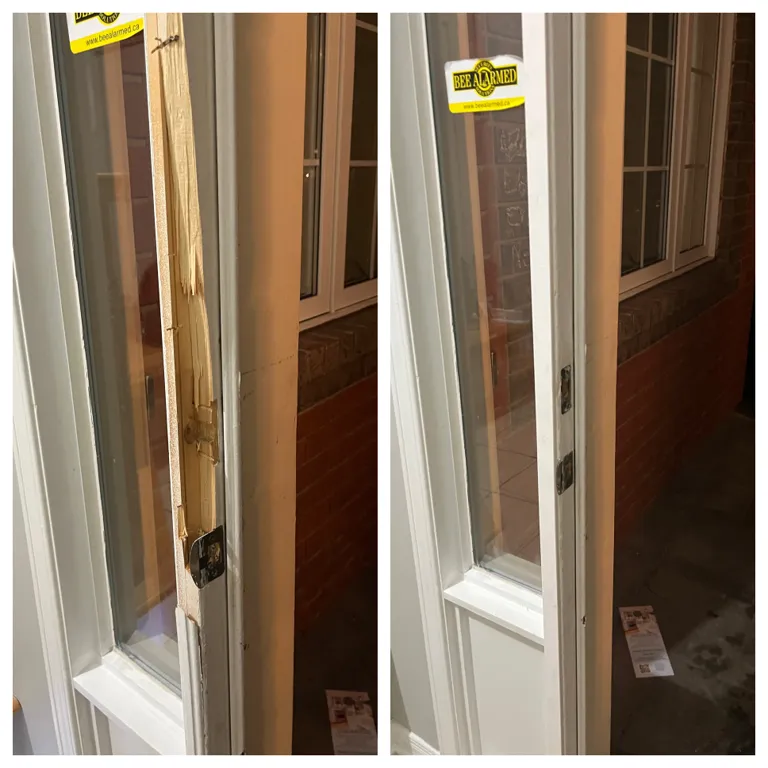
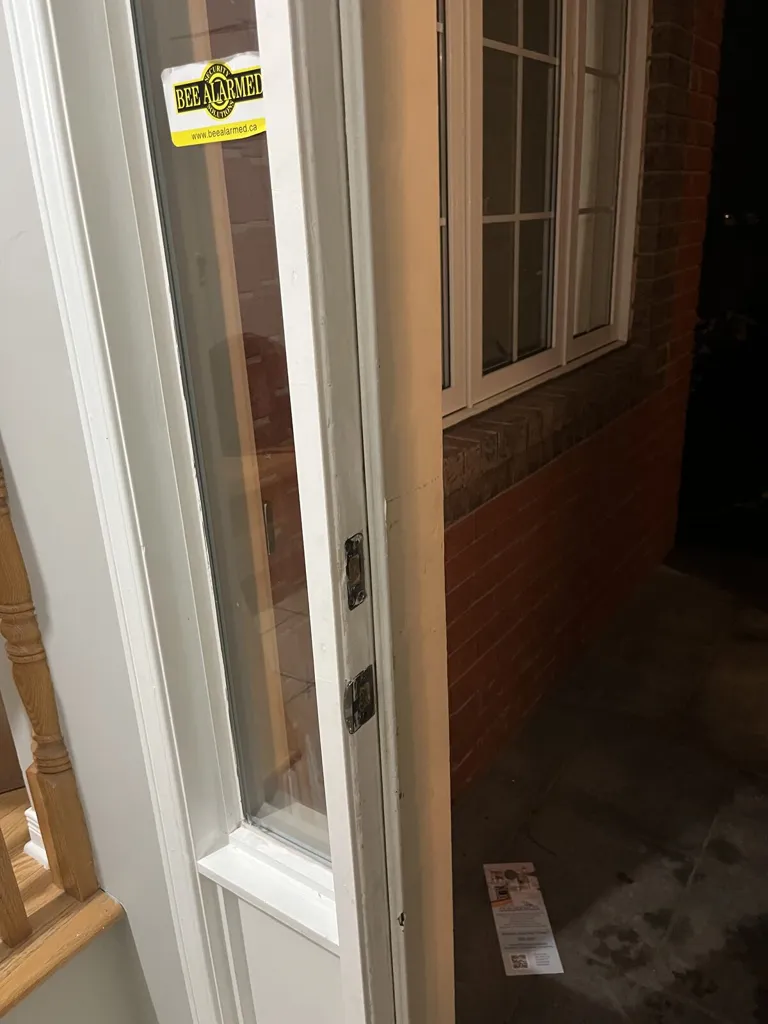
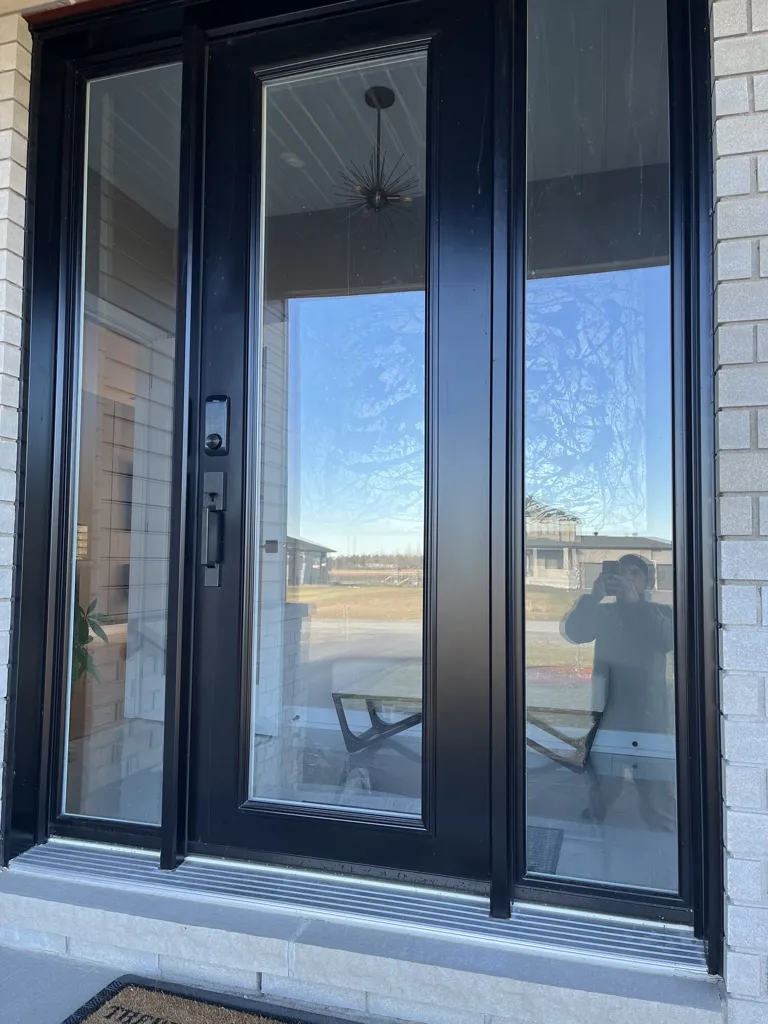
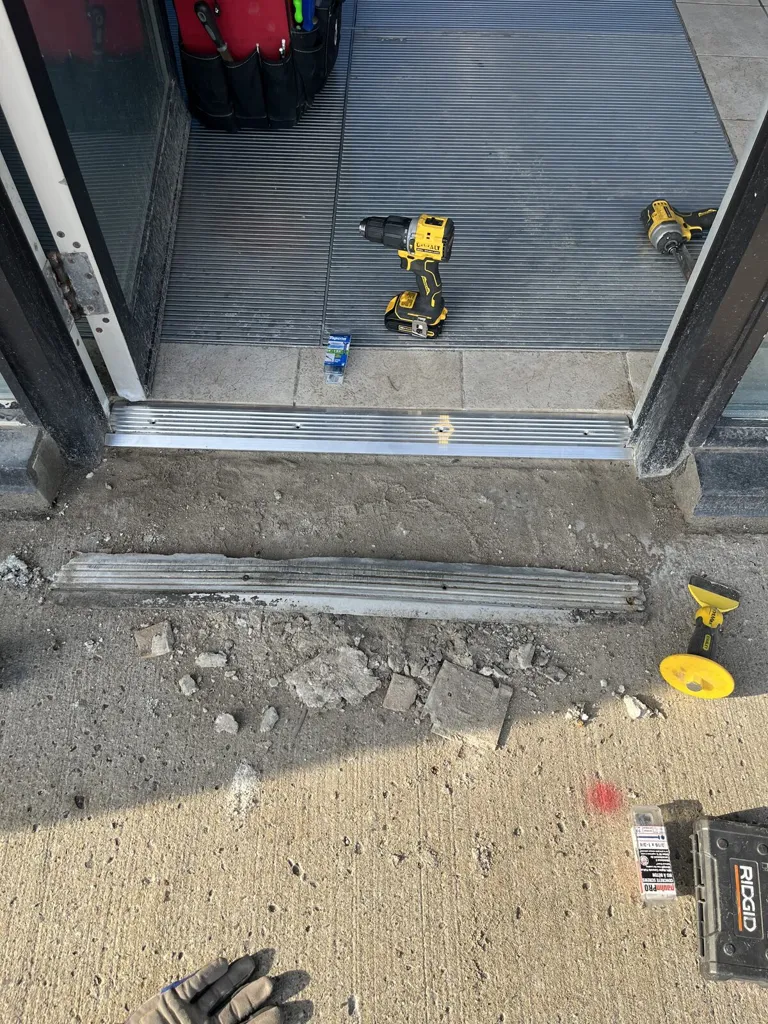
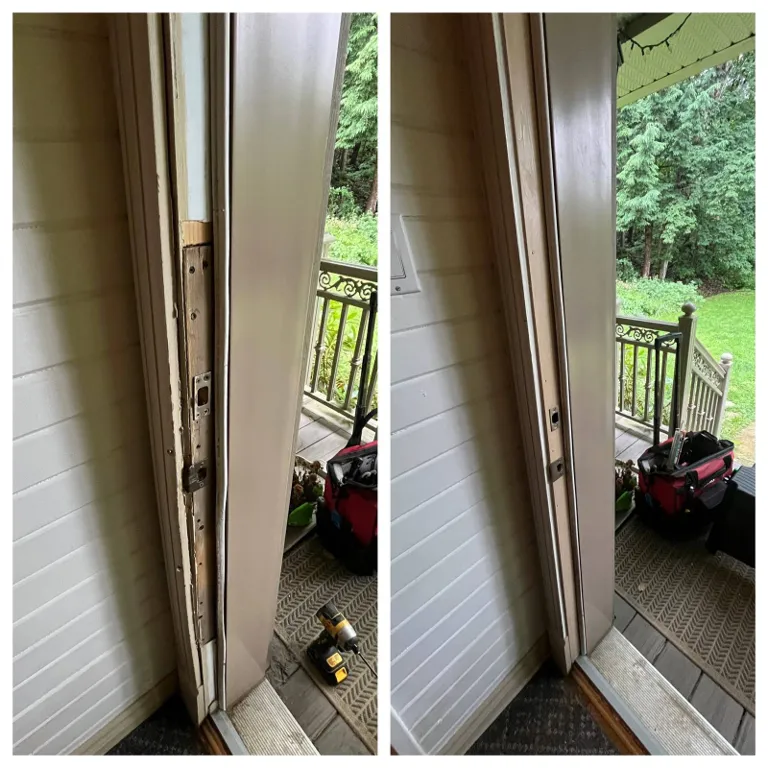
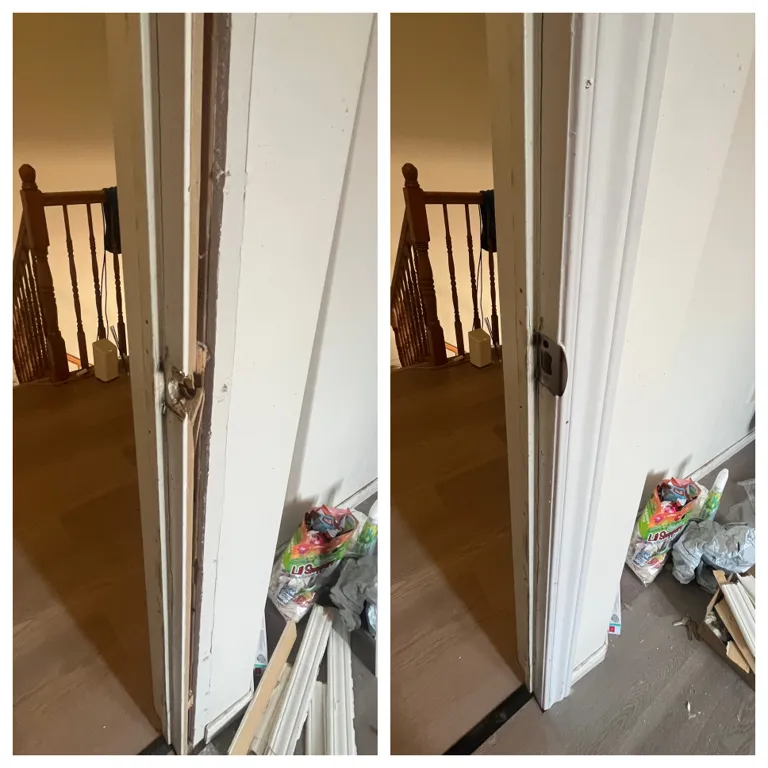
Same-day rotting door frame repair across Ottawa — full-extent probing, moisture-source correction and rot-proof materials.