A door that sags — dropping on its hinge side, dragging at the bottom corner, failing to latch without lifting the handle, or showing a gap that is wide at the top of the latch side and narrow at the bottom — is one of the most common door repair calls we receive across Ottawa. It’s also one of the most commonly misdiagnosed, because a sagging door has multiple possible causes that look identical from the outside and require completely different repairs. We diagnose the real cause first. Then we fix it.

A sagging door has five common causes that look identical from outside — we diagnose the real one, then fix it. Tap for door frame repair.
The visible symptom of a sagging door is always the same: the door has dropped on its hinge side relative to its latch side, changing the door’s position in the frame and producing the cascade of secondary problems that drop produces. The latch no longer aligns with the strike. The door contacts the floor or threshold at the bottom corner of the latch side. The top of the door on the latch side pulls away from the frame head and creates a gap. Weatherstripping that was contacting the door face no longer makes uniform contact. All of these are symptoms of the same underlying positional change — the door’s hinge side is lower than it was when the door was hung.
What Ottawa homeowners, building managers, and even some trades people underestimate is the number of different causes that produce this identical visible symptom. Treating the symptom — planing the bottom corner that’s dragging, repositioning the strike, adjusting the weatherstripping — without identifying the cause produces a temporary improvement that reverses as the underlying cause continues to operate. We have seen Ottawa doors that were planed at the bottom corner three times over ten years without anyone identifying the stripped hinge screw holes that caused the sag to begin with. On a residential front entry, sagging repair is handled through our entry door repair service.
Door dragging, sticking or not latching in Ottawa? Call 613-265-3667 for same-day service — or request a free quote online.
The most common cause of a sagging Ottawa door — particularly in older Ottawa homes across Nepean, Gloucester, Kanata, and the pre-1990s housing stock generally — is stripped screw holes in the hinge mortise area of the door jamb. Wood door jambs have a finite ability to hold screw fasteners under load. The top hinge carries most of a door’s weight, and over years of daily use, the screw holes in the jamb at the top hinge position compress and fracture the wood fibres around them until the screws no longer bite solidly. The hinge leaf moves — barely perceptibly at first, then noticeably — and the door drops on its hinge side.
The fix is not larger screws. A larger screw in a stripped hole bites against already-compromised wood fibre and provides short-term improvement that deteriorates at the same rate as the original. The correct repair is filling the stripped holes with an appropriate wood filler that restores the material for fasteners to bite into, then driving correctly sized screws — and where the jamb’s structural integrity has been significantly compromised, installing longer screws that bypass the jamb entirely and reach the framing stud behind it.
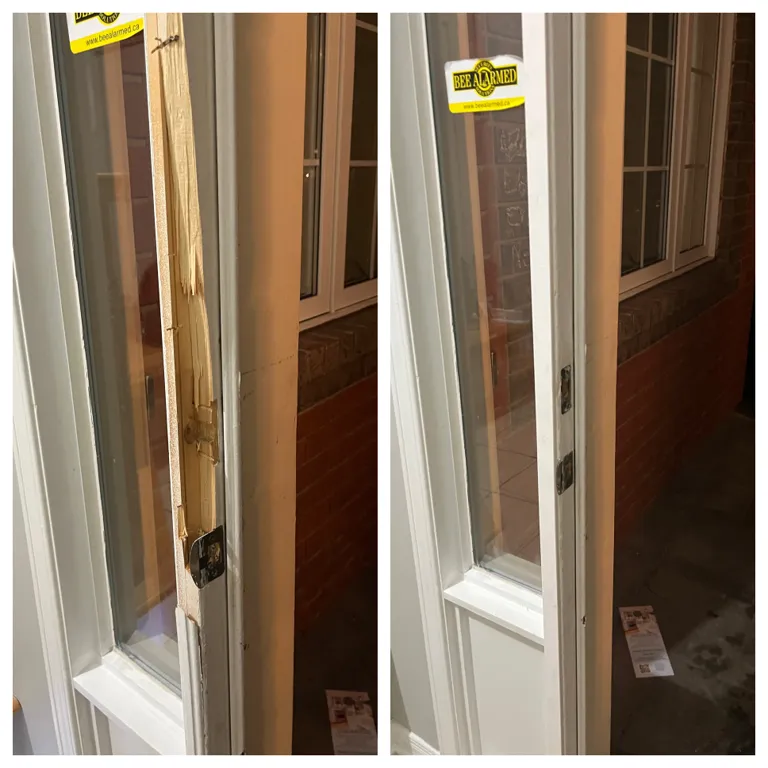
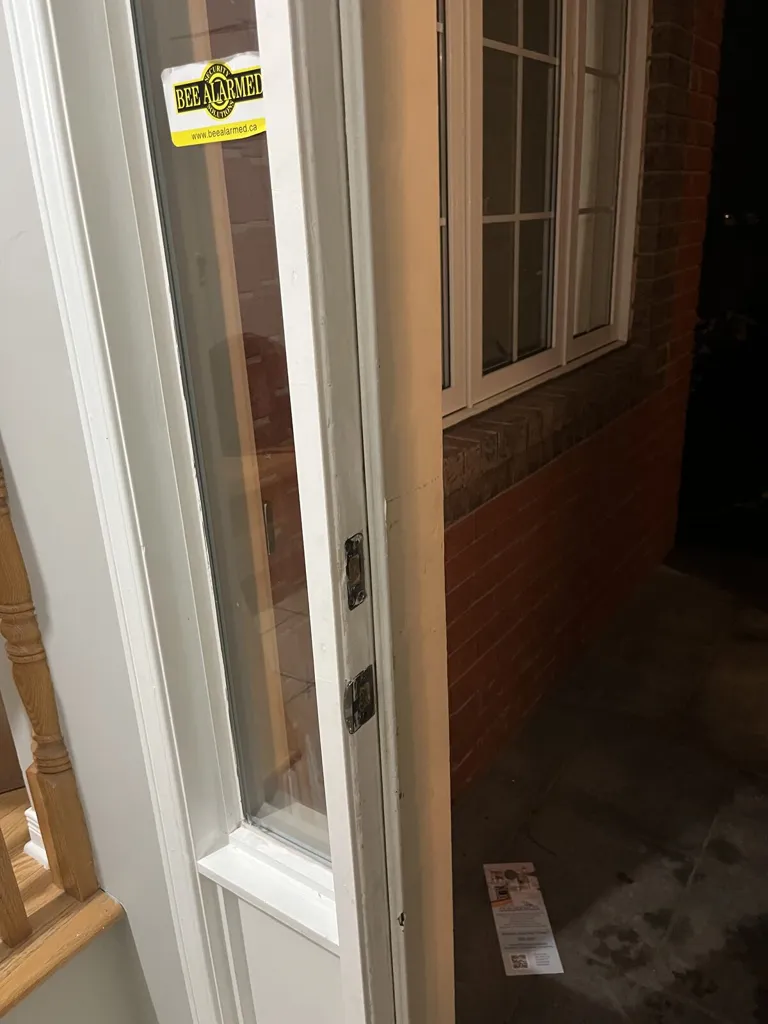
 Misaligned latches and uneven gaps are tells — see the signs your frame needs repair.
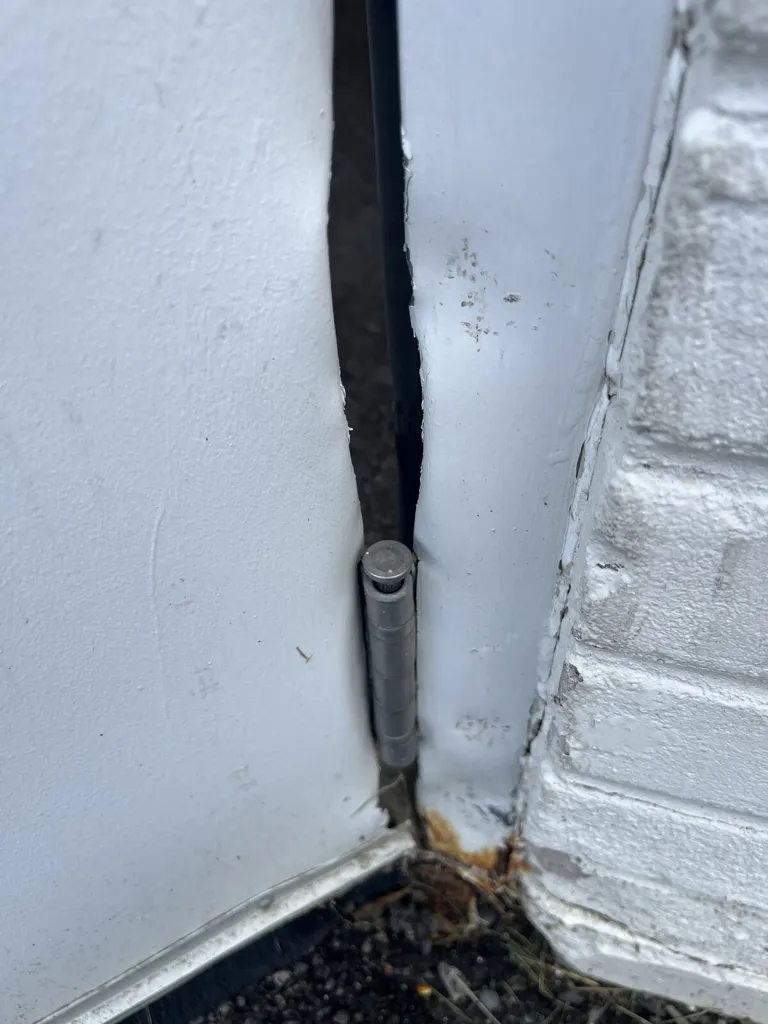
A door that has been hanging for twenty or thirty years on its original hinges has hinges whose knuckle — the interlocking barrel around the pin — has developed play through decades of load cycling. The play in the knuckle allows the hinge leaf to move slightly relative to the pin, which allows the door to shift position when weight is applied. The result is a door that sags when closed under load but appears to hang correctly when the hinges are inspected visually, because the play only becomes apparent under the door’s weight.
Testing for hinge knuckle wear requires lifting the door face slightly at the lock stile and observing whether the top hinge shows movement as the load transfers. Even 2-3mm of knuckle play in the top hinge produces enough positional change in the door panel to affect latch engagement. We replace worn hinge sets with commercial-grade hinges correctly sized for the door weight, restoring the hinge’s ability to hold the door’s position accurately through its full operating range.
In Ottawa homes where the building has settled incrementally over decades — common in the clay soil conditions that underlie much of Ottawa’s residential development — the door frame has moved with the building. The rough framing that the door jamb is nailed to has shifted slightly out of plumb and square, which means the opening the door is hung in is no longer the rectangle it was when the door was installed. The door hasn’t sagged on its hinges — the frame it’s in has moved, changing the door’s position relative to the floor and the adjacent wall.
The diagnostic for frame racking is assessing the plumb of the hinge-side jamb with a level. An out-of-plumb jamb that has been plumb within the past ten or twenty years indicates frame movement. In Ottawa homes with clay soil foundations, this movement is common in the spring following a heavy-frost winter, when frost heave displaces the foundation and the building above it. The repair involves re-shimming the frame to current plumb rather than trying to rehang the door for its original frame position.
Some Ottawa doors — particularly solid wood exterior doors installed as upgrades to older homes that originally had lighter hollow-core doors — are heavier than the hinge specification that was installed with them was designed to carry. A solid wood exterior door weighing 40 kilograms hung on hinges that were sized for a 20-kilogram hollow-core door will sag as the hinge hardware deforms under the sustained overload. This failure mode is slower than stripped screws or hinge wear, but it is progressive and won’t correct itself.
The fix is replacing the undersized hinges with correctly specified heavy-duty residential hinges — sized for the actual door weight, with a larger leaf area that distributes the load over more screw fasteners, and with a tighter knuckle tolerance that reduces the play that will develop over time.
Ottawa’s humidity range — from very dry in January to humid in August — causes solid wood doors and wood door frames to expand and contract seasonally. A door that sticks only in summer and operates freely in winter is almost always seasonal wood expansion rather than mechanical failure. The wood in the door panel swells in Ottawa’s humid summer, and the door that had adequate clearance in February now contacts the frame head or side in August. This is not a sagging door in the mechanical sense — it’s a door that needs a plane cut on the specific contact edge and a finish coat to seal the cut surface so that subsequent seasons don’t produce the same expansion at the same rate.
We distinguish seasonal sticking from mechanical sagging through the assessment process, and we don’t recommend hardware replacement or frame adjustment for a door whose only symptom is seasonal summer sticking at a consistent location. Our guide to why doors stick in summer explains how humidity changes the fit.
We diagnose and repair sagging doors the same day across all of Ottawa — every era of housing, every door material, every underlying cause. We bring a level, a probe, and the hardware to address the most common causes on the first visit, and we carry additional hardware for less common scenarios. Flat-rate pricing confirmed before we start, guaranteed workmanship backed in writing.
Real door repairs, installations, and security work completed by our Ottawa and Ottawa Valley team.
Send a couple of details and we'll reply with a flat-rate price — no obligation, no pressure.
Same crew, same flat-rate pricing — explore frame, hardware and entry door services across Ottawa.
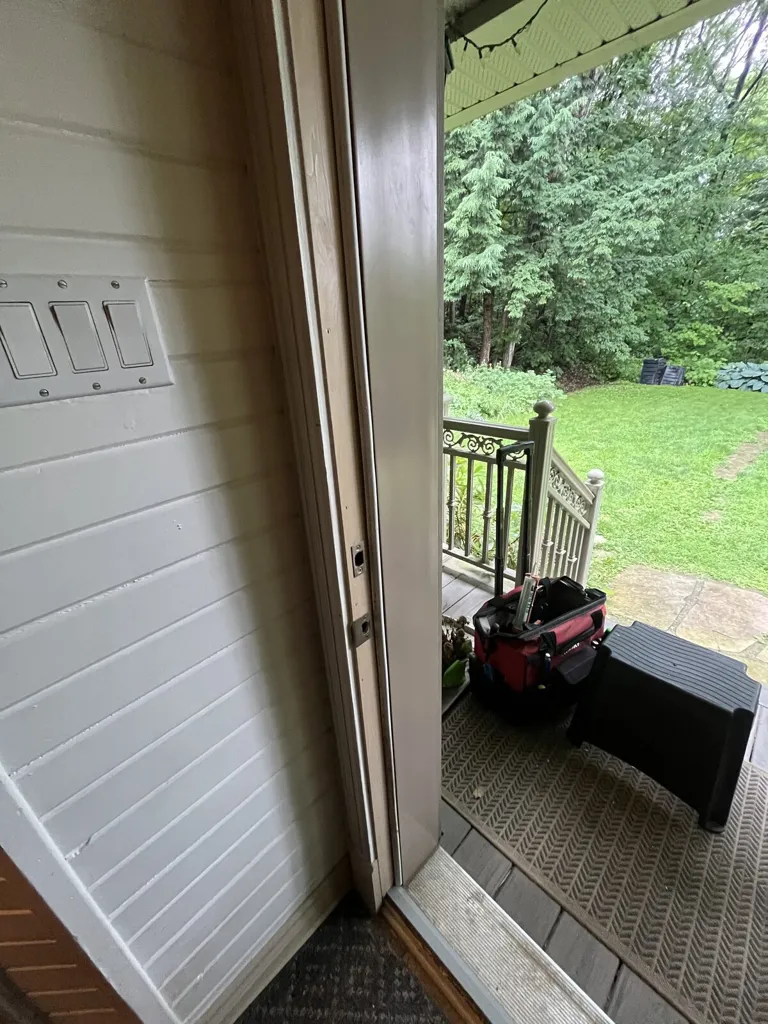
Same-day sagging door repair across Ottawa — correct diagnosis first, then a fix that lasts. Flat-rate pricing confirmed before we start.