A door that slams hard enough to rattle the frame, drifts shut without ever latching, or weeps oil down its arm is telling you its closer has failed. The closer is the small hydraulic device that controls how every commercial and many residential doors shut — and when it stops working, the door becomes loud, unsafe, or insecure. We adjust, repair, and replace door closers of every type across Ottawa and the Ottawa Valley.

Surface and concealed closers adjusted, repaired, or replaced so doors self-close reliably.
The door closer is one of the most overlooked pieces of hardware in any building, right up until it stops doing its job — and then everyone notices. It is the device that takes a door someone has pushed open and brings it back to closed under control: not too fast, not too slow, firmly enough to latch, gently enough not to slam. On a commercial entrance it does this hundreds of times a day. On a fire door it is a life-safety component, the thing that guarantees the door is closed and latched when a fire starts. On an accessible door it is the difference between an opening force someone can manage and one they cannot. For something the size of a brick mounted above the door, it carries a remarkable amount of responsibility.
At Fix My Door Now Ottawa, door closers are core, everyday work. We service them on storefronts, office and stairwell doors, clinic and school entries, multi-unit building doors, and the heavier residential doors that need controlled closing. A closer problem is one of the most satisfying repairs to get right, because a well-adjusted closer is invisible — the door simply behaves — while a failed one announces itself with every slam and every door left standing open. We know how these devices work, how they fail, and when a closer can be brought back into adjustment versus when it has reached the end of its life and needs to be replaced.
Understanding the mechanism explains every symptom. A door closer is a sealed cylinder containing a spring and a body of hydraulic oil. Opening the door compresses the spring and pushes oil through internal passages; the spring then drives the door closed, while the oil — metered through small adjustable valves — controls how fast that happens. Those valves are the heart of the device. The sweep valve governs the speed through most of the door's travel; the latch valve governs the final few degrees, where the door needs a bit of extra speed to push the latch home; and many closers add a backcheck that cushions the door if it is thrown open hard, protecting the wall and the closer itself. The spring power, meanwhile, sets how much force it takes to open the door and how firmly it pulls shut. When any of these drift out of adjustment, or the oil leaks out, or the spring weakens, the door misbehaves in a way that points straight back to the cause.
Slamming. The most frequent complaint. Usually the latch-speed valve is open too far, or the closer is starting to lose oil and can no longer damp the final swing. We re-set the valves; if the closer is leaking, we replace it.
Won't close or won't latch. The door stops an inch short, or touches the frame but the latch never engages. This is too little closing force, too much sweep damping, a tired spring, or a door and frame that have shifted so the latch and strike no longer line up. We balance the force and speed and correct the alignment so the door latches every time.
Closing too slowly. A nuisance on a busy entrance and a problem on a door that needs to secure or seal — common in winter when cold thickens the hydraulic oil and slows an already marginal closer. We adjust the sweep speed, and where the closer can't hold a setting through Ottawa's temperature swings, we recommend a replacement rated for the conditions.
Leaking oil. A film of oil on the closer body or running down the arm means the seals have failed. This is terminal — a closer cannot be refilled or resealed reliably — and the only real fix is replacement.
Loose or bent arm. The arm that links the closer to the door or frame can work loose, strip its fasteners, or bend if the door is forced against it. We re-secure or replace the arm and re-set the geometry so the closer delivers its force correctly.
Door slamming, or standing open and won't close? Call 613-265-3667 for fast door closer service across Ottawa & the Valley — adjust, repair, or replace, same flat-rate pricing, or request a quote online.
Door closers come in three families, and we service all of them. The surface-mounted closer is by far the most common — the familiar box mounted on the door or the frame with a visible arm. It is the workhorse of commercial doors and the easiest to adjust and replace, available in regular-arm, parallel-arm, and top-jamb mountings to suit how the door is hung. Concealed closers hide the mechanism inside the top of the door or in an overhead transom for a clean look, common on architectural and higher-end commercial entries; they do the same job but require more disassembly to service. Floor closers, also called floor springs, sit in a cast box set into the floor beneath the door's pivot and carry the full weight of heavy glass and aluminum entrance doors — the kind found on Ottawa storefronts and lobbies. Floor closers are the most demanding to service because the door has to be supported and lifted off the spindle, but they are entirely repairable and replaceable, and we have the equipment to do it.
Adjusting a door closer is the most common service we perform on one, and it is far more nuanced than turning a screw until the door seems okay. A closer has independent adjustments — sweep speed, latch speed, backcheck, and on many units the spring power and a delayed-action setting — and they interact. Open the latch valve to stop the door dragging and you may make it slam; increase the spring power so the door latches reliably and you may make it too heavy to open comfortably. Getting all of them balanced for the specific door — its weight, its width, the traffic it sees, and the temperature range it lives in — so it opens easily, closes smoothly, and latches firmly without slamming is genuinely skilled work. It is also why a closer that was "adjusted" by someone guessing often comes right back to misbehaving. We set each valve deliberately and test the door through its full cycle until it behaves correctly cold and warm.
On a fire-rated door the closer is not a convenience — it is a code-required life-safety device, because a fire door only works if it is closed and latched when a fire occurs. That means the closer must reliably close the door from any open position and drive the latch fully home every single time, with no exceptions and no help. We service and replace closers on Ottawa fire doors, set them so the door is dependably self-closing and self-latching, and remove any improvised hold-open — a wedge, a hook, a kicked-down stop, or a non-compliant hold-open closer — that defeats the door's entire purpose. A fire door propped or held open is one of the most common and most serious deficiencies a building inspector finds, and the closer is central to fixing it. We can document the work for your fire safety records. For the full repair approach across hinges, latches, frames and door sealing, see fire-rated doors service.
The same spring power that makes a door latch reliably also determines how hard it is to open — and on an accessible door there are limits on how much force that can be. A closer cranked up to overcome a draft or a tight seal can leave a door too heavy for many people to open. We adjust the opening force, the sweep speed, and the delayed-action timing — which holds the door open a moment longer before it begins to close — so the door is easier to open and gives a person using a walker, a cane, or carrying bags enough time to pass through, all within what the closer can deliver. Where the door simply cannot be both self-closing and light enough to be accessible, the right solution is a powered operator, and we'll tell you so rather than leaving you with a compromised door — pedestrian operator service.
When a closer is leaking, worn out, undersized, or simply the wrong type for the door, we replace it — and matching the new closer to the door is what makes the replacement last. A closer is sized to the door's width and weight, and a unit too small will struggle and wear quickly while one too large makes the door needlessly heavy. We assess the door, choose the correct size and mounting style, install the closer and arm, and adjust it from scratch to the door and its conditions. For a door that has never had a closer and now needs one — a new fire separation, an entrance that keeps getting left open, a draft you want controlled — we supply and fit the right closer for the job.
Installation pairs with closer repair, commercial entries, and hardware. These pages go further:
Real door repairs, installations, and security work completed by our Ottawa and Ottawa Valley team.
Property managers and facility teams — get pricing and book a site visit that suits your hours.
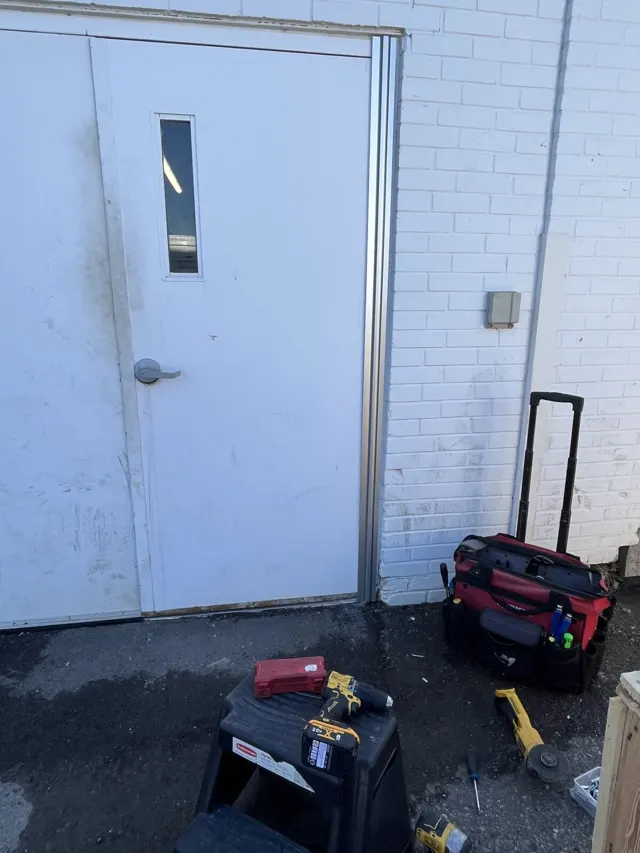
A heavy commercial steel door re-set so it closes under control and latches firmly on every cycle at an Ottawa property.

This heavy commercial door was slamming and then drifting shut without latching. We balanced the closer's sweep and latch speeds, corrected the closing force, and re-set the latch so it shuts under control and secures every time.
Storefronts, closers, exit devices and fire-rated doors serviced on your schedule, with proper documentation.
Same crew, same flat-rate pricing — related Ottawa door work.
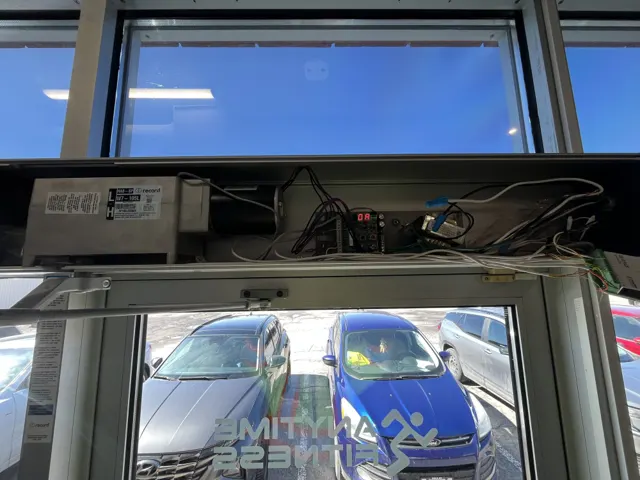
When a manual closer can't be both self-closing and accessible, a low-energy power…
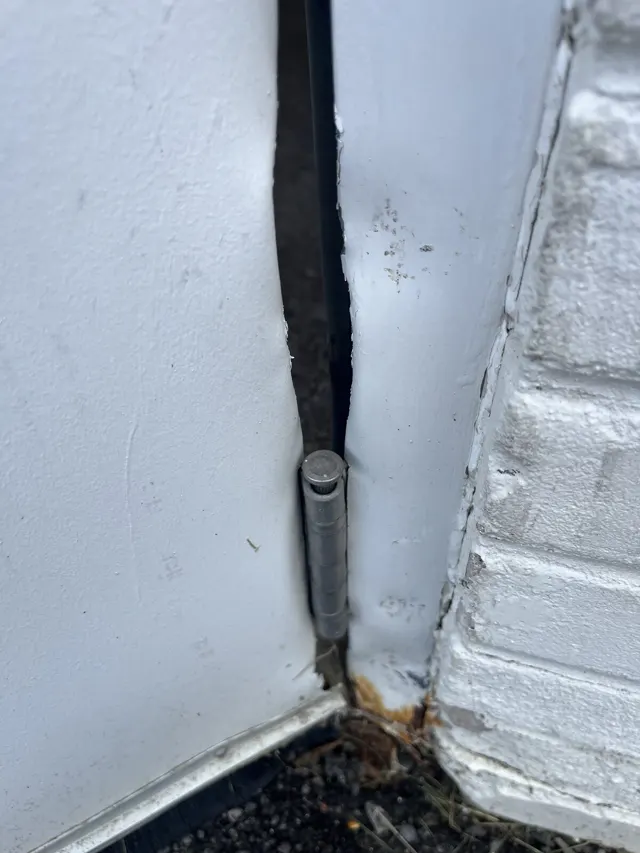
Sagging doors, grinding hinges, and broken handles — sourced and replaced with…
Storefronts, offices, fire doors, and industrial entries — scheduled and emergency…
What Ottawa businesses and property managers ask us most about door closers.
Call for door closer repair, adjustment, and installation across Ottawa & the Valley, or send us the details and we'll give you a fast, flat-rate quote — no pressure, no surprises.