

Google
★★★★★
Fast and professional service. Alex was very knowledgeable and helped us to pick a right door. The wait time and installation was fast.
A secured door that has failed unlocked is a security breach; one that has failed locked can trap people inside or lock staff out. The electrified hardware that controls who comes through your doors is where the door meets the building's security and life-safety systems — and it has to work every time. We install, repair, and integrate access control hardware across Ottawa and the Ottawa Valley.

Electric strikes, sequencers, and entry controls wired for life safety and free egress.
Access control is what turns an ordinary door into a controlled entry point — a door that opens for the people who are supposed to come through and stays secured against everyone else. In an Ottawa office, that might be a card reader on the main entrance and electrified locks on server and records rooms. In a clinic, it is the lock that keeps the public out of clinical areas while letting staff move freely. In a condominium or apartment building, it is the lobby buzzer system, the fob reader on the parkade door, and the maglock on the amenity room. Whatever the building, access control sits at the intersection of three things — the door hardware, the electrical and control system, and the building's life-safety requirements — and problems usually live at the seams between them.
At Fix My Door Now Ottawa, we focus on the door side of access control: the electrified locking hardware and the door-mounted devices that make a controlled entry work, along with the wiring, power, and integration that tie them together. Electric strikes, magnetic locks, electrified mortise and exit hardware, readers, keypads, request-to-exit sensors, door position switches, power supplies, and buzzer-release systems are all things we install, diagnose, and repair. Just as importantly, We know how these components have to behave on a fire alarm and during a power loss — because an access control installation that ignores egress and life safety is not just a nuisance, it is a code violation and a danger.
The electric strike is the most common piece of access control hardware we service. It replaces the fixed strike plate in the frame with a hinged keeper that can be released electrically, letting an authorized person push or pull the door open without the lock being retracted by hand. When a reader, keypad, or buzzer grants access, the strike buzzes and releases, the door opens, and the lock re-secures when the door closes. Strikes are reliable, but they fail in predictable ways: the keeper binds and won't release, the latch and strike fall out of alignment as the door or frame shifts so the latch no longer seats cleanly, or the strike doesn't receive the correct voltage and either won't release or buzzes without releasing. We align the latch to the strike, correct the voltage and wiring, and replace strikes that have worn or burned out. Strikes come in fail-safe and fail-secure versions, and we confirm the right one is fitted for the door's role.
A magnetic lock — a maglock — holds a door shut with a powerful electromagnet mounted on the frame and a steel armature plate on the door. As long as the magnet is powered, the door is held firmly closed; cut the power and it releases instantly. That makes a maglock inherently fail-safe, which is exactly why its life-safety wiring matters so much. A maglock on an egress door must release on a fire alarm signal and on any loss of power, and it must allow free exit — which means it has to be paired with the right request-to-exit and emergency-release devices so that people can always get out. We install and repair maglocks and the devices around them, and we pay close attention to mounting (a maglock that is poorly shimmed loses holding force and develops a gap that lets the door rattle) and to the release logic that keeps the door legal. A maglock that does not drop on the fire alarm is one of the most serious faults we encounter, and we flag and correct it.
Beyond strikes and maglocks, the lock or exit device itself can be electrified. Electrified mortise locks and electrified panic/exit devices keep the door's normal mechanical operation while adding electrical control over the latch or the outside lever — so the door can be remotely locked or unlocked, monitored, and tied into the access system without giving up its certified hardware. These are common on Ottawa commercial doors that need both code-compliant egress hardware and access control on the same leaf. We install and repair electrified mortise locks, electric latch retraction on exit devices, and the power transfer hinges or door loops that carry power across the gap from the frame to a moving door — a frequent failure point, since the conductor flexes every time the door opens.
Secured door failed locked or failed unlocked? Call 613-265-3667 for fast access control service across Ottawa & the Valley — we'll restore safe egress and secure the opening, or request a quote online.
On the entry side, access is granted by a credential: a proximity card or fob held to a reader, a code entered on a keypad, or increasingly a phone presented to a mobile-credential reader. When a reader stops working, the reader itself is often not the culprit — the fault is more commonly in the cabling back to the controller, a sagging power supply, or the controller relay that drives the lock. We test the whole chain from the credential to the lock: the reader and its wiring, the controller power and outputs, and the strike or maglock at the far end. We install and replace readers and keypads, and we repair the wiring and connections that intermittent-fault readers so often hide. Where a code or fob is no longer trusted, we can re-secure the door so an old credential no longer opens it.
A controlled door needs more than a lock and a reader to work safely and reliably. A request-to-exit device — a motion sensor over the door or a sensor built into the exit hardware — releases the lock and signals the system when someone is leaving from the secure side, so they are never trapped and the system does not log a forced-door alarm for a normal exit. A door position switch tells the system whether the door is actually closed, so a propped or ajar secure door can raise an alert. And the whole installation runs on a power supply — usually with a battery backup — that has to deliver clean, adequate, correctly-rated power to every locking device. Undersized or failing power supplies are behind a surprising share of intermittent access control faults: a strike that releases fine on a quiet morning but not when several doors draw at once is almost always a power problem. We install, test, and repair REX devices, door contacts, and power supplies, and we size power correctly for the load.
Many Ottawa offices, clinics, and multi-unit residential buildings use buzzer or intercom entry: a visitor presses a call button, a person inside answers and confirms who it is, and a release button drops the lock to let them in. We install and repair the door-release side of these systems — the electric strike or maglock at the door, the release wiring back to the desk or suite, and the door hardware and closer that make sure the door re-secures every time. For multi-unit buildings, a reliable lobby release is a security baseline, and we keep it working.
This is the part of access control that is most often done wrong, and it is the part that matters most. Any electrically locked door on an egress path has to release and permit free exit under the conditions the Ontario Building Code and fire code require — most importantly on fire alarm activation and on loss of power. Fail-safe locking has to fail open on egress doors; fail-secure hardware must never be used where it would block exit. We wire electric locking to drop on the fire alarm, provide the request-to-exit and emergency-release hardware that code requires, and make sure egress is never dependent on a credential or a working network. When we are called to an existing installation that violates this — a maglock with no fire-alarm release, an egress door that can only be opened with a fob — we flag it clearly and correct it, because a secured door that cannot be exited in an emergency is the most dangerous thing in the building.
Access control works hand in hand with automatic entrances, accessible operators, and the mechanical door it controls. These pages go further:
Recent customer experiences with Fix My Door Now Ottawa.
Fast and professional service. Alex was very knowledgeable and helped us to pick a right door. The wait time and installation was fast.
Alex was awesome! Informed his arrival, did a great job fixing our bathroom door privacy lock and as an added bonus he aligned our front entrance locking mechanism to allow the Nest lock to close more smoothly. Highly recommend "Fix My Door Now Ottawa"!
We rented an Airbnb in Gatineau over the weekend and the smart lock stopped working. We couldn't access the house. The host called this company and Alex arrived within 20 minutes. He saved our vacation. Thank you Alex!!!
Real door repairs, installations, and security work completed by our Ottawa and Ottawa Valley team.
Property managers and facility teams — get pricing and book a site visit that suits your hours.
Electric strike hardware installed and aligned so a controlled Ottawa door releases and re-secures cleanly.

The strike was installed and tested so reader, keypad or buzzer release can unlock the door cleanly while the closer re-secures it after entry.
Fast commercial response with flat-rate quotes — book a site visit that fits your operating hours.
Same crew, same flat-rate pricing — related Ottawa door work.
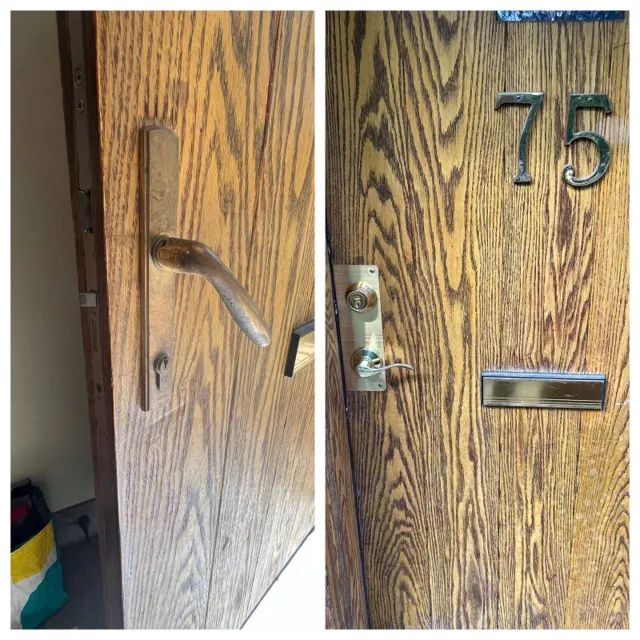
Deadbolts, mortise locks, knob sets, and smart locks — repaired, rekeyed, or upgraded…
Automatic sliding and swing entrances — operators, sensors, and safety devices repaired…
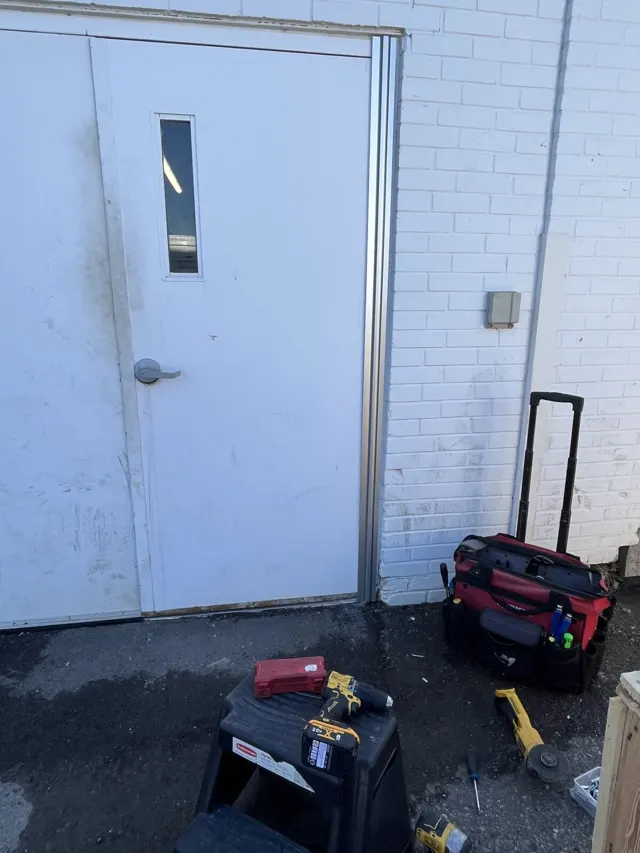
Storefronts, offices, fire doors, and industrial entries — scheduled and emergency…
What Ottawa businesses and property managers ask us most about access control hardware.
Call for access control repair and installation across Ottawa & the Valley, or send us the details and we'll give you a fast, flat-rate quote — no pressure, no surprises.