A push-plate that no longer opens the door, an operator that slams or stalls, an accessible entrance that has quietly stopped working — these strand the very people the door was installed to help. We repair and install low-energy pedestrian door operators across Ottawa and the Ottawa Valley, keeping barrier-free entrances opening gently, holding long enough, and closing safely for everyone who uses them.

Accessibility paddle operators and swing-door openers repaired or newly installed.
A pedestrian door operator is the quiet, low-energy cousin of the high-speed automatic entrance. Instead of a fast-moving sliding or full-energy system, it is a compact powered unit mounted on the header of an ordinary swing door. Press the round push plate on the wall — or wave at a touchless sensor — and the operator drives the door open slowly and gently, holds it for a set time, and then eases it closed under control. Because it opens slowly and with limited force, a low-energy operator can be used safely on an everyday door without the guide rails and presence sensors a full-speed automatic door requires. That combination of simplicity and safety is exactly why it has become the standard way to make an existing Ottawa entrance, washroom, or interior door barrier-free.
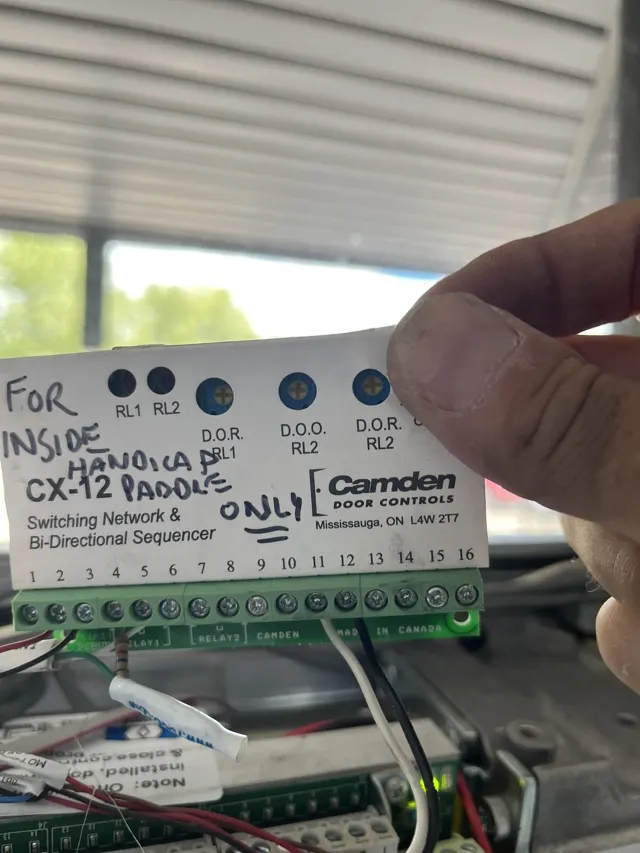
 Clean low-voltage pulls keep paddles and sequencers reliable.
At Fix My Door Now Ottawa, we install, repair, and maintain pedestrian door operators throughout Ottawa and the Valley — for office buildings, medical and dental clinics, schools, places of worship, community centres, retail spaces, and the lobby and amenity doors of multi-unit residential buildings. We know that an accessible operator is not a convenience feature; for many people it is the difference between entering a building independently and being unable to get through the door at all. When one fails, it is not a problem that can wait for a slow service window, and we treat it accordingly.
Understanding the parts helps explain how they fail. A low-energy pedestrian operator has four working pieces. The operator unit in the header contains the motor, gear train, and a spring that both assists opening and provides the closing force. The arm — either a pushing arm or a pull-side track arm — transfers that motion to the door leaf. The control box holds the circuit board that interprets the activation signal and governs the opening speed, hold-open time, and closing speed. And the activation devices — the push plates or wave switches mounted on the walls inside and out — tell the system when to open. A fault in any one of these stops the door from cycling, and the symptom often points to which part is at fault.
The most common service call we get on pedestrian operators is a dead activation: someone presses the push plate and nothing happens. The actuator is the part of the system most exposed to daily abuse — it gets struck, leaned on, hit by carts and wheelchairs, and weathered by the elements on exterior installations — so it is also the part most likely to wear out. We diagnose the whole activation chain: the switch inside the plate, the wiring or the wireless transmitter and its battery, the receiver, and the input on the operator's control board. Hardwired plates fail at the switch or in a broken conductor; wireless plates fail at a dead battery or a lost radio pairing. We repair the wiring, replace failed actuators, re-pair wireless transmitters, and confirm the door responds reliably from both the interior and exterior buttons. We also upgrade tired push-button systems to touchless wave-to-open switches, which many Ottawa clinics and public buildings now prefer because they let people open the door without touching a shared surface.
When the activation works but the door behaves badly, the fault is in the operator unit or the arm. A pedestrian operator that has lost its opening assist labours to swing the door and may stall before it is fully open; one with a worn gear train grinds or chatters as it runs; one whose spring has weakened no longer pulls the door closed and latched. The arm can loosen at its connection to the door, bend if the door has been forced against the operator, or come out of adjustment so the door binds at the start or end of its travel. We open the operator, inspect the motor, gearing, and spring, rebuild or replace the worn internals, and re-set the arm so the door swings true through its whole arc. Where an operator is simply worn out beyond economical repair, we recommend and install a replacement unit matched to the door's weight and the traffic it sees.
Accessible door operator down? Call 613-265-3667 for fast pedestrian operator service across Ottawa & the Valley — we'll get your barrier-free entrance back in operation, or request a quote online.
The single most important thing about a low-energy operator is how it is adjusted, because the adjustment is what keeps it safe. The operator has separate settings for opening speed, the time the door stays held open, and closing speed and force — and each has to fall within the limits of the low-energy door standard, ANSI/BHMA A156.19. Open too fast or close too hard and the door becomes a hazard to the very people it is meant to help; hold open too briefly and someone using a walker is caught by a closing door before they have cleared the opening. Over months of cycling these settings drift, and a door that was set perfectly when installed slowly becomes either sluggish or aggressive. We measure and re-set the opening time, hold-open delay, and closing speed and force to safe, comfortable values, and we verify the result by cycling the door repeatedly and confirming a person moving slowly through it is never rushed or struck.
When you are adding an accessible entrance — whether to meet an accessibility requirement, respond to a customer or tenant need, or simply make your Ottawa building easier to enter — we supply and install complete low-energy operator systems. In most cases we can retrofit an operator onto your existing swing door, provided the door, hinges, and frame are sound enough to carry it; this is far less disruptive and less costly than replacing the whole entrance. We confirm the door's weight and swing, choose a push-arm or pull-arm operator to suit the geometry, mount the unit and arm, install the interior and exterior actuators at accessible heights, run the wiring, and commission the system to the low-energy standard. Where two doors form a vestibule, we can sequence the operators so the inner and outer doors open in the right order. We finish by walking your staff through the daily operation and the quick visual check worth doing each morning.
Some of the most valued operator installations are the small ones. An accessible washroom with a heavy self-closing door is unusable for many people without a power operator and a clearly placed push plate — and it is one of the most common places an operator is required. Interior doors between a lobby and an elevator, the door into a community room, or the inner door of a two-stage vestibule all become genuinely barrier-free only when powered. We pay particular attention to actuator placement on these jobs: a push plate mounted too high, too close to the door swing, or behind a piece of furniture defeats the whole purpose, so we site the buttons where someone seated can reach them and clear of the door's path. Building-wide accessibility door opener repair for AODA-compliant entrances is part of accessibility operators work city-wide.
Because accessible operators run constantly and people depend on them, they reward a little routine attention. Actuators loosen, hold-open timers drift, and closing force creeps up as the spring ages — none of which is obvious until the door is uncomfortable or unsafe. We provide scheduled maintenance for Ottawa property managers, schools, clinics, and multi-unit buildings, checking the actuators, re-confirming the speed and force settings against the low-energy standard, tightening the arm and mounting hardware, and documenting the work for your accessibility and maintenance records. A planned check costs far less than an out-of-service accessible entrance and the complaints that follow it.
Pedestrian operators sit alongside automatic entrances, entry control, and reliable door closing. These pages go further:
Real door repairs, installations, and security work completed by our Ottawa and Ottawa Valley team.
Send a couple of details and we'll reply with a flat-rate price — no obligation, no pressure.
A low-energy operator wired and commissioned so an Ottawa swing door opens smoothly from accessible activation.

The operator and control wiring were set up so the swing door opens from accessible activation, holds long enough for users and closes under control.
Tell us what the door's doing and we'll lock in a flat-rate price — most jobs done the same day.
Same crew, same flat-rate pricing — related Ottawa door work.
High-traffic automatic sliding and swing entrances — operators, sensors, and safety…
Electric strikes, maglocks, card readers, and entry systems that tie into your powered…
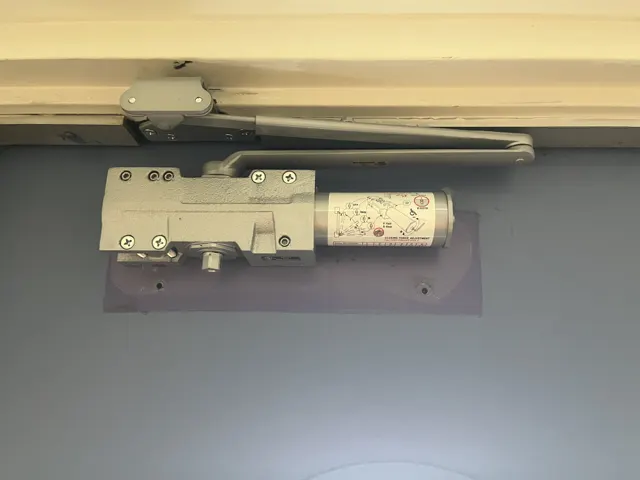
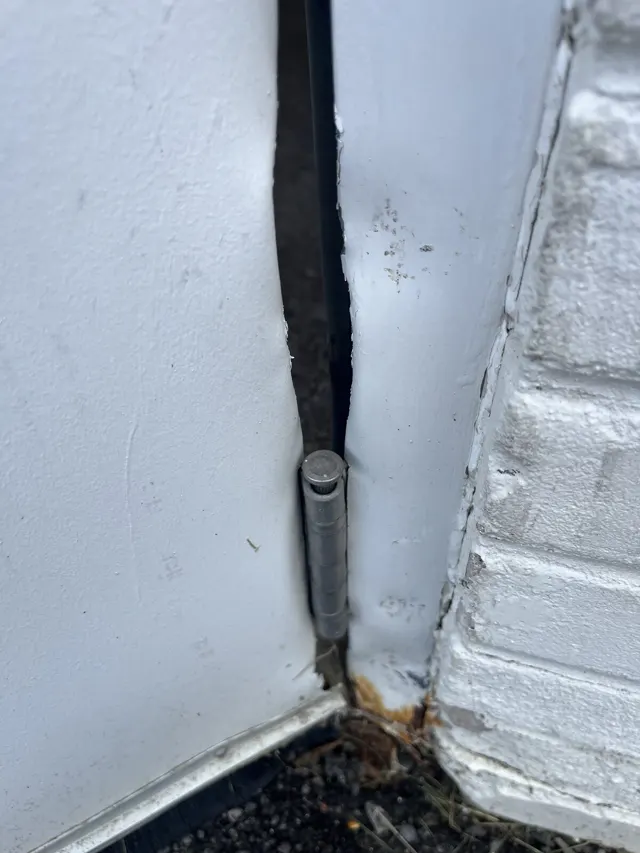
Surface, concealed, and floor closers adjusted, repaired, and replaced for controlled…
Push-button and low-energy swing operator install and service across the Ottawa region — calibrated to AODA opening-force limits.
What Ottawa facility managers and building owners ask us most about accessible door operators.
Call for pedestrian operator repair and installation across Ottawa & the Valley, or send us the details and we'll give you a fast, flat-rate quote — no pressure, no surprises.