
The weatherstripping on this Ottawa front door had worn out. Along the latch side of the frame it was cracked, broken into short pieces and missing in places, so the door no longer sealed where it closes. The door, the frame and the strikes were fine. We took the door off, pulled out the old seal, installed new weatherstripping that runs continuously around the opening, and adjusted the door so it closes tight against the new seal.
What we found
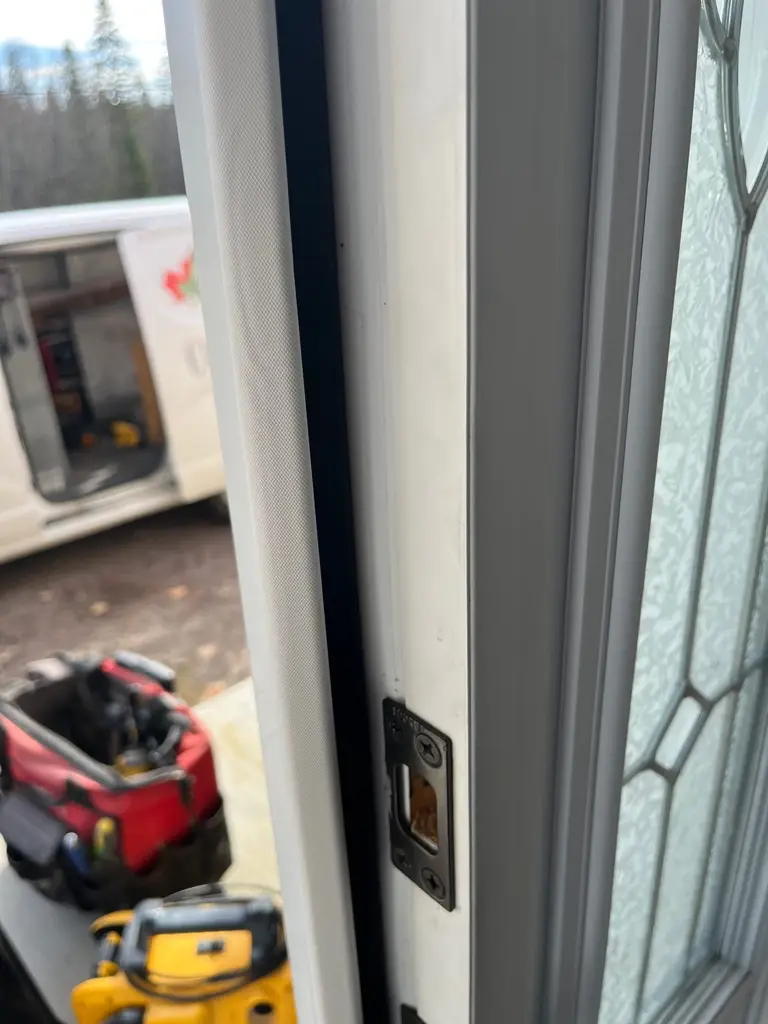
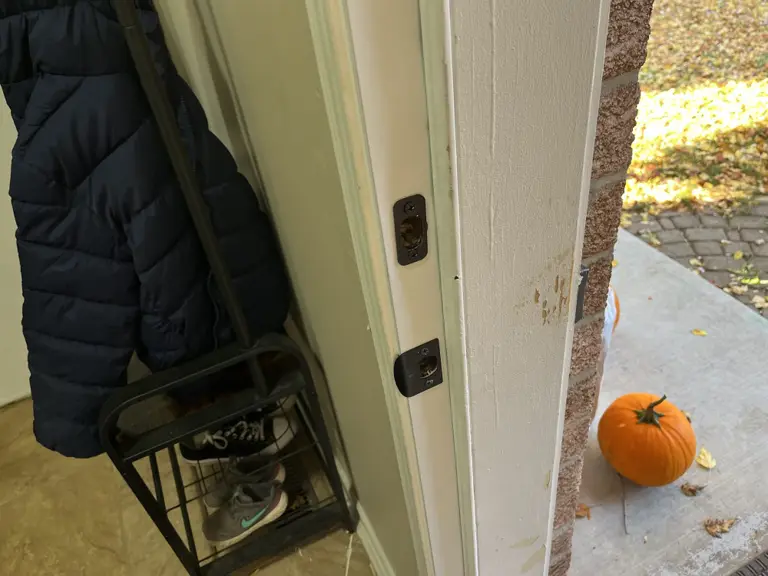
The door is a front entry door with a decorative glass sidelite, set in a brick wall. The latch side of the frame has three strikes: one for the deadbolt, one for the latch and a third lower down. The old white weatherstripping had been cut into short sections to fit between them, and those sections had cracked, pulled away and, in places, broken off.
Gaps like that are exactly where cold air comes in. With the seal broken right next to the strikes, air could get past the door at the lock, which is often where people feel the draft and see frost in winter.

Taking the door off
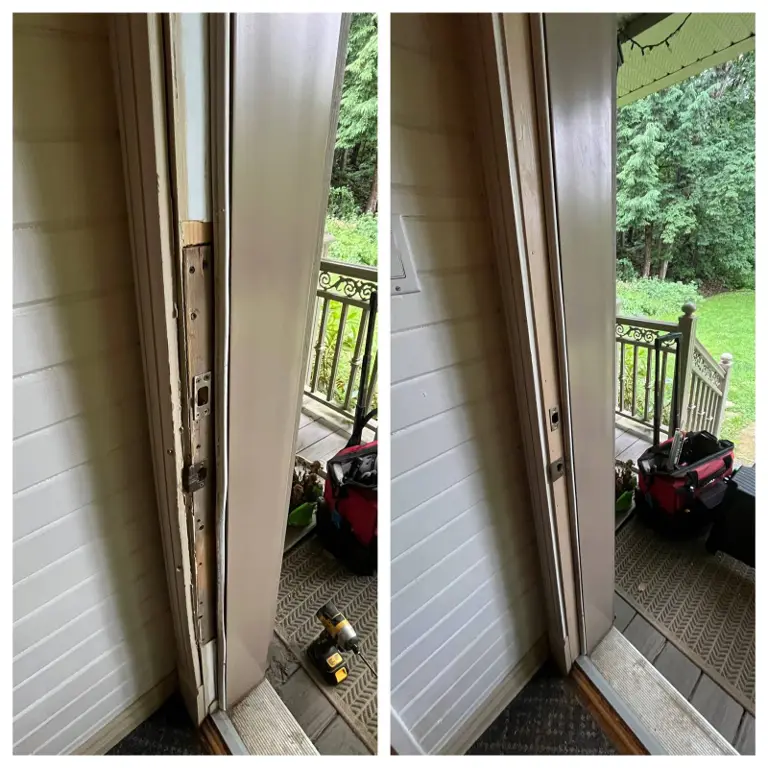
We took the door off its hinges to get full access to the frame. With the door out of the way, the old weatherstripping was pulled out along the hinge side, the head and the latch side. The old seal came out in long, brittle pieces, which is typical of weatherstripping that has hardened with age.


The new seal
The new weatherstripping is a dark compression seal pressed into the kerf in the frame. On the latch side it runs as one continuous piece past the deadbolt, latch and lower strikes, instead of short sections cut between them, so there is no gap at the lock. The strikes stayed where they were.
Adjusting the door
New weatherstripping only stops drafts if the door closes evenly against it. With the door back on its hinges, we adjusted it so it presses against the new seal along its full height when it is closed and latched, without making the door hard to latch or lock. That even contact is what keeps the cold air out.
Signs your door seal needs replacing
- Drafts you can feel at the edge of the closed door.
- Daylight showing around the door from inside.
- Frost or ice on the inside of the frame or the lock in winter.
- Weatherstripping that is cracked, flattened, torn or missing in sections.
If the door also rubs, sags or does not latch, the seal alone may not fix the draft; see front door repair and threshold and sill repair. For more on seals, see weatherstripping in Ottawa.
Drafty front door?
Send us a photo of the frame with the door open. We will tell you whether the weatherstripping, the sweep or the door alignment is the problem, and give you a flat-rate quote before any work starts.