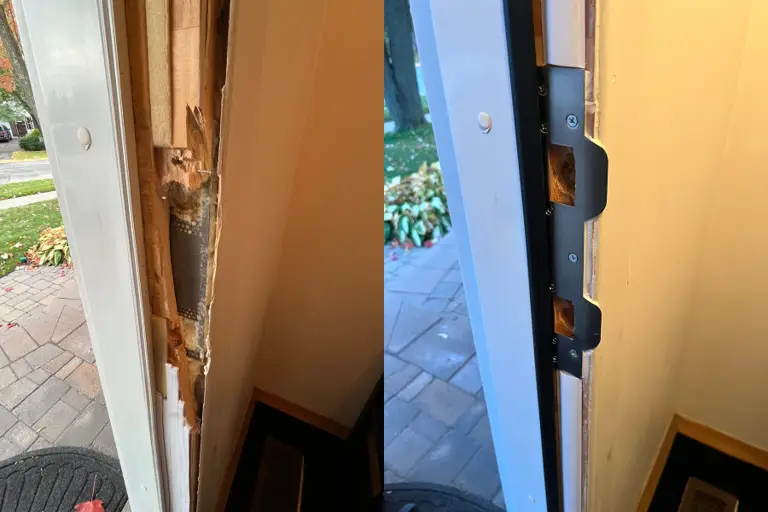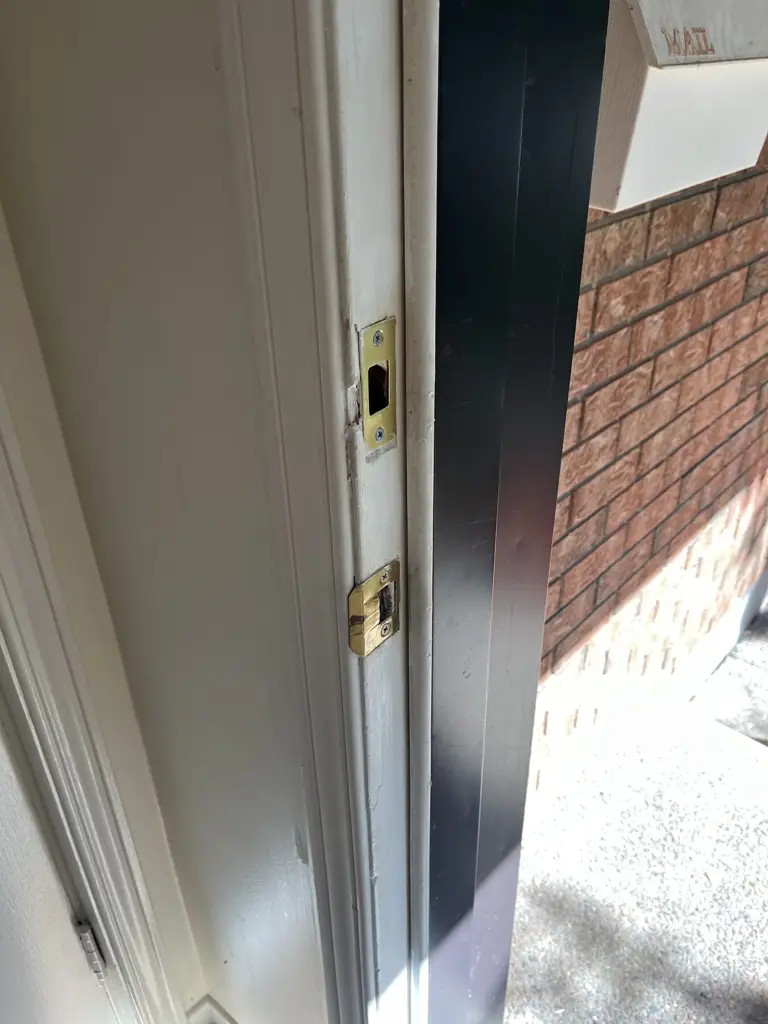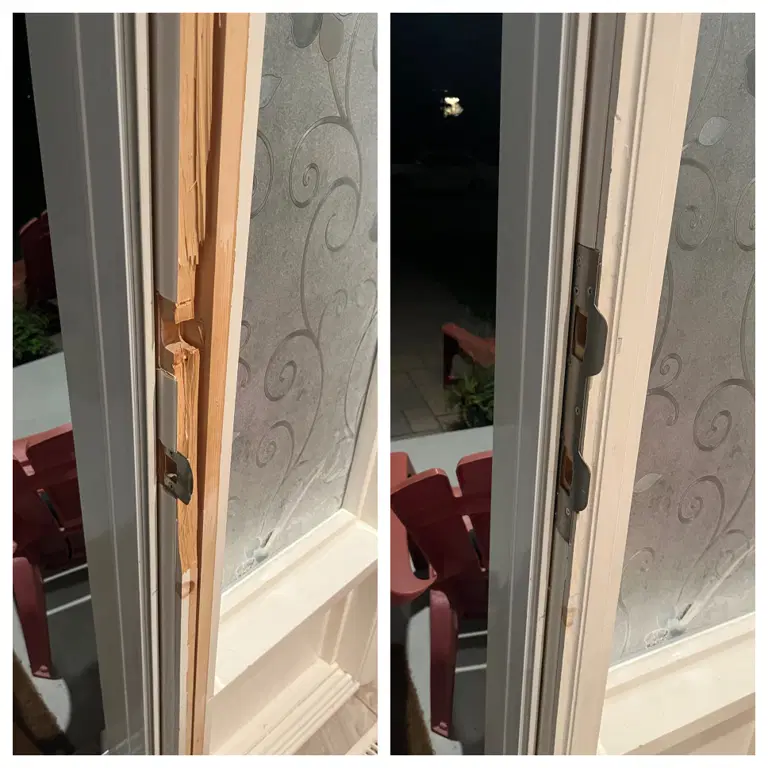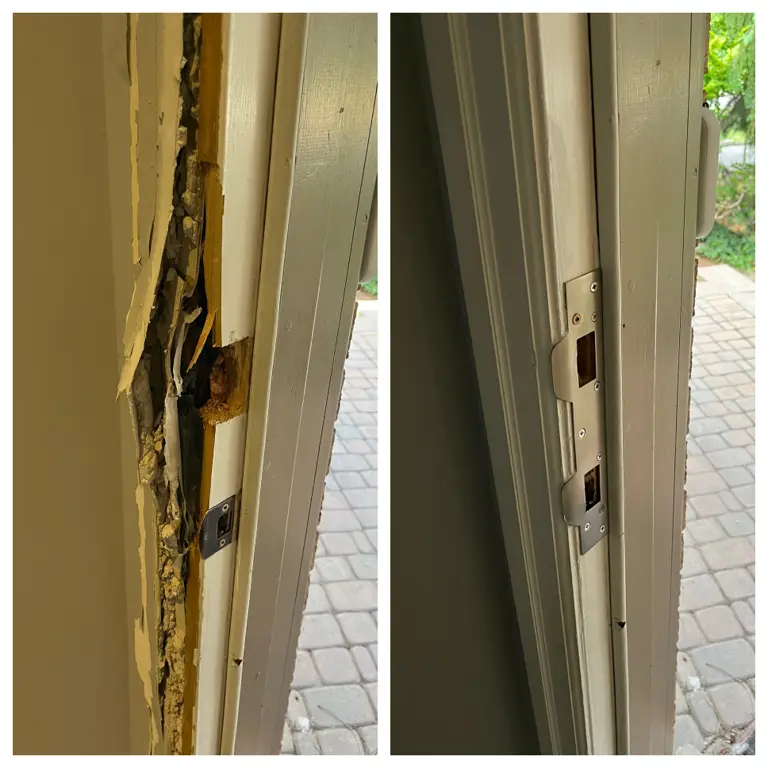

This front door in Orléans was forced during a break-in. The door itself and the lock survived, but the frame did not: the latch-side jamb split and the deadbolt strike was torn out of the wood. We repaired the jamb, rebuilt the strike areas and fitted new deadbolt and latch strikes, so the door closes, latches and locks properly again.
What the break-in did to the door frame
When a door is kicked or pried, the weakest point is usually not the lock but the wood around it. Here, the force went into the latch side of the frame. The jamb split along its length above and below the deadbolt, the deadbolt strike was ripped out and the mortise behind it was broken open, and the latch strike was bent and pulled partly out of the jamb. The old strike plate ended up on the floor.
The frame also showed signs of earlier work: filled holes, extra screw heads and patched paint along the jamb. Damage like this gets worse each time the door is slammed or forced again, and a door that only holds with a few screws in a split jamb is not secure.

Why the frame fails before the lock
Most residential deadbolts are strong. What holds them is a strike plate fastened with short screws into a thin wood jamb. When the door is forced, those screws pull through, the wood splits along the grain and the bolt simply comes out of the frame. That is why break-in repairs are mostly frame repairs: replacing the lock alone would leave the same weak spot.
How we repaired it
The damaged jamb was repaired so the latch side is solid along its length again, and the torn-out areas around both strikes were rebuilt so the new hardware has sound wood to fasten into. New deadbolt and latch strikes were fitted and lined up with the bolt and latch, so the door closes, latches and locks without being forced. The repaired jamb was finished and painted to match the rest of the frame.
The deadbolt now throws fully into its strike and the latch catches cleanly, which is what keeps the door secure day to day. When you want a frame that resists being forced better than it did before the break-in, we can also fit heavier strike reinforcement anchored into the framing; see our security strike installation project.
Repair the jamb or replace the frame?
Not every forced door needs a new frame. The questions we ask are simple: is the damage limited to the latch side around the strikes, is the hinge side still tight, and is the wood sound rather than soft or rotted at the bottom? When the answers are yes, as they were here, repairing the jamb and rebuilding the strike areas restores the frame and keeps the existing door, trim and brick untouched.
When the jamb is broken through in several places, the hinge side has pulled away, the brickmould outside is split, or the door itself is bent, replacing the frame (and sometimes the door) is the better repair. We look at the whole opening before quoting and tell you which one your door needs; see door frame repair in Orléans.
If your door has been forced
- Check whether it still locks. If the deadbolt will not throw into the frame, the door is not secure, even if it closes.
- Do not keep screwing the strike back in. Screws in split wood hold for a while and then pull out again.
- Take photos for insurance before anything is repaired: the jamb, the strikes, the lock and any damage to the door.
- Call for an emergency repair if the door cannot be locked. Same-day emergency repair is available; call to confirm the earliest appointment. If it cannot be secured right away, we can board up the opening.
For more on what we do after a forced entry in the east end, see break-in door repair in Orléans and emergency door repair in Orléans. If the lock itself was damaged, see lock repair.
Door forced or won’t lock in Orléans?
Call us or send a few photos of the frame, the strikes and the lock. We will tell you what the repair involves and confirm a flat-rate quote before any work starts.