An electric strike lets a controlled door release from a reader, keypad, buzzer or operator while keeping the lock hardware familiar. This Ottawa project shows the strike area up close, where careful cutting, alignment and testing matter most.
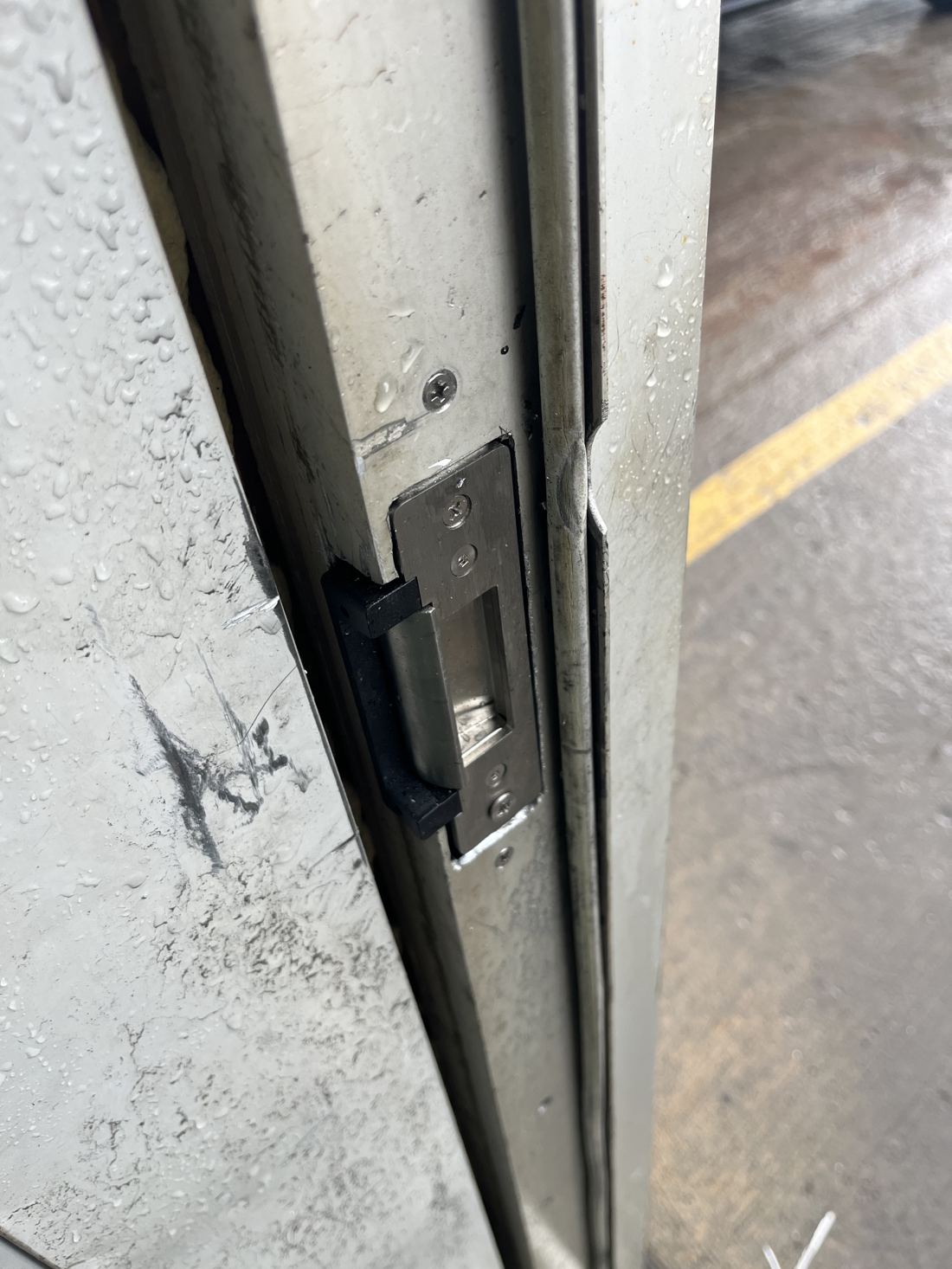
An electric strike is one of the most useful access control devices because it can add controlled release to many existing doors without replacing the entire lockset. Instead of retracting the latch, the strike keeper releases when power is applied or removed, allowing the door to open after a valid card read, keypad code, buzzer signal or automatic operator command. The concept is simple. The installation is not. The strike must be cut into the frame accurately, wired correctly and aligned with the latch so it releases without binding and re-secures every time the door closes.
The close-up photo shows the area where the work happens. On a commercial door, there is very little tolerance for a rough opening or sloppy cut. The latch has to enter the keeper cleanly. The keeper has to swing freely. The faceplate has to sit flush enough that the door does not scrape. The strike body has to be secured to material strong enough to resist repeated impact. If any of those details are missed, the door may buzz but not open, stay unlocked, rattle in the frame, or fail to latch after a few weeks of use.
Before installing an electric strike, we inspect the door's mechanical operation. A strike cannot compensate for a sagging hinge, twisted frame, worn latch or weak closer. The door must close to the same position every time or the strike will never be reliable. We adjust the door first, then mark and prep the frame. On hollow metal frames, that may mean precise cutting and reinforcement. On aluminum storefronts, the strike selection and faceplate style have to match the stile and latch geometry. On wood frames, reinforcement may be needed so the strike is not just held by weak material.
This project belongs with our access control installation Ottawa service. Electric strikes often integrate with card readers, fob readers, keypads, intercoms, buzzer releases, pedestrian operators and automatic doors. They can be fail-secure or fail-safe depending on the door's role. The wrong mode can create either a security problem or an egress problem, so we confirm how the door is used before choosing the device.
Wiring and power are just as important as the cut. A strike must receive the correct voltage and current, and the power supply must be sized for the full system. Long wire runs, undersized transformers and overloaded power supplies can make a strike buzz weakly without releasing. We test voltage under load rather than assuming the label on the power supply tells the whole story. If the strike is controlled by a reader, intercom or operator, we test the signal path from that device all the way to the keeper.
After installation, we run the door through real cycles: closed and locked, release signal, door opens, closer returns the door, latch seats, strike holds. We test from both sides and check that egress remains safe. If the strike is on a fire-rated or egress door, hardware compatibility and release requirements matter, and we flag anything that needs correction before the system is relied on.
A properly installed electric strike should feel uneventful. The authorized user hears the release, opens the door without pulling hard, and the door locks again when it closes. That reliability comes from accurate prep, correct hardware selection, clean wiring and full-cycle testing.
Electric strikes are especially useful in Ottawa offices, clinics, storefronts and multi-unit entries where staff need to release the door remotely without handing out keys. They also suit many pedestrian operator installations because the operator can open the door only after the strike has released. Timing matters in those combined systems. If the operator pushes before the strike releases, hardware wears quickly and users experience a door that appears stuck. We sequence and test the release so the door unlocks first, moves second and secures again when closed.
Call for electric strike installation, replacement and troubleshooting across Ottawa and the Valley.
Common questions about this project and the service behind it.