A door closer that is slamming, not closing, or fighting you every time you open the door is failing at its one job. We repair and replace door closers across Ottawa — commercial aluminum storefront closers, fire door closers, heavy-duty parallel arm closers on commercial entries, and concealed overhead units — the same day you call.
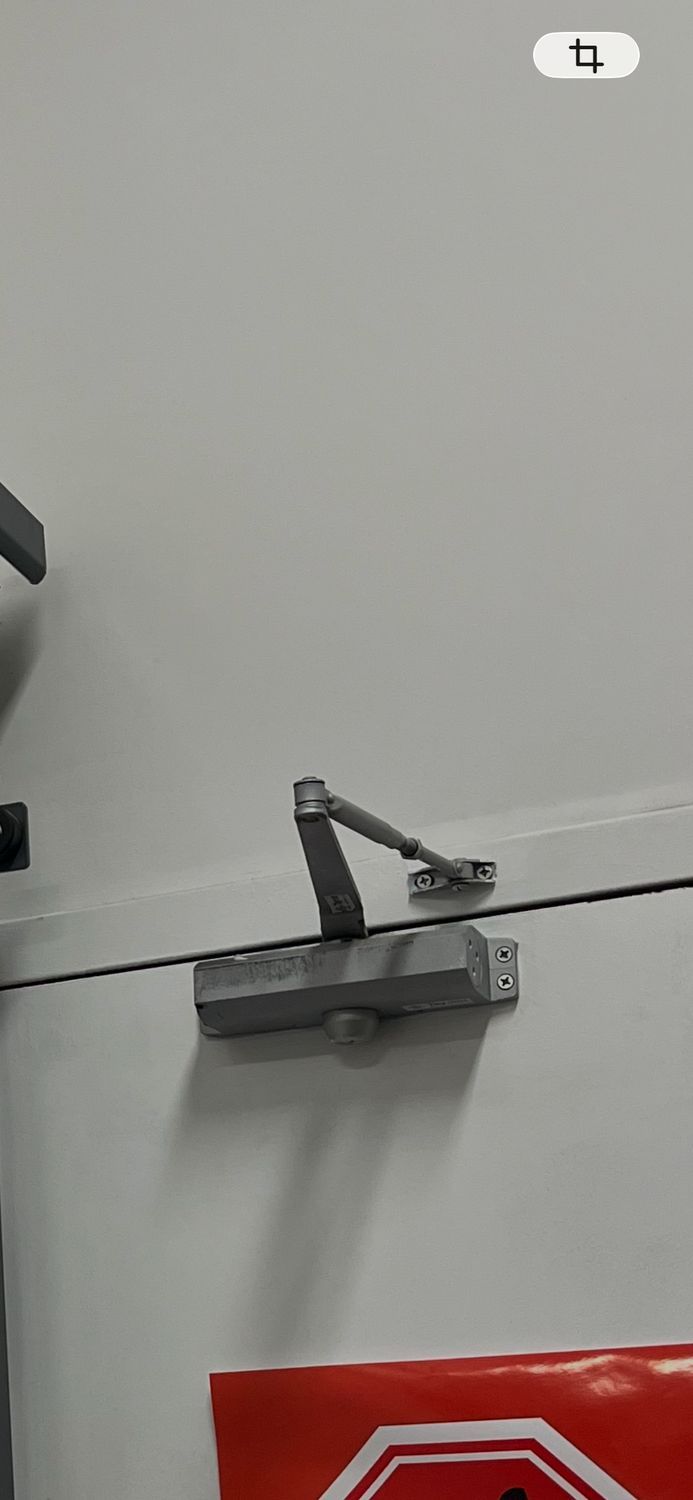
A correctly set closer controls the sweep, latch and backcheck across Ottawa's full seasonal temperature range. Tap to see closer installation work.
Door closers are the most consistently underserviced hardware component on Ottawa commercial and multi-unit residential doors. They work invisibly when they work correctly — so invisible that most building managers and business owners don’t think about them until a door is slamming loudly enough to drive customers away or failing to close in a way that triggers a fire inspection deficiency notice.
Ottawa’s climate makes closer maintenance more critical than in milder cities. The hydraulic fluid inside a closer changes viscosity significantly across Ottawa’s temperature range — thinner in summer heat, thicker in winter cold. A closer calibrated correctly in October will be over-damping in a July heat wave, allowing the door to swing open but struggling to pull it closed. A closer set for summer conditions may slam in winter when the fluid thickens and the spring force isn’t balanced against the damping resistance. Both ends of the seasonal range need to be accounted for in correct closer setting.
Slamming or won't-close door at your Ottawa business? Call 613-265-3667 for same-day service — or request a free quote online.
Slamming is the most obvious failure mode — the closer has lost hydraulic control through fluid leakage, and the spring force is now unmoderated. A slamming door damages its frame, its hardware, and the closer arm itself with every cycle. It’s also a liability on a commercial entry where customers or staff can be struck by a door they didn’t expect to close that fast.
Not closing fully is the most commercially significant failure. A door that swings to within a few centimetres of closed and stops is leaving the premises unsecured and losing heat on every cycle. This is typically caused by the latch speed valve drifting closed, by hydraulic fluid that has thickened in Ottawa’s cold, or by a closer that has lost spring tension.
Resistance to opening — a door that fights you when you try to open it — has a backcheck valve that has drifted closed or a spring tension that was set too high for the door’s weight. On a commercial entry this creates accessibility issues and customer experience problems. On a fire door it can create an egress hazard.
Seized or frozen — a closer that doesn’t move at all has either seized mechanically or had its hydraulic fluid freeze in an unheated space. Ottawa’s extreme winter cold can freeze closer hydraulic fluid in vestibules, stairwells, and other spaces that aren’t maintained at interior temperatures.
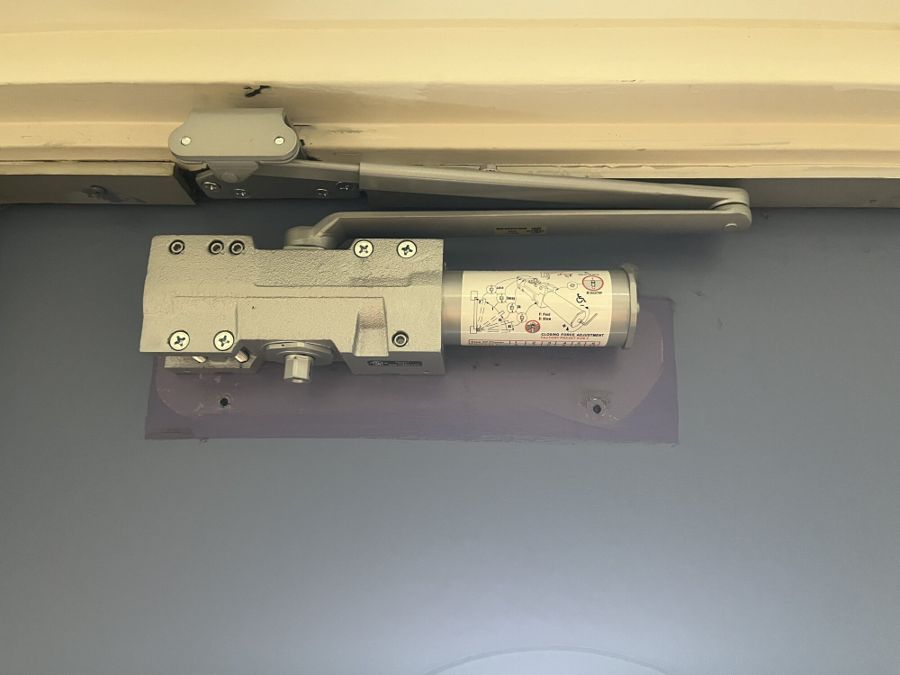 A failing closer rarely fails alone — we check the full hardware set. See commercial door hardware repair.
Not every closer problem requires replacement. A closer that is slamming or not closing because its valves have drifted out of adjustment can often be restored through recalibration — adjusting the sweep speed, latch speed, and backcheck valves to their correct positions for the door’s weight and the traffic pattern. We assess whether adjustment is viable before recommending replacement, and we’re straight with building managers when a closer has lost enough hydraulic fluid that adjustment will provide temporary improvement but the unit is at end of life.
When replacement is the right call, we size the new closer correctly for the door — a closer that is undersized for the door weight won’t hold up regardless of how well it’s adjusted — and we set all three valves correctly before leaving. For selecting closer types and new installs, see door closer installation and replacement in Ottawa, or review a completed closer installation project.
The buildings that feel a failed closer fastest are Ottawa’s busiest: downtown office towers where every tenant entry and stair door carries a closer tied into the building’s life-safety plan, federal and municipal government buildings with strict egress and fire-separation requirements, and the high-cycle retail strips along Bank and Rideau Streets where a single entrance can see thousands of cycles a day. On surface-mounted closers we adjust sweep and latch; on the concealed overhead and floor closers common in glass storefronts and lobby vestibules, diagnosis takes more disassembly, but the goal is the same — controlled latching with the right backcheck. For comprehensive entry work commercial door repair in Ottawa and commercial door hardware repair.
Older Centretown and Glebe walk-ups carry a different burden: fire-door closers on stair and corridor doors that must close and latch on every cycle to keep the building’s fire separations intact. These doors get propped or their closers drift out of spec, and the result is a compliance gap as much as a comfort one. We re-tension springs for drafty river-corridor entries, slow sweep speed to stop slamming, and re-check every closer for positive latching — and where panic hardware shares the door we coordinate with panic bar repair and fire-rated door service. Across the river suburbs, the same crew handles closer repair in Kanata on the same flat-rate basis.
Real door repairs, installations, and security work completed by our Ottawa and Ottawa Valley team.
Property managers and facility teams — get pricing and book a site visit that suits your hours.
A slamming door means the closer has lost hydraulic control — usually fluid has leaked past worn internal seals, so the spring force is no longer damped. On downtown office towers and high-cycle Bank and Rideau Street retail entries this wears the frame stop and arm fast. We adjust the latch and sweep valves first, but a closer that has lost fluid needs replacement.
Yes. A fire-rated stairwell or corridor door must self-close and positively latch on every cycle to maintain its fire separation. A closer that lets the door drift to within an inch and stop is a deficiency a fire inspector will flag. We recalibrate or replace the closer and provide documentation for your building’s fire safety records.
Most commercial closers are sealed hydraulic units that cannot be economically rebuilt — once they lose fluid, adjustment only buys temporary improvement. We tell you straight whether recalibration will hold or whether the unit is at end of life, and we size any replacement correctly for the door’s weight and traffic.
It does. Hydraulic fluid thickens in the cold, so a closer set in summer may close too slowly or fail to latch in January, while one set in winter can slam in July heat. We set both the sweep and latch valves to perform across Ottawa’s full seasonal range and re-adjust seasonally where needed.
Same crew, same flat-rate pricing — explore closer repair across Ottawa and the surrounding communities.
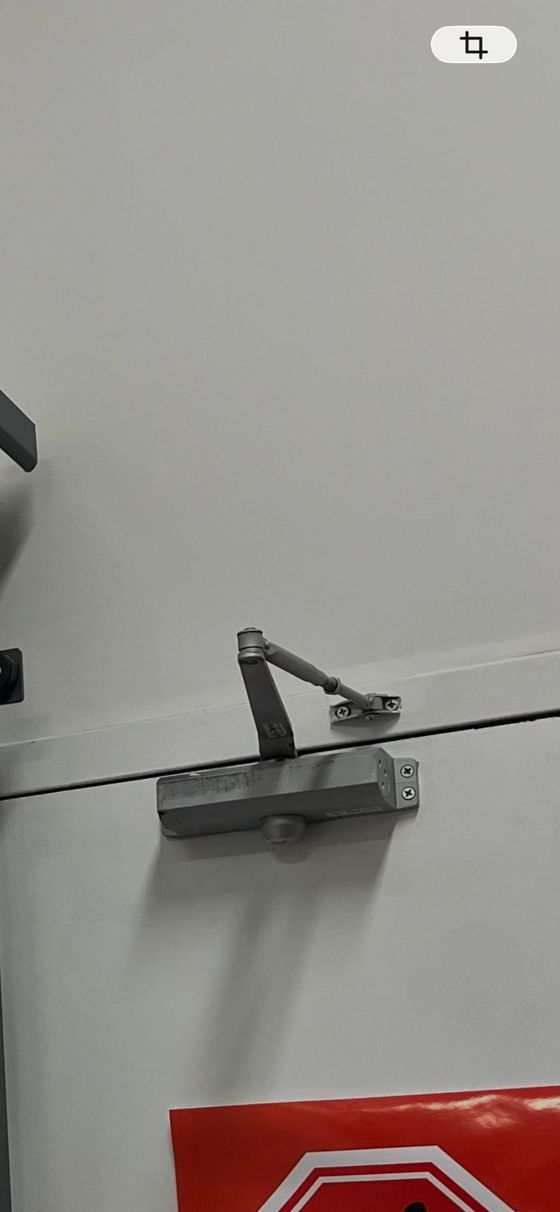
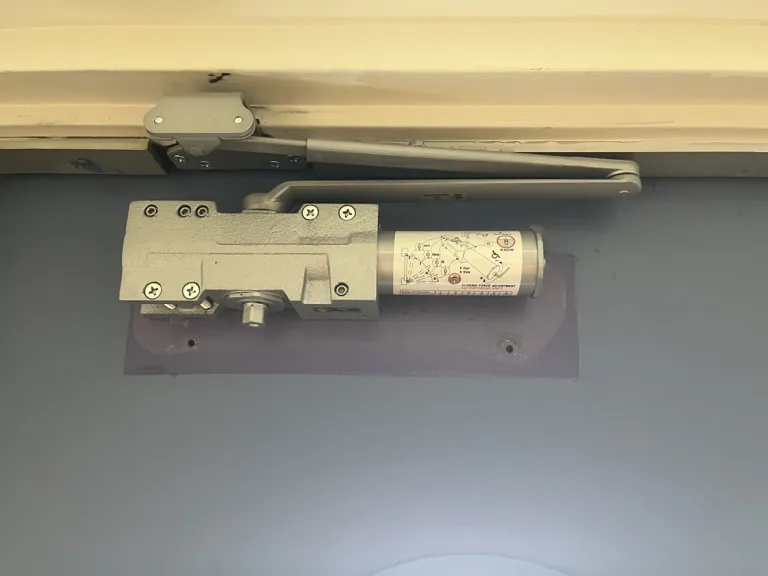
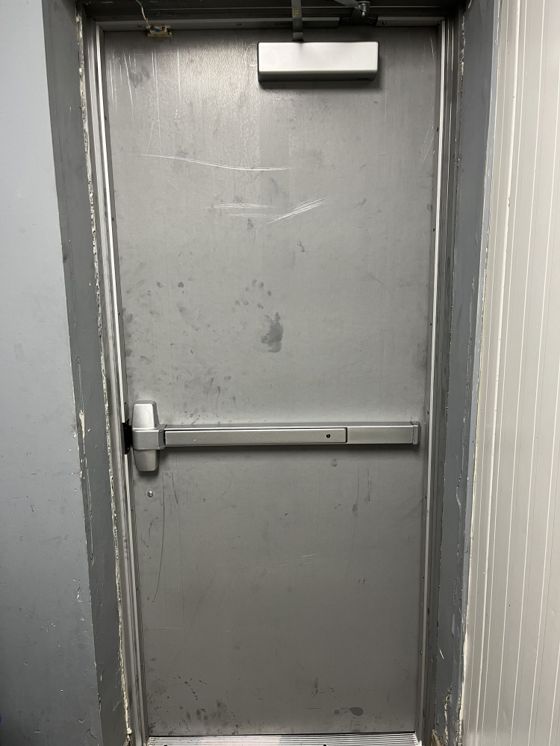
Same-day door closer repair across Ottawa — commercial and residential closers adjusted or replaced. Call or send a photo for a flat-rate quote.