Panic bars — also called exit devices or push bars — are life-safety hardware. When they fail, they fail in one of two directions: they don’t release when pushed, which is an egress emergency, or they release too easily and compromise the building’s security. Neither is acceptable. We repair and install panic bars across Ottawa’s commercial buildings the same day you call, with the knowledge that a panic bar that isn’t working correctly is not something to monitor.
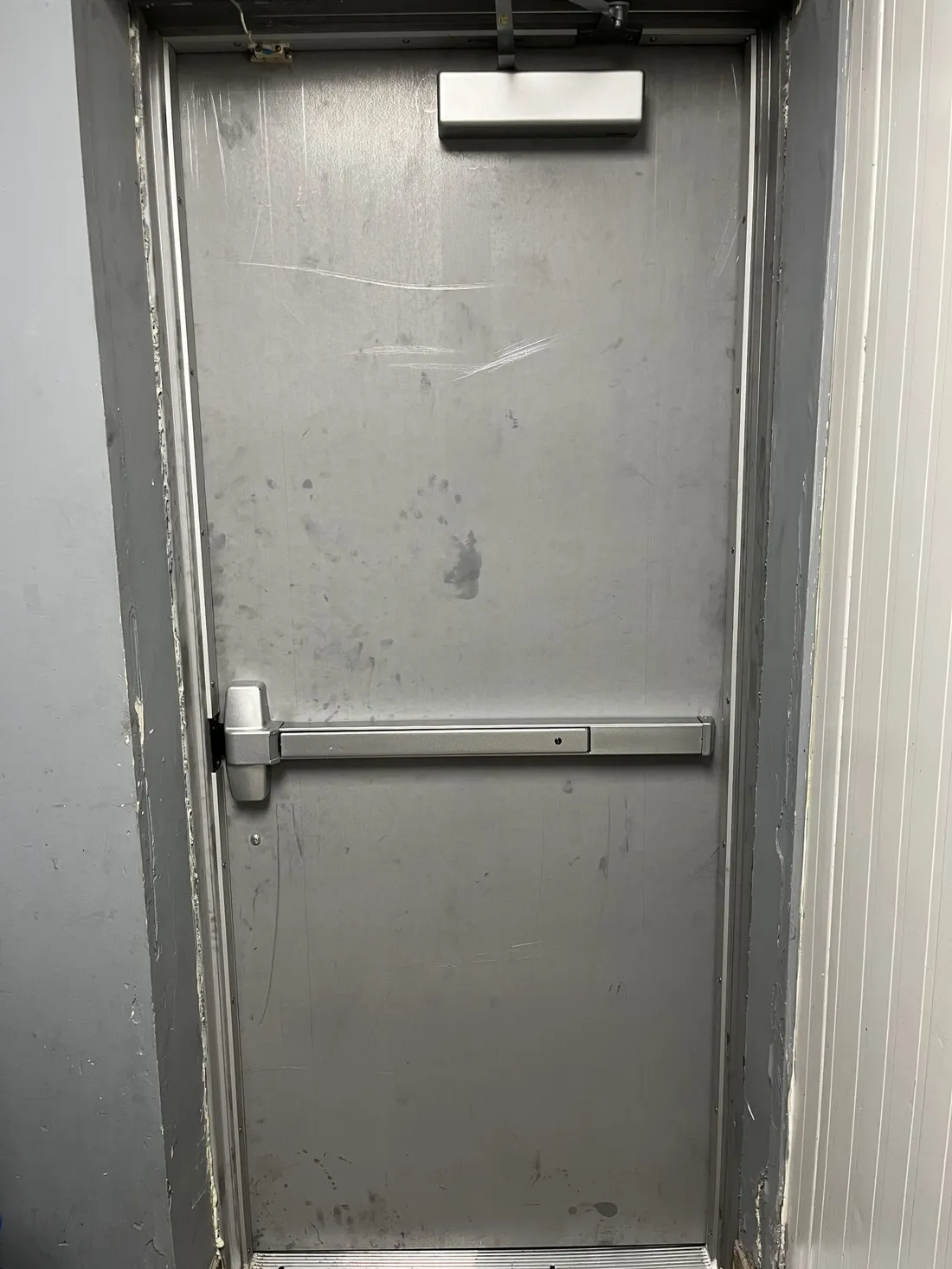
A panic bar that's stiff, binding or corroded isn't meeting code — and it's life-safety hardware. Tap for commercial door repair across Ottawa.
Panic hardware exists because people under stress don’t have time to find a handle, turn a knob, or work a lever. The Ontario Building Code and the Ontario Fire Code both require panic hardware on specific exit doors in occupancies above certain thresholds — assembly occupancies like theatres and arenas, large retail spaces, schools, and any door that serves as a required exit in a building where the occupant load demands it. The standard is simple: the door must open when a person pushes against the panic device with a force that a person in a hurry would naturally apply. Nothing more should be required. No turning, no pulling, no special knowledge.
When a panic bar is stiff, partially seized, or requires two hands or unusual force to operate, it is not meeting that standard — regardless of whether it has ever been tested under actual emergency conditions. The fact that a panic bar has been “working fine” for years without complaint is not evidence that it would function correctly when a crowd of people are pushing toward the exit in a smoke-filled corridor.
Panic bar not releasing at your Ottawa building? Call 613-265-3667 for same-day service — or request a free quote online.
Rim exit devices are the most common panic bar configuration in Ottawa commercial buildings — a crossbar that spans the door face, connected to a rim latch that retracts when the bar is pushed. Rim devices are used on single-leaf hollow-metal and aluminum doors where the latch engages a strike in the door frame. They are mechanically straightforward but have failure modes that accumulate with use and Ottawa’s climate cycling: spring fatigue that reduces latch retraction speed, pivot wear at the push bar connection point that creates play and reduces the mechanical efficiency of the push, and latch bolt corrosion from the moisture that Ottawa’s freeze-thaw cycling deposits in unheated stairwells.
Vertical rod exit devices use a crossbar that activates rod systems running up to a head bolt at the top of the door and down to a floor bolt at the bottom, providing three-point locking on a single door leaf. These are typically used on fire-rated doors where the perimeter sealing requirement means a rim latch alone isn’t adequate. Vertical rod systems have more components and more failure points than rim devices — the top rod mechanism, the bottom rod mechanism, the crossbar activation linkage, and the coordination between all three points. We repair vertical rod systems by assessing each component individually rather than assuming that a stiff push bar means the crossbar mechanism is the problem.
Concealed vertical rod devices function like standard vertical rod devices but with the rod hardware concealed within the door panel rather than surface-mounted. These are used on glass doors and architecturally exposed applications where surface-mounted hardware is aesthetically unacceptable. Concealed rod devices are significantly more complex to service because access requires removing the door or working through limited access panels, and parts availability for older concealed rod systems is limited.
Mortise exit devices combine the panic bar function with a mortise lock body inside the door stile, providing a more secure and feature-rich exit device for high-security commercial applications. These are common on hotel and institutional building corridors where both controlled entry and panic egress are required on the same door.
Alarmed exit devices add an audible alarm to the push bar that activates when the device is pushed, providing both egress capability and an alert to security or management that an exit is being used. These are common on secondary exits in retail environments where inventory security is a concern alongside life-safety compliance.
Panic bars are part of the broader exit device family — see the full exit device range.
The most common Ottawa panic bar failure call we receive is a push bar that has stiffened to the point where it requires more than a firm push to activate. This is typically caused by spring fatigue — the internal springs that return the push bar to its extended position and maintain tension on the latch mechanism have weakened through years of compression cycling, and the reduced spring force means the mechanical engagement between the push bar and the latch body is no longer efficient. The push bar moves, but more of the applied force goes into overcoming internal friction rather than retracting the latch.
The second most common failure is a panic bar that has developed a binding point — a specific position in the push bar’s travel arc where it catches, requires additional force to push through, and then releases suddenly. This is almost always a pivot or linkage wear issue — a pin that has worn in its bore, a linkage that has bent slightly out of alignment, or a component that has corroded and is now binding against an adjacent surface. Binding panic bars are particularly dangerous because the additional force required to push through the catch means that occupants who encounter resistance will push harder — and when the bar releases suddenly under that additional force, the door can open violently.
Ottawa’s unheated stairwell environment is the specific condition that produces the third common failure: corrosion. Stairwells in Ottawa commercial and multi-unit residential buildings reach temperatures that produce condensation on metal surfaces during the spring and fall transition periods. That condensation, combined with Ottawa’s road salt that tracks in on winter footwear, creates a corrosive environment for the carbon steel components inside most panic hardware. Rod mechanisms and latch bolts corrode, producing increased operating resistance and in severe cases complete seizure.
New panic bar installation on an Ottawa commercial door is not simply a matter of mounting the hardware and leaving. Correct installation requires:
Door preparation: The door panel must be drilled and mortised for the device body, the mounting bolts, and any rod exit holes. These penetrations must be sized and positioned precisely for the specific device being installed — a millimetre off in the mortise position produces a device that doesn’t operate correctly regardless of how well the hardware itself functions.
Strike alignment: The rim latch or rod bolts must engage their respective strikes with the door in its normal closed position. Strike alignment requires assessing the door’s actual closed position — accounting for any sag, frame racking, or seasonal expansion — rather than the theoretical position the drawing specifies. An Ottawa commercial door in January is in a different position than the same door in July due to thermal expansion of the frame, and the strike must be positioned to engage correctly across that range.
Closer coordination: The panic device and the door closer must work in coordination — the closer must pull the door fully closed so the latch engages, and the closer spring tension must be appropriate for the door weight while remaining within the opening force limits that the Ontario Building Code specifies for exit doors. A panic bar on a door with an over-tensioned closer may meet the closer standard but fail the opening force standard. For repair of the full fire-rated door assembly (closer, hinges, latching hardware and sealing), see Fire-Rated Doors Ottawa.
Testing and documentation: Every panic bar installation we complete is tested through its full operation — push bar activated, latch retracted, door opened, door closed, latch re-engaged — and the test results are documented for the building’s records. This documentation matters for fire inspections and insurance purposes.
The Ontario Fire Code requires that panic hardware on required exit doors be maintained in operable condition at all times. Fire inspectors in Ottawa check panic bar function as part of routine inspections, and non-compliant hardware generates deficiency notices with short compliance timelines. We respond to panic bar compliance deficiency calls the same day and provide the written documentation of repair and testing that building managers need for their compliance records.
Under the Ontario Building Code, panic hardware is required on exit doors serving:
Many Ottawa commercial building managers are uncertain about whether their specific doors require panic hardware, and the answer depends on the occupancy classification, the floor level, and the specific exit door’s role in the overall egress system. We advise on panic hardware requirements in the context of the specific Ottawa building and its occupancy — not as a substitute for a code consultant where formal compliance is at issue, but as the practical knowledge of a service provider who installs and repairs this hardware across Ottawa’s commercial building stock every day.
A panic bar that isn’t functioning correctly in an Ottawa commercial building gets same-day response from us. We carry common panic bar replacement parts and complete exit device units on the vehicle, and we can address most Ottawa commercial panic bar repair calls in a single visit. For devices that require parts that aren’t stocked — concealed rod devices, older institutional hardware, or non-standard commercial configurations — we assess and advise the building manager on interim security measures while sourcing the required components.
We serve panic bar repair and installation across Ottawa’s full commercial landscape — ByWard Market restaurants and retail, Sparks Street office buildings, Merivale Road strip commercial, Kanata North technology corridor, Nepean business parks, Barrhaven commercial development, and the institutional and multi-unit residential buildings across every Ottawa neighbourhood.
Real door repairs, installations, and security work completed by our Ottawa and Ottawa Valley team.
Tell us what's wrong and we'll get you a fast, honest price for the fix.
Same crew, same flat-rate pricing — explore commercial panic and exit hardware services across Ottawa. For after-hours physical barriers on non-egress openings, see security grilles.
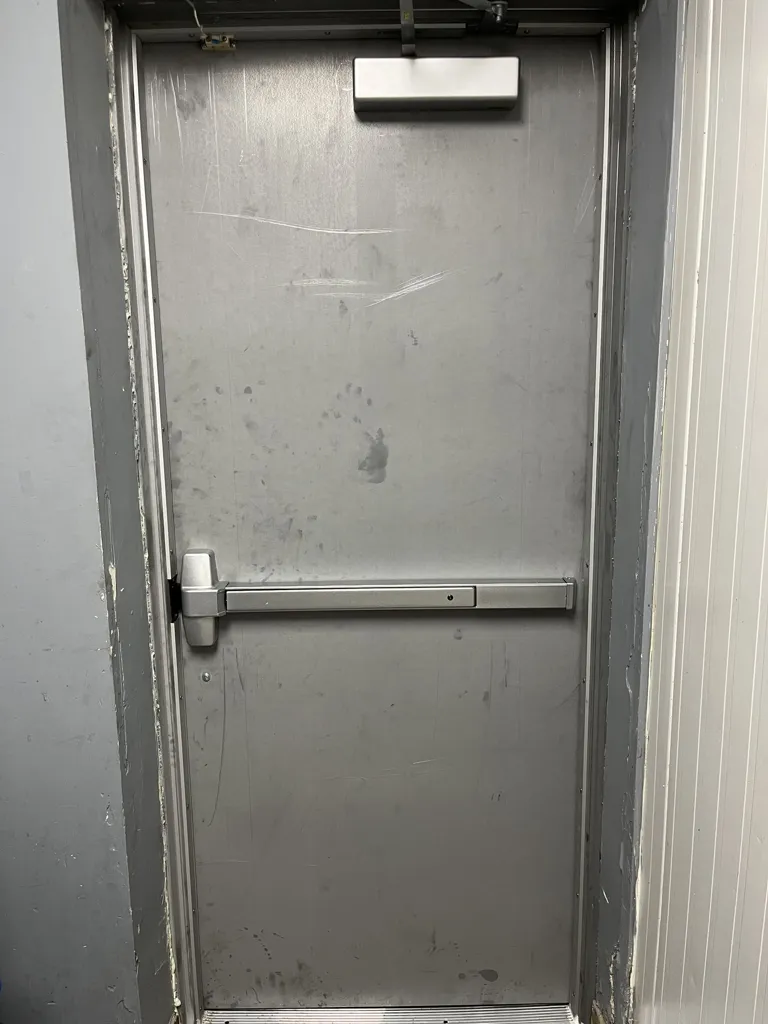
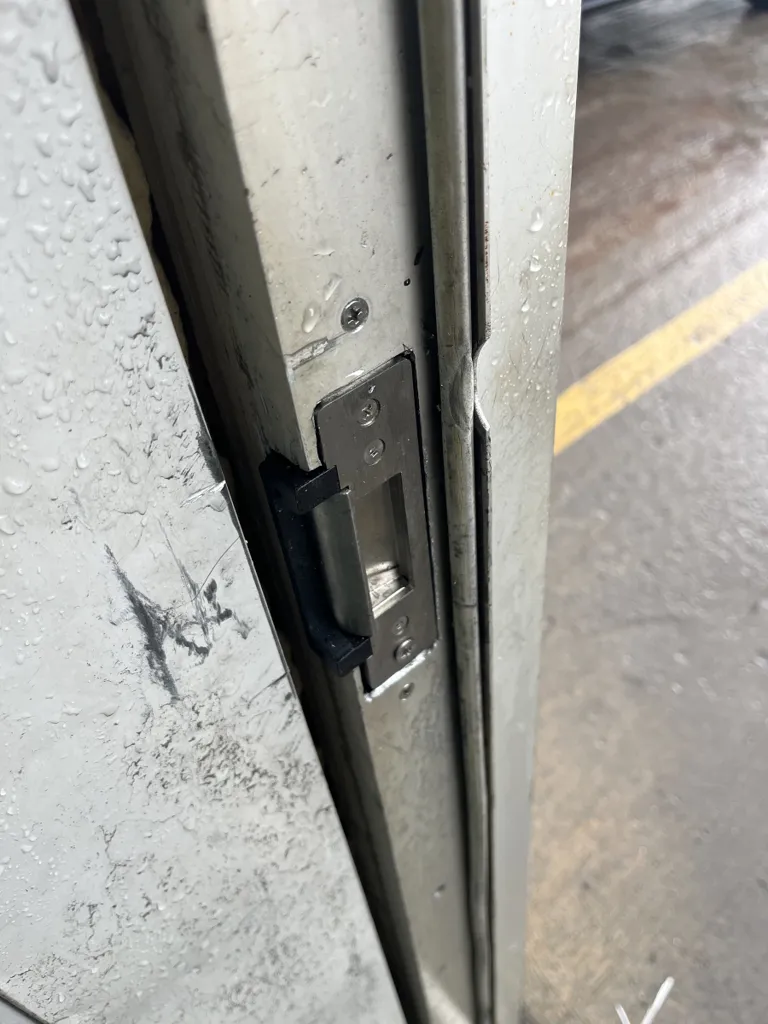
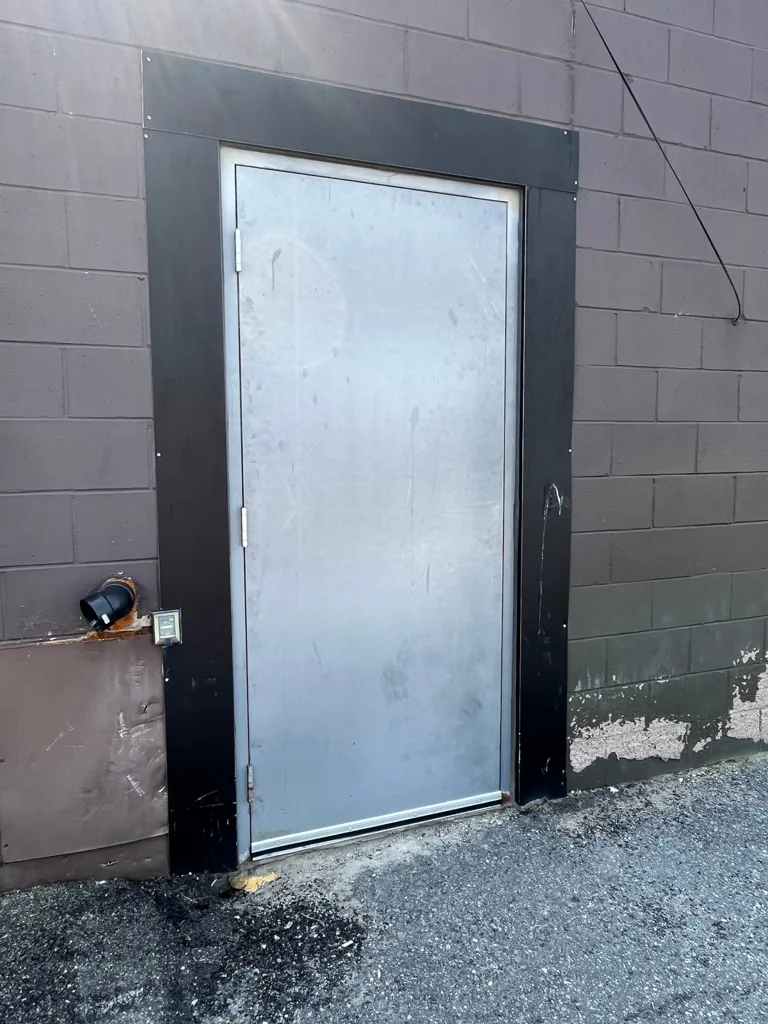
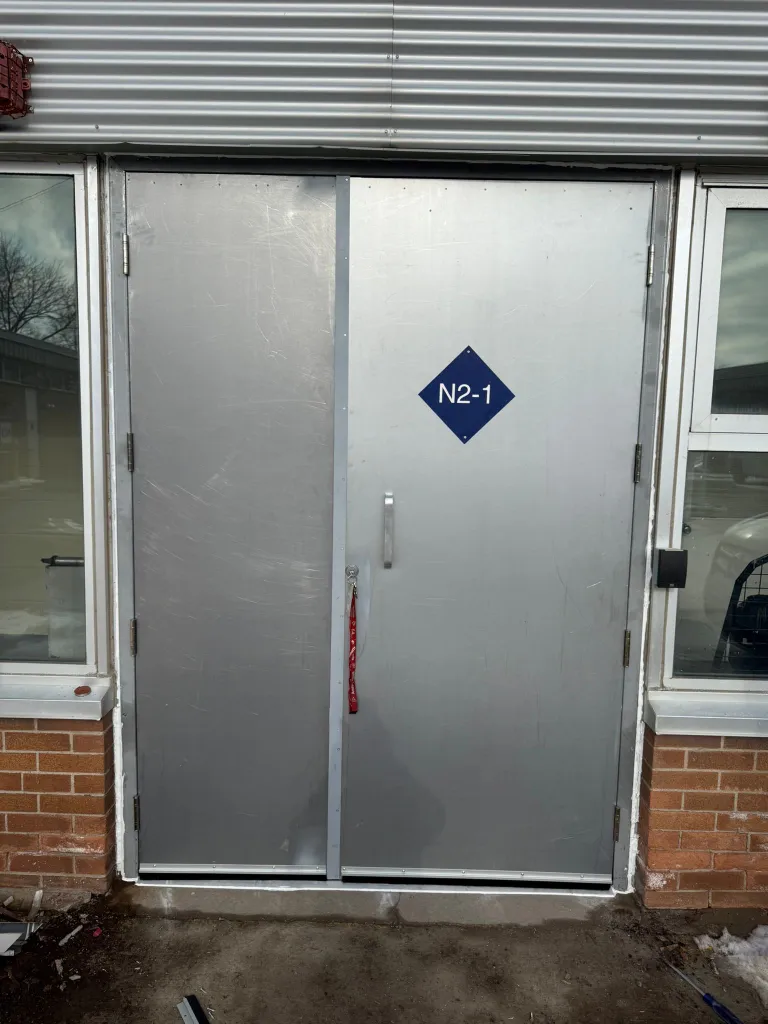
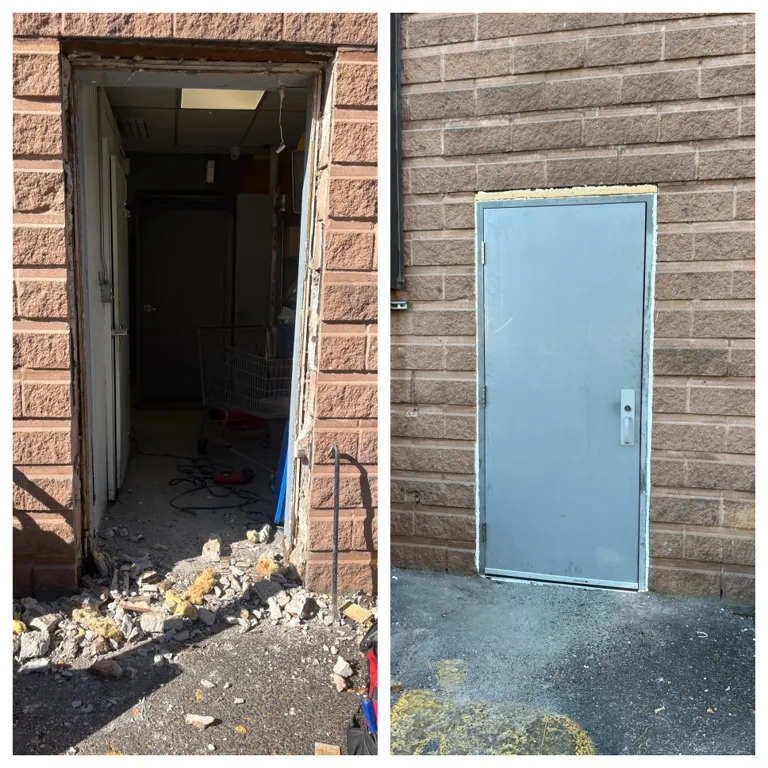
Same-day panic bar repair and installation across Ottawa — rim, vertical rod and mortise exit devices, tested and documented for compliance.