Exit devices are the hardware category that Ottawa building managers think about least until they fail at the worst possible moment — during a fire inspection, during an actual emergency, or when a tenant or visitor is injured by hardware that didn’t function correctly. We repair and install exit devices across Ottawa’s commercial building stock the same day you call, with the technical knowledge that this category of life-safety hardware requires.
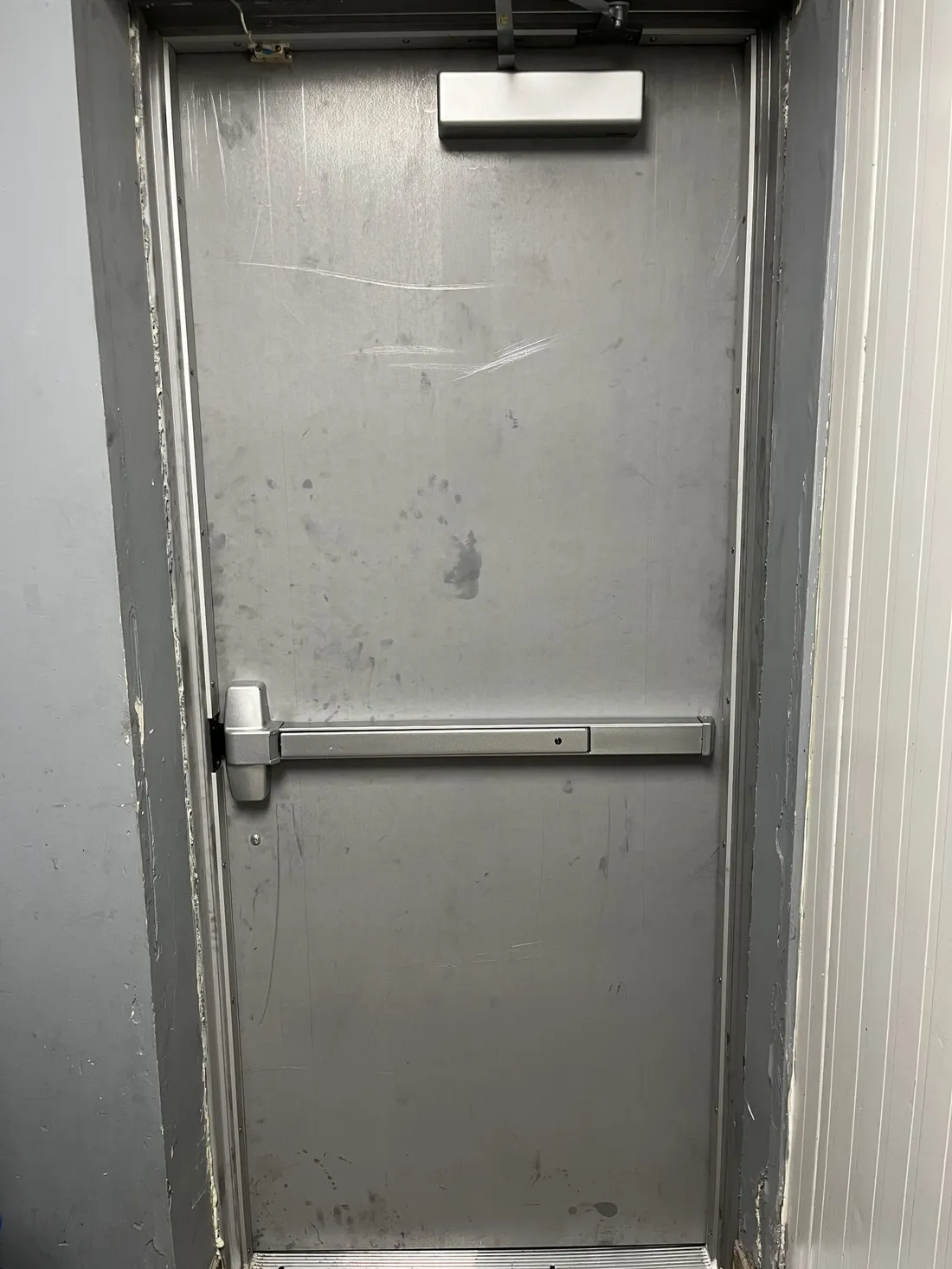
Rim, vertical rod, mortise, electrified, delayed-egress and coordinate exit devices — life-safety hardware installed to code. Tap for commercial door repair.
Exit device is the broader technical term for the hardware category that includes panic bars, push bars, touch bars, and the various mechanical systems that allow a door to be opened from the egress side under emergency conditions without requiring knowledge of how the hardware operates. The Ontario Building Code and the Ontario Fire Code use the term “panic hardware” and “exit device” interchangeably in some contexts, but the broader exit device category includes hardware configurations that go beyond the standard panic bar — electrified exit devices, delayed egress devices, fire door coordinate exit devices, and the specialized hardware that complex commercial buildings require on specific door applications.
Understanding which exit device type is correct for a specific Ottawa door application requires knowing the door’s role in the building’s egress system, the occupancy classification, the fire rating of the door assembly, and the access control requirements that may need to be integrated with the exit hardware. We work across all of these variables in Ottawa’s commercial building stock and advise on the correct device selection before any installation begins.
Exit device failed at your Ottawa building? Call 613-265-3667 for same-day service — or request a free quote online.
Standard egress exit devices on non-fire-rated doors in Ottawa commercial buildings typically use rim latch devices — the crossbar activates a rim latch that releases the door for outward swing, providing one-motion egress that requires no knowledge of the hardware. These are the most common exit devices in Ottawa retail and restaurant exit applications, and their repair and installation is straightforward when the device is correctly selected for the door weight and the door is correctly prepared for the mounting.
Fire door exit devices have requirements beyond standard egress devices. A fire-rated door assembly must maintain its fire resistance rating when equipped with exit hardware — which means the exit device must be listed and labeled for use on fire doors, and the installation must not compromise the fire door assembly in any way. Drilling a fire door for an exit device that isn’t listed for that door’s rating, or installing rod mechanisms that penetrate the door at locations that compromise the fire assembly, voids the fire rating and creates a code compliance failure that is invisible until a fire inspector or an adjuster looks at it.
Ottawa’s institutional buildings — the hospitals, care facilities, government offices, and schools across the city — have fire door exit device requirements that are more stringent than standard commercial applications, and the documentation that confirms correct installation and listing is a requirement rather than a recommendation.
Electrified exit devices integrate the mechanical exit device with an electrical circuit that can control the latch through an access control system. The most common Ottawa application is a building where normal entry requires access control — a card reader, a code pad, a fob — but exit must always be available through the panic device. The electrified exit device allows the same door to serve both functions: controlled entry from the exterior side through the access control system, and free egress from the interior side through the exit device’s mechanical function.
Installing electrified exit devices in Ottawa commercial buildings requires coordinating the mechanical door hardware with the building’s electrical infrastructure and the access control system’s control logic. We install the mechanical components of electrified exit devices and coordinate with the access control system’s installer or the building’s electrical contractor on the integration — because a mechanical device installed without understanding the electrical system it connects to will produce access control behavior that doesn’t match what the building manager expects.
Delayed egress exit devices are permitted under the Ontario Building Code in specific occupancies — typically care facilities and buildings where security of the occupants requires a controlled exit delay. A delayed egress device allows a fifteen or thirty second delay after the exit device is activated before the door releases — during which an alarm sounds. This delay is sufficient to alert staff to an unauthorized exit attempt while still allowing egress under actual emergency conditions. Installing delayed egress devices requires specific code authority approval for the occupancy and application, and we advise building managers on the code pathway before any delayed egress installation proceeds.
Coordinate exit devices are required on pairs of doors where a meeting stile astragal — the overlapping strip between the two panels — means that one panel must open before the other. A coordinator mechanism controls the closing sequence so that the active panel always closes after the inactive panel, maintaining the fire seal. Coordinator mechanisms are frequently the source of malfunction in Ottawa’s paired exit door applications — when they fail, the doors close in the wrong sequence, the astragal catches, and the door pair doesn’t latch. We repair and replace coordinator mechanisms on Ottawa paired fire door exit applications.
 Fire-door exit devices must be listed for the assembly — the wrong device voids the rating. See fire-rated doors.
The worst exit device repairs are the ones where a component is replaced without understanding why it failed. A push bar that has stiffened because its spring has fatigued will improve temporarily if the spring is replaced — but if the reason the spring fatigued prematurely was an installation that placed the device body at an angle that increased the travel distance of the latch linkage, the replacement spring will fatigue at the same rate. We diagnose the cause of every exit device failure before committing to a repair approach, because the correct repair addresses the cause rather than the symptom.
The most common causes of exit device failure in Ottawa commercial buildings are: spring fatigue from high cycle counts, particularly in high-occupancy Ottawa buildings like schools and large retail where exit doors are used constantly; corrosion in the Ottawa stairwell environment where road salt and seasonal condensation work on carbon steel components; installation misalignment where the strike position or the device mounting angle creates mechanical disadvantage that accelerates wear; and lack of lubrication where the moving parts in the device have dried out and are operating with metal-on-metal contact rather than on a maintained lubricant film.
We lubricate exit device pivot points and latch mechanisms as part of every repair visit, using dry lubricants appropriate for the application rather than oil-based products that attract the grit and salt that Ottawa’s stairwell environment deposits on hardware.
Exit device installation in Ottawa commercial buildings is governed by the Ontario Building Code, the Ontario Fire Code, and in some applications the manufacturer’s specific listing requirements for the door assembly. The critical installation factors are:
Device selection: The exit device must be appropriate for the door material, the door width, the fire rating of the assembly, and the latching requirements of the application. A rim device that is correct for a standard hollow-metal exit door is not correct for a fire-rated door that requires positive latching through a vertical rod system.
Mounting height: The Ontario Building Code specifies the height range within which exit device actuating elements must be located — typically between 900mm and 1200mm from the floor. Exit devices mounted outside this range are non-compliant regardless of how they function mechanically.
Opening force: The maximum force required to open an exit door through its exit device is specified by the Ontario Building Code for different occupancy types. We test opening force with a calibrated gauge on every installation and record the results.
Hardware coordination: On fire-rated assemblies, every component on the door — the closer, the hinges, the exit device, the frame — must be listed for use on that specific assembly. Mixing non-listed components on a fire door assembly voids the rating even if every individual component is rated for something.
Ottawa’s institutional buildings — the University of Ottawa, Carleton University, Ottawa hospitals, Ottawa school boards, government office buildings on Wellington and Sparks — have exit device inventories that span decades of installation and multiple generations of hardware standards. We service exit devices in Ottawa’s institutional building stock, providing both repair of existing hardware and replacement with currently listed and compliant devices where the existing hardware no longer meets current standards.
Multi-unit residential buildings across Ottawa — the apartment and condominium towers in Centretown, Vanier, Gloucester, Orléans, and Nepean — have stairwell exit device requirements under the Ontario Fire Code that are separate from the commercial occupancy requirements but equally important. We service residential building stairwell exit hardware with the same compliance documentation that commercial building managers receive.
We respond to Ottawa exit device repair calls the same day. We carry common exit device components and complete rim device units on the vehicle, and we can address most Ottawa commercial exit device repair situations in a single visit. For complex installations — electrified devices, vertical rod systems, fire door coordinate devices — we assess and quote the full scope before beginning, so the building manager knows what the installation involves and what it will cost before we start.
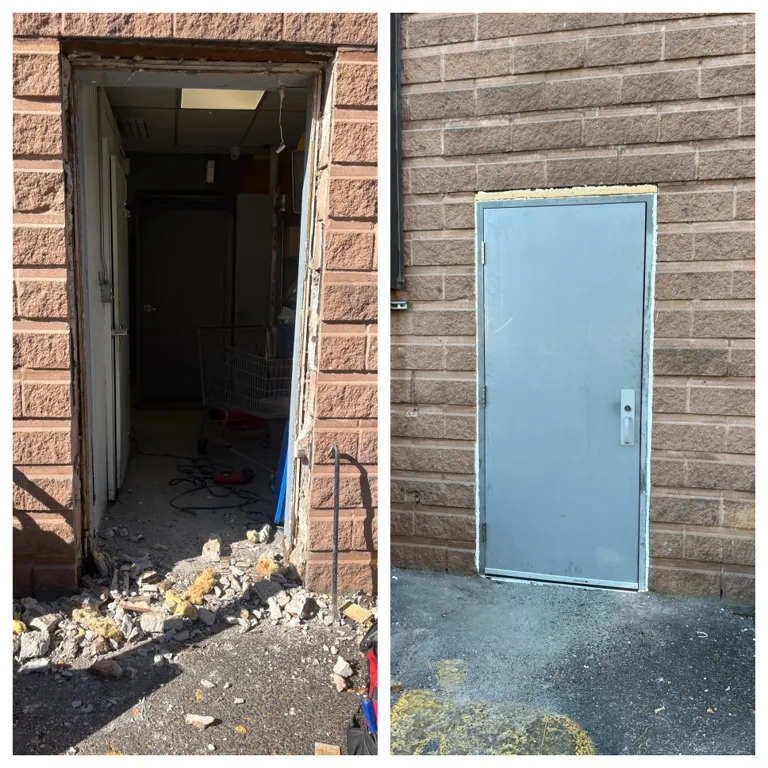
Real door repairs, installations, and security work completed by our Ottawa and Ottawa Valley team.
Property managers and facility teams — get pricing and book a site visit that suits your hours.
Same crew, same flat-rate pricing — explore commercial exit hardware and fire-door services across Ottawa.
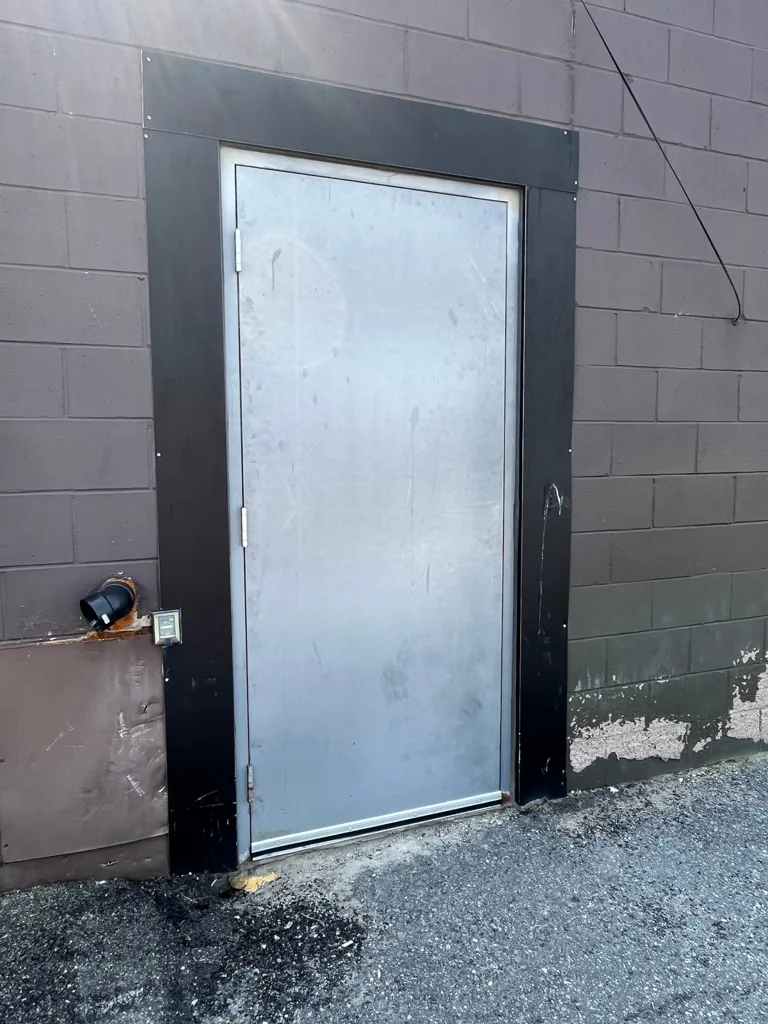
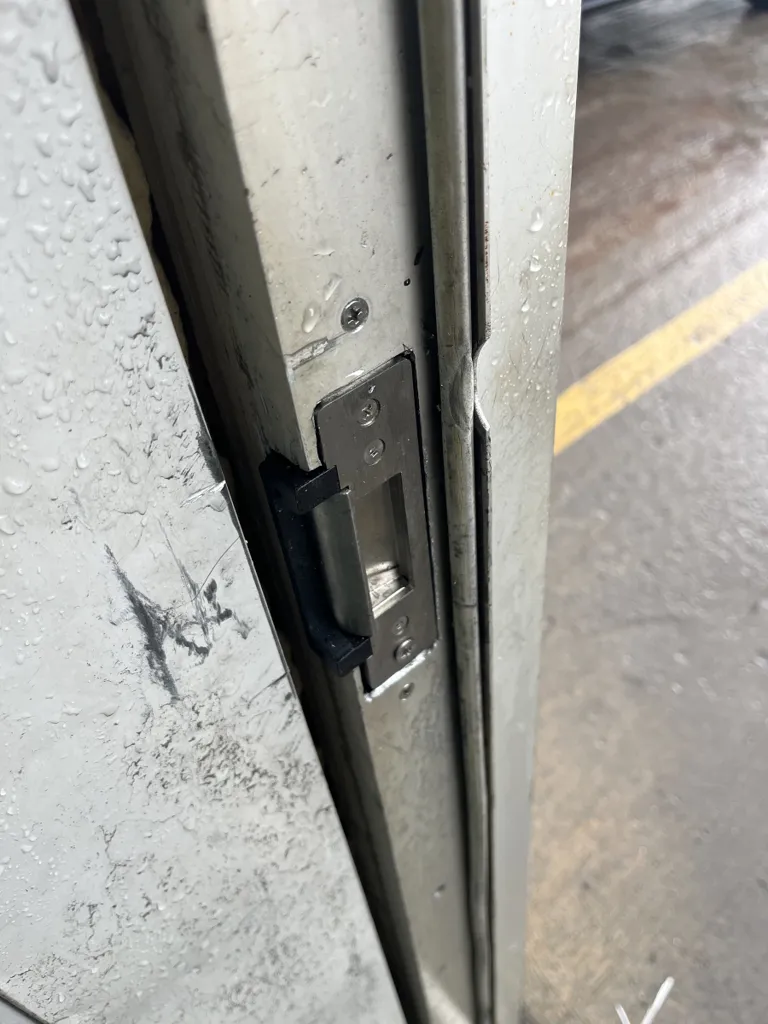
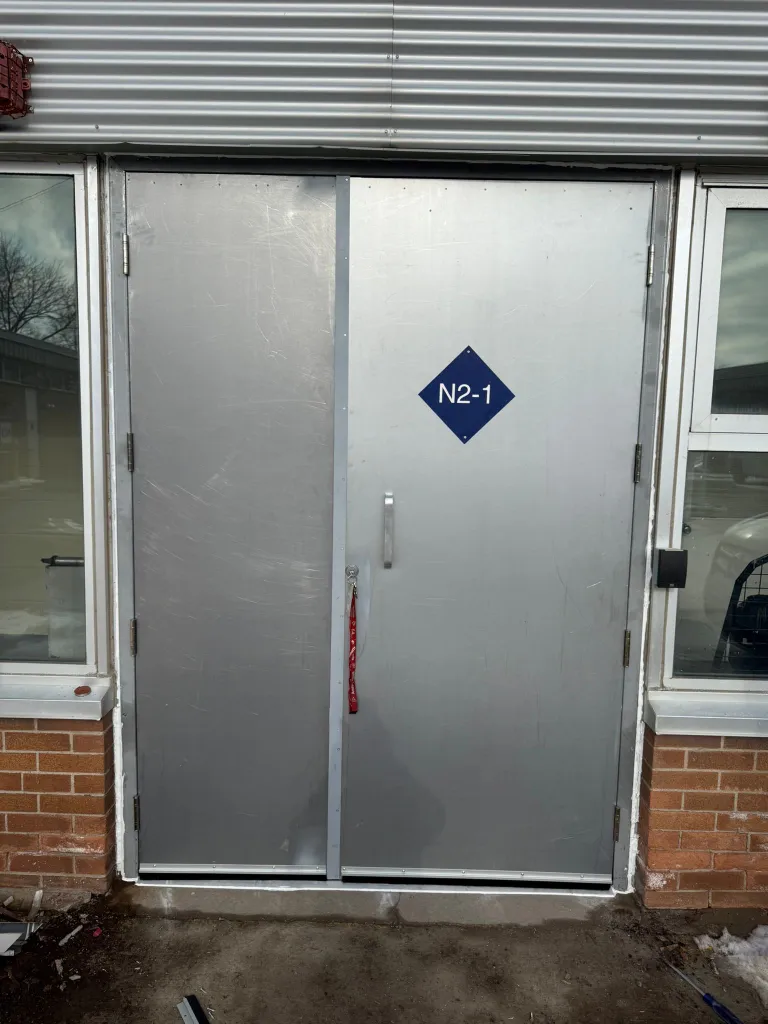
Same-day exit device repair and installation across Ottawa — rim, vertical rod, mortise, electrified and fire-door hardware, tested and documented.