

Every patio door takes a beating over the years. Between daily use, shifting seasons, and the freeze-thaw cycling that defines an Ottawa winter, a door that once glided with one finger can start dragging, catching or refusing to seal. This project follows the complete repair, including the technician’s real before-and-after videos.
Before: A Patio Door That Wouldn't Slide or Seal Properly
When the homeowner called Fix My Door Now Ottawa, the issue was one we hear often: the patio door had gotten progressively harder to open over several months, to the point where it took a firm shove to get it moving, and even then it would jump and shudder partway along the track. Just as importantly, when the door was finally pushed shut, it wasn't sitting flush against the frame — leaving a visible gap along the bottom edge and a weatherstripping seal that was no longer doing its job.
For most homeowners, a door that's simply "a bit stiff" doesn't feel like an emergency, so this kind of wear often gets lived with for longer than it should. The trouble is that a door that isn't sealing properly isn't just inconvenient, it's letting conditioned air escape and outside air in, which shows up as a draft near the floor and, eventually, a colder room and a higher heating bill.
Damage Assessment: Finding the Real Cause
Sliding patio doors look simple, but there are usually two or three things happening at once when one stops working smoothly, and it's easy to fix the wrong one if you don't check all of them. Our technician's inspection covered:
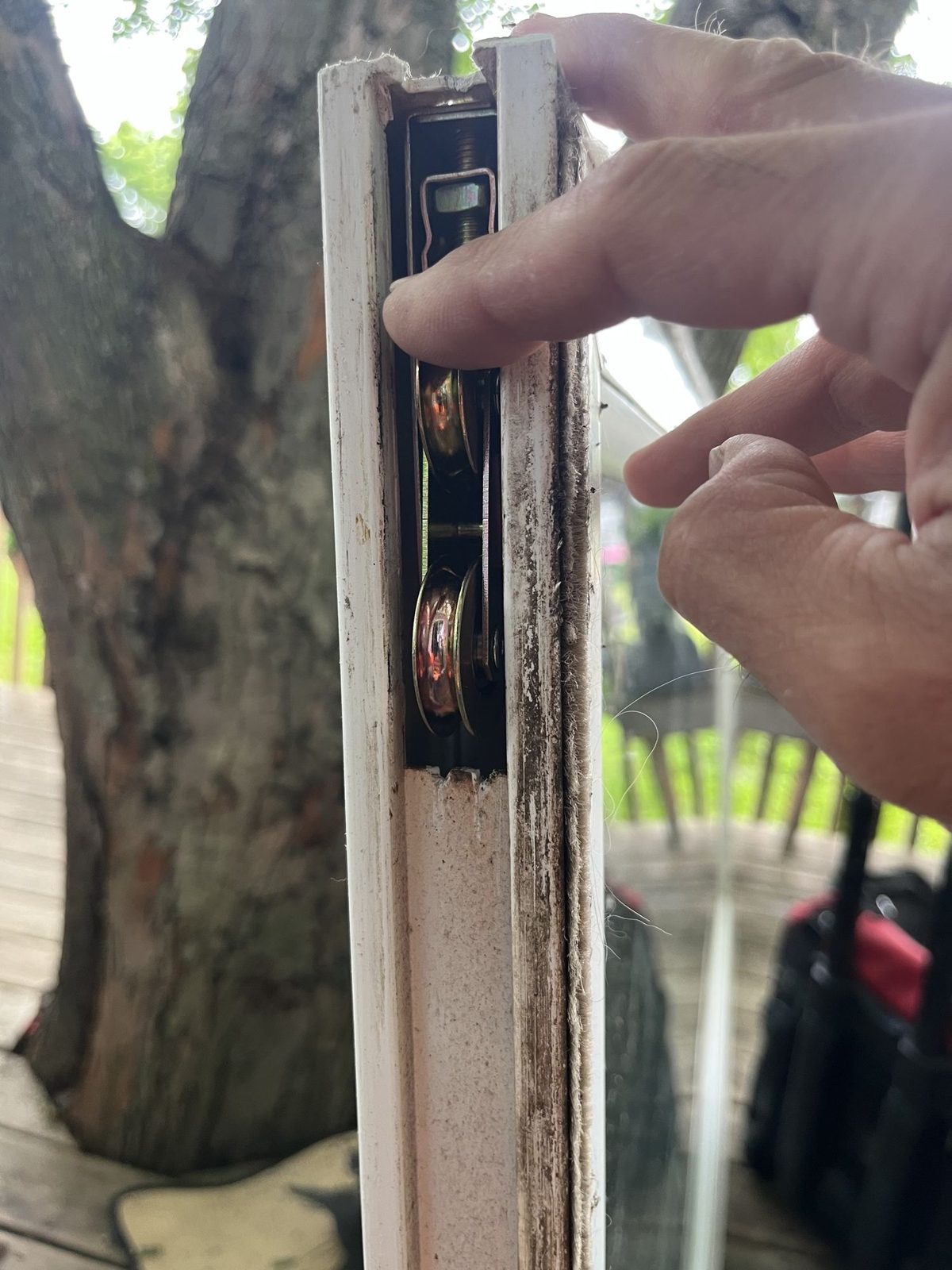
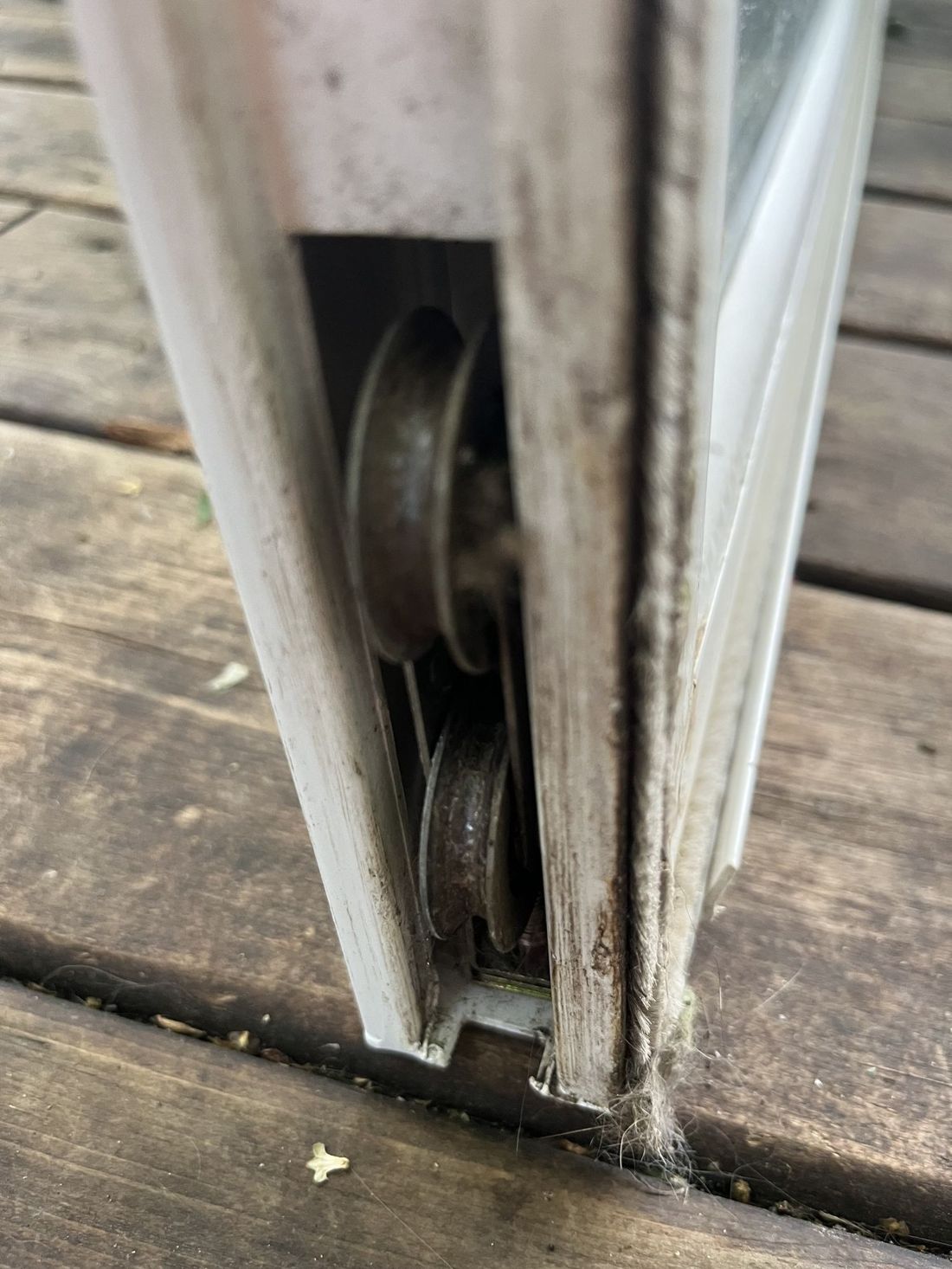
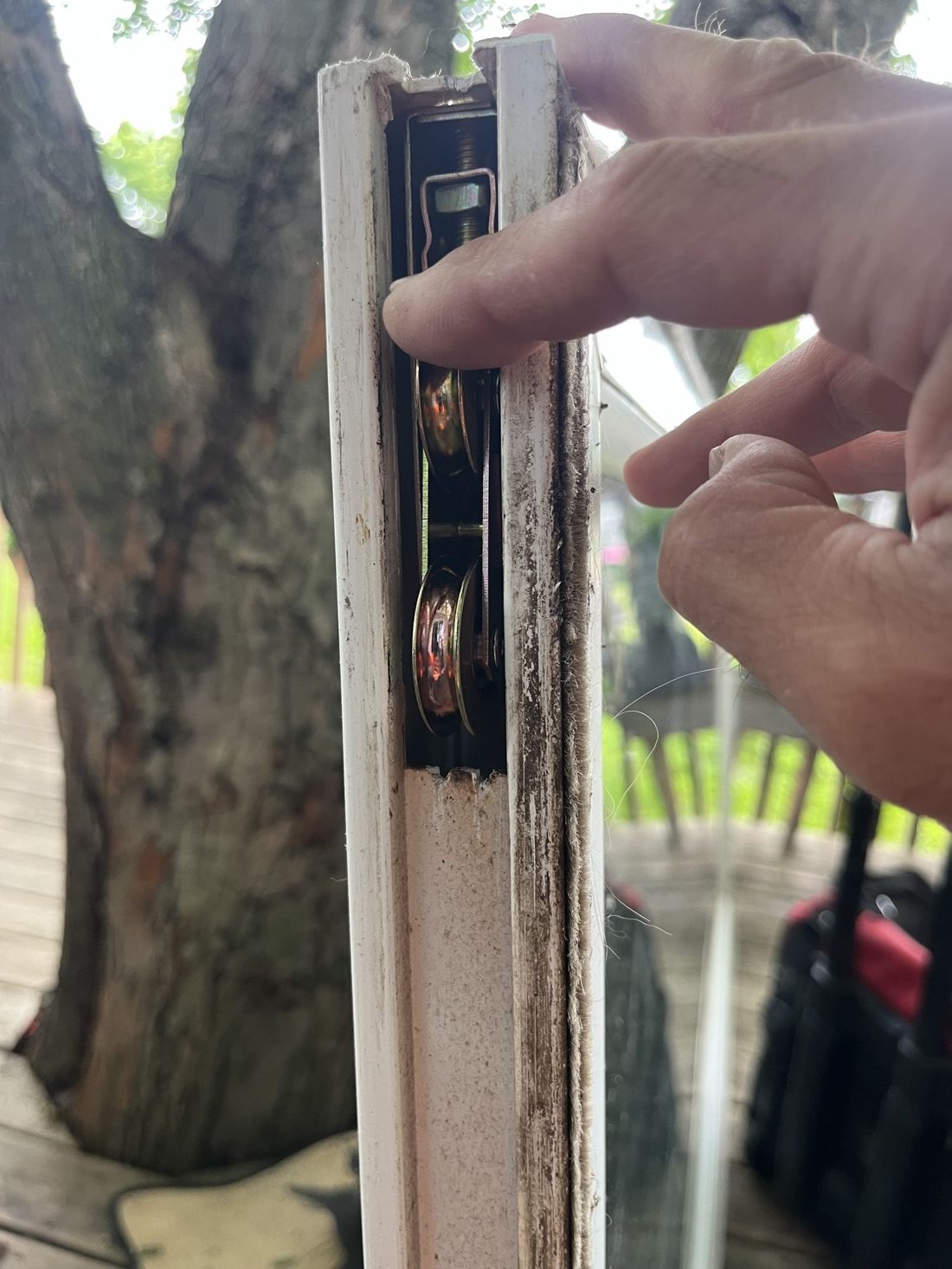
- The rollers — the small wheeled assemblies at the bottom of the door panel that carry its full weight along the track. On this door, the rollers had worn down unevenly and were no longer sitting level, which explained the dragging and jumping motion.
- The track — the aluminum channel the rollers ride in. Years of dirt, grit, and small debris had packed into the track, adding friction on top of the worn rollers.
- The alignment — because the door was riding low on one side, it was no longer closing square against the frame, which is what created the gap and the failed seal.
- The weatherstripping — the fin and bulb seals along the frame had flattened and worn thin from years of the door dragging across them rather than gliding cleanly.
None of this pointed to a cracked glass unit or a structurally damaged frame, which was good news for the homeowner. This was a mechanical wear issue, not a full door failure, and that distinction matters because it's the difference between a same-day repair and a full door replacement.
Challenges on This Job
The main challenge was the uneven roller wear. Because one side of the door had dropped slightly more than the other, simply adjusting the height screws without replacing the rollers would have masked the problem temporarily rather than solving it. Our technician also had to clear years of compacted debris from the track without scratching or gouging the aluminum channel, since any new grooves in the track create the same dragging problem all over again.
The Repair Process
With the cause confirmed, the repair moved through a straightforward but precise sequence:
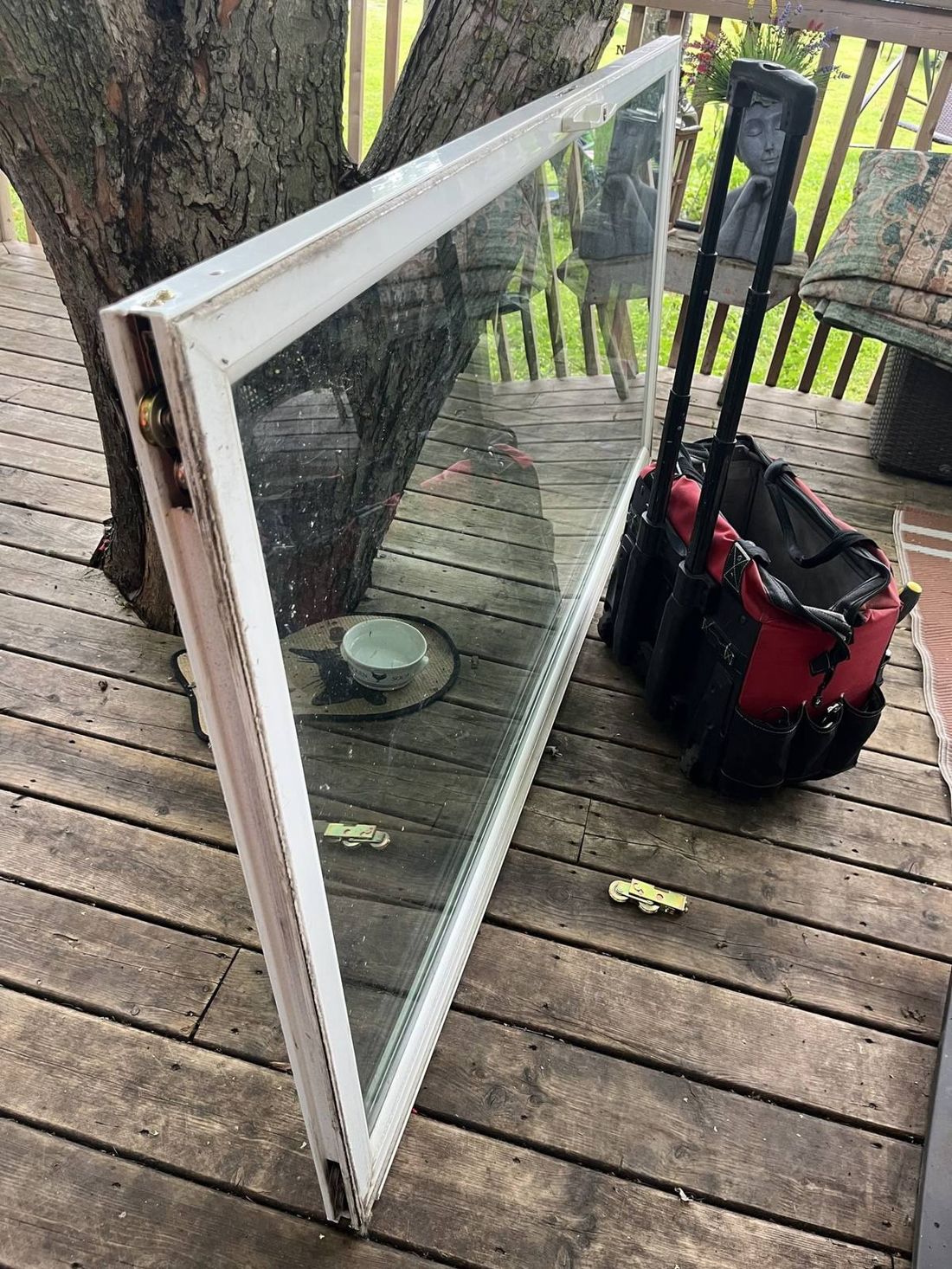
- Panel removal. The sliding panel was carefully lifted out of the frame to give full access to the track and the roller housings without straining the glass unit or the frame corners.
- Track cleaning. The aluminum track was cleared of packed dirt and debris, then checked for any bends or burrs that could catch the new rollers.
- Roller replacement. New rollers matched to the door's weight and track profile were installed, replacing the worn originals rather than simply adjusting them.
- Rehang and alignment. The panel was rehung and the height-adjustment screws were set so the door sat level and closed square against the frame on both sides.
- Weatherstripping replacement. The flattened fin and bulb seals were replaced along the frame contact points to restore a proper weathertight seal.
- Function and seal test. The door was opened and closed repeatedly to confirm smooth, even movement, then checked for a flush, gap-free seal in the closed position.
Materials Used
This repair used replacement rollers rated for the door's weight class, aluminum-safe cleaning tools to protect the track finish, and fin-and-bulb weatherstripping matched to the frame's original profile so the seal performs the way it was designed to.
Safety Considerations
Patio door panels are heavy and awkward, particularly with a full glass unit, so panel removal was handled with proper lifting technique and a second point of support to avoid putting stress on the glass or dropping the panel during the roller swap. The track edges were also checked for burrs before rehanging the door, since a sharp edge on aluminum track can be a cut hazard during future use.
Why This Repair Was Completed This Way
Replacing the rollers rather than just adjusting them addressed the actual source of the wear instead of a symptom of it. A height adjustment alone might have closed the gap for a few weeks, but with worn rollers still in place, the dragging and uneven wear would have returned quickly, likely worse than before. Pairing the roller replacement with fresh weatherstripping meant the homeowner got both a mechanical fix and a sealing fix in the same visit, rather than needing a second call-back later for the draft.
The Finished Result: Smooth, Secure, and Weathertight
After the repair, the door slid open and closed with one hand, without the catching or shuddering that had become normal for the homeowner. More importantly, when closed, the panel now sits flush against the frame along its full height, so the gap that was letting outside air in is gone. The homeowner tested it several times before we left, and the difference in how little effort it took was immediately obvious.
Long-Term Benefits
- Smooth, low-effort operation that won't strain the track or frame over time
- A proper seal that keeps conditioned air in and drafts out, particularly along the floor line
- Reduced wear on the track itself, since new, correctly sized rollers glide rather than drag
- No need for a full door replacement, keeping the original frame and glass unit in service
Project Timeline
Preventive Maintenance Tips for Patio Doors
A few simple habits go a long way toward avoiding this kind of repair, or at least catching it early:
- Vacuum or brush out the track every few months, especially heading into fall, so dirt and grit don't pack in over winter.
- Avoid using household oils or grease on the track, since these tend to attract more dirt; a dry silicone-based lubricant is a better choice for rollers.
- Check the weatherstripping once a year by closing the door and feeling for drafts along the edges.
- Address a dragging or sticking door as soon as you notice it. The longer a door drags on worn rollers, the more the track itself can wear or bend, turning a simple roller swap into a more involved repair.
When Would Replacement Be Necessary Instead?
Repair isn't always the right call. A patio door usually needs full replacement rather than repair when the glass unit's seal has failed and fogged permanently between the panes, when the frame itself has warped or rotted beyond what adjustment can correct, or when the track is bent badly enough that it can't be straightened. On this job, none of those conditions were present. The frame was square, the glass unit was intact, and the track, while dirty, was in good physical shape. That's what made a repair the right and more cost-effective choice for this homeowner.
Why Professional Repair Saved Money Here
A full patio door replacement, including the unit, installation, and any trim or frame work, runs well into the thousands of dollars. This repair addressed the actual problem for a fraction of that cost, using the existing frame and glass unit, which were both still in good condition. For homeowners on the fence about repair versus replacement, our advice is consistent: have it inspected first. A worn roller and a failed glass seal can look similar from the couch, but they call for very different fixes and very different budgets.
Why This Matters in Ottawa's Climate
Ottawa's climate is hard on exterior doors. Wide summer-to-winter temperature swings cause frames and tracks to expand and contract, which can loosen hardware and shift alignment over time. Winter grit, salt, and sand tracked in from outside also work their way into door tracks more than most homeowners expect, accelerating roller wear. And because a patio door often sits on an exterior wall exposed to prevailing wind, even a small gap in the seal can be felt as a noticeable draft once temperatures drop below freezing. Repairing the seal and alignment before winter sets in, as we did here, makes a real difference in comfort and heating costs through an Ottawa winter.
Frequently Asked Questions
Why does a patio door start dragging or sticking?
Most dragging or sticking comes down to worn rollers, a track packed with debris, or a frame that's shifted slightly out of alignment. Ottawa's freeze-thaw cycles can accelerate all three.
Can a sliding patio door be repaired instead of replaced?
In most cases, yes. As long as the glass unit and frame are structurally sound, realigning the track and replacing rollers and weatherstripping typically restores full function at a fraction of the cost of a new door.
How much does patio door repair cost in Ottawa?
It depends on what needs to be done — roller replacement, track cleaning, and weatherstripping are generally inexpensive compared to a full door replacement. We provide an exact quote after an on-site inspection.
How long does a patio door repair take?
A repair like this one is typically completed in a single visit, often within a couple of hours depending on the extent of the wear and parts needed.
Will a repaired patio door seal properly against Ottawa winters?
Yes. Restoring the weatherstripping and confirming the door closes flush against the frame is exactly what stops cold air infiltration during Ottawa winters.
Is Your Patio Door Dragging, Sticking, or Letting in Drafts?
Don't wait for a small alignment issue to turn into a bigger repair. Our Ottawa team can inspect your patio door, sliding door, or entry door and give you a straight answer on repair versus replacement.
- Patio Door Repair Ottawa — rollers, tracks, seals and winter drafts on residential patio units
- Sliding Door Repair Ottawa — broader sliding-door diagnosis when the problem is more than one panel
- Sliding Door Roller Repair Ottawa — when worn wheels and a dirty track are the whole story
- Broken Glass Repair Ottawa — cracked or fogged patio glass replacement
- Emergency Door Repair Ottawa
- More Completed Door Repair Projects
- Best Weatherstripping for Ottawa Winters