

Why Winter Is a Great Time to Replace Interior Doors
Most door projects get scheduled around the weather. Entry doors, thresholds, patio sliders — anything that opens onto the outside — make more sense to tackle when it's not minus fifteen and the wind is coming off the river. Interior doors don't have that problem, and I think a lot of homeowners forget that until they're staring at a sticking bedroom door in January wondering if it has to wait until spring.
It doesn't. In a lot of ways, winter is actually a better time to deal with it.
The Weather Isn't a Factor
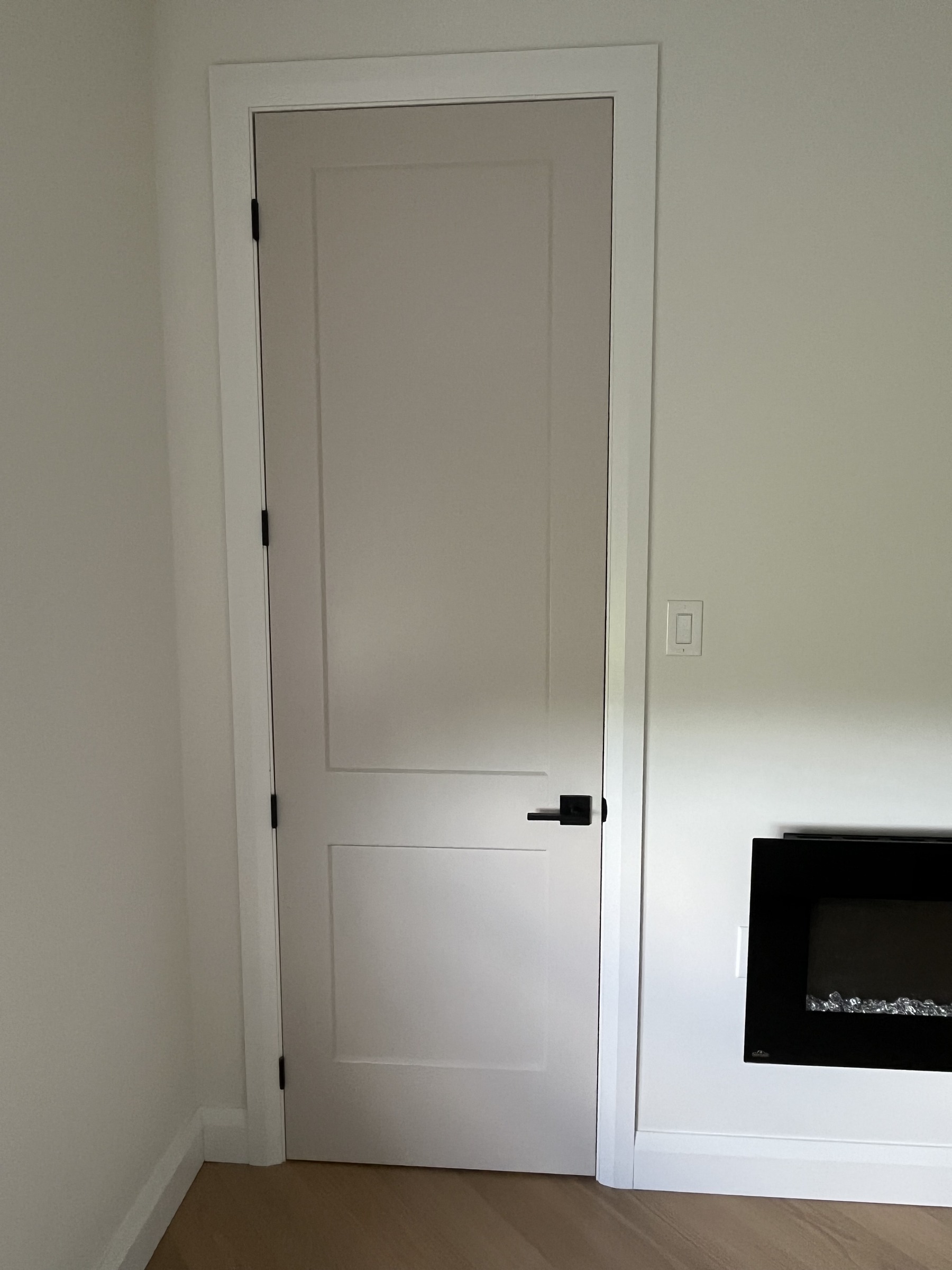
The obvious advantage is that whoever's doing the work is inside your house the whole time. There's no exterior opening that has to stay uncovered while a new door gets fitted, no snow blowing in, no cold air pouring through a temporarily removed frame. Measuring, fitting, trimming, hanging hardware, and adjusting the swing all happen indoors, start to finish.
For Ottawa specifically, that distinction matters more than it might elsewhere. Exterior work genuinely does get harder once the temperature drops — caulking doesn't cure the same way, materials get brittle, and nobody wants a door opening sitting exposed longer than it has to. None of that applies to a bedroom or closet door.
Winter Is Often When the Exterior List Finally Clears
Spring through fall tends to be full. Decks, landscaping, roofs, windows, siding, driveways — there's always something outside competing for attention, and interior projects get pushed down the list by default, not because they're less important.
By the time winter shows up, that list has usually cleared out. That's often when people actually notice what's been bothering them inside the house the whole time: the bedroom door that's stuck for two years, the hallway that got repainted around doors that still look dated, the bathroom that got renovated last spring except nobody ever got around to the door. Winter is when there's finally room on the calendar for it.
A New Door Changes a Room More Than People Expect
Interior doors take up more visual real estate than most people give them credit for. Swapping out something old, damaged, or just dated can make a hallway or bedroom feel noticeably newer without anything close to a full renovation.
The usual reasons homeowners replace an interior door:
- Renovating a bedroom or bathroom and the old door no longer fits the look
- Replacing a builder-grade hollow-core door with something more solid
- A door that's damaged, warped, or was never installed well to begin with
- Wanting better privacy in a room where the current door doesn't fully seal
- Updating handles and hardware as part of a bigger refresh
- A door that won't latch, drags on the floor, or swings open on its own
Sometimes the door itself is fine and it's everything around it that's off — a hinge that's loosened, a strike plate that's shifted, a frame that's settled slightly out of square. That's an adjustment, not a replacement, and it's worth ruling out before ordering a new door you didn't need. Loose hinges and shifted strike plates are usually a hinge and hardware fix, not a new slab.
Winter Heating Can Actually Reveal the Problem
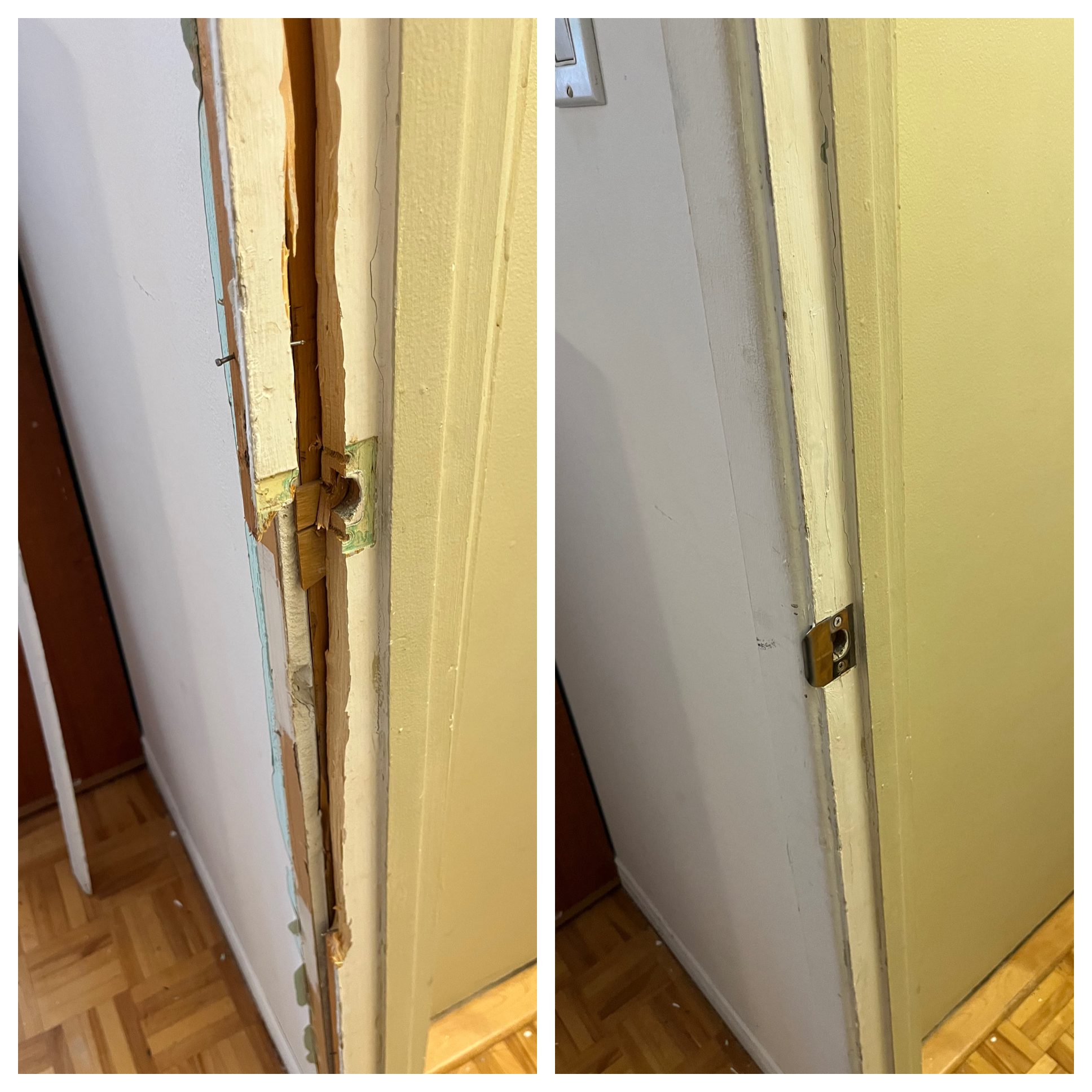
Wood doors and frames move a little through the year as humidity and temperature shift, and winter heating tends to be when that movement shows up most. A door that closed fine in July can start rubbing against the frame in January, or develop a gap it didn't have before, or need a firmer push to latch.
None of that automatically means the door needs replacing. Often it's a small adjustment — a hinge screw, a strike plate moved a fraction of an inch, a bit of planing on a swollen edge — and having it looked at before assuming the worst can save you from replacing something that only needed a tune-up. A recent bedroom door jamb repair was exactly that kind of fix.
It's Usually Less Disruptive Than People Expect
A lot of homeowners put off interior door work because they're picturing a bigger project than it actually is. Depending on the condition of the existing frame, the job might only mean swapping the door slab itself, or it might mean a full pre-hung unit if the jamb's seen better days too. Either way, because the work stays inside, there's none of the scheduling pressure that comes with leaving an exterior opening uncovered — which is exactly why winter suits this kind of job better than people assume.
Worth Combining With Other Indoor Projects
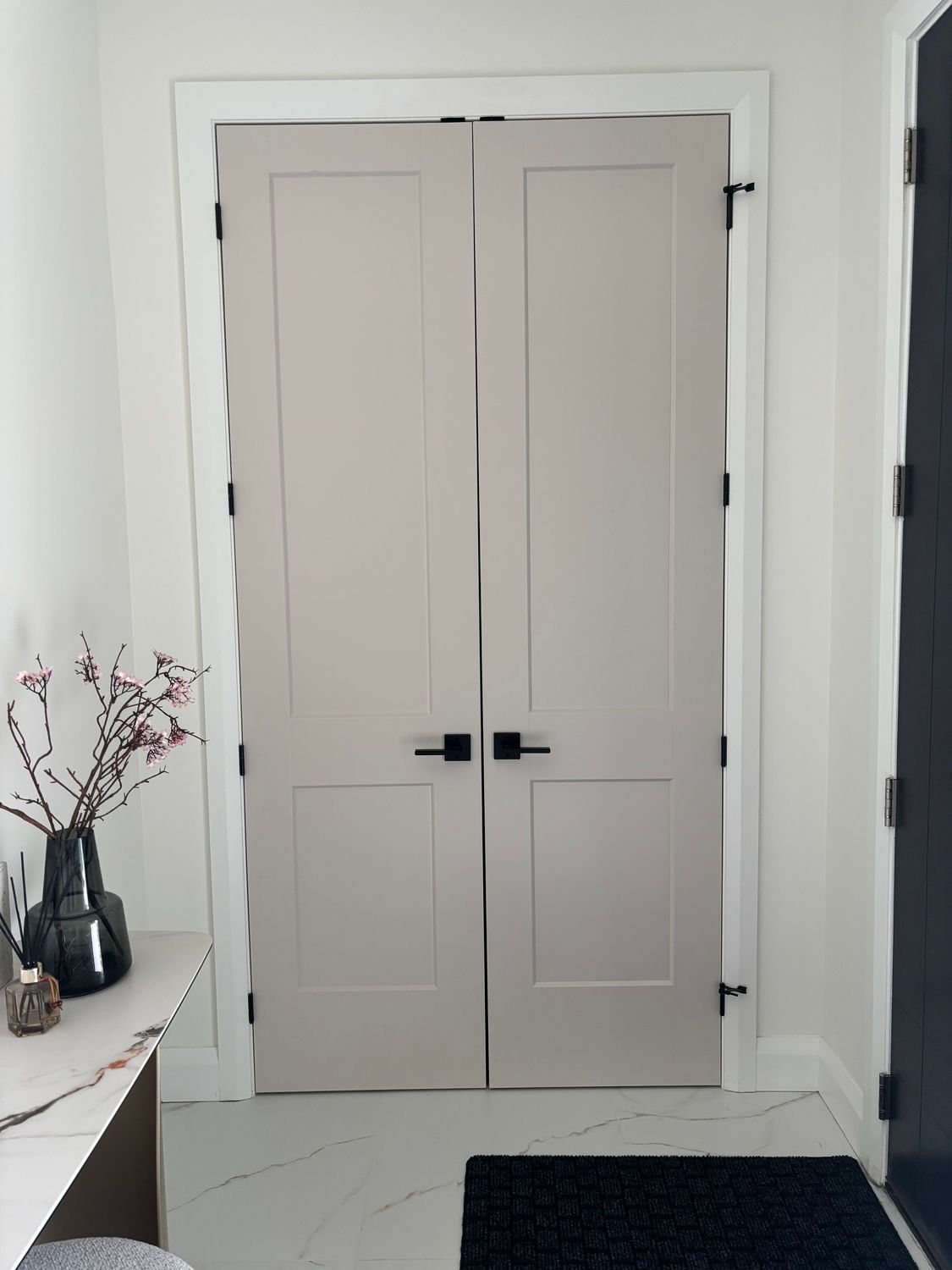
Winter is already when a lot of indoor renovation happens — painting, flooring, basement work, bedroom updates. If you're already doing any of that, it's worth handling the doors at the same time rather than after, so freshly painted walls or new trim don't end up disturbed later when the door finally gets replaced. Doing it together also means door style, casing, hardware, and paint colour all get decided as one picture instead of patched in separately. A recent 8 ft interior door installation landed with the rest of a room refresh the same way.
You Don't Have to Do the Whole House
Updating interior doors doesn't mean replacing every door at once. Plenty of people start with the one that's actually a problem — a bathroom door that won't latch, a couple of bedroom doors that are damaged, a basement door left over from a renovation — and leave the rest alone. Others prefer doing several at once so the style and hardware stay consistent across a floor. Both are reasonable ways to approach it, and it comes down to budget and how much the mismatch actually bothers you.
Measure the Opening Before You Order Anything
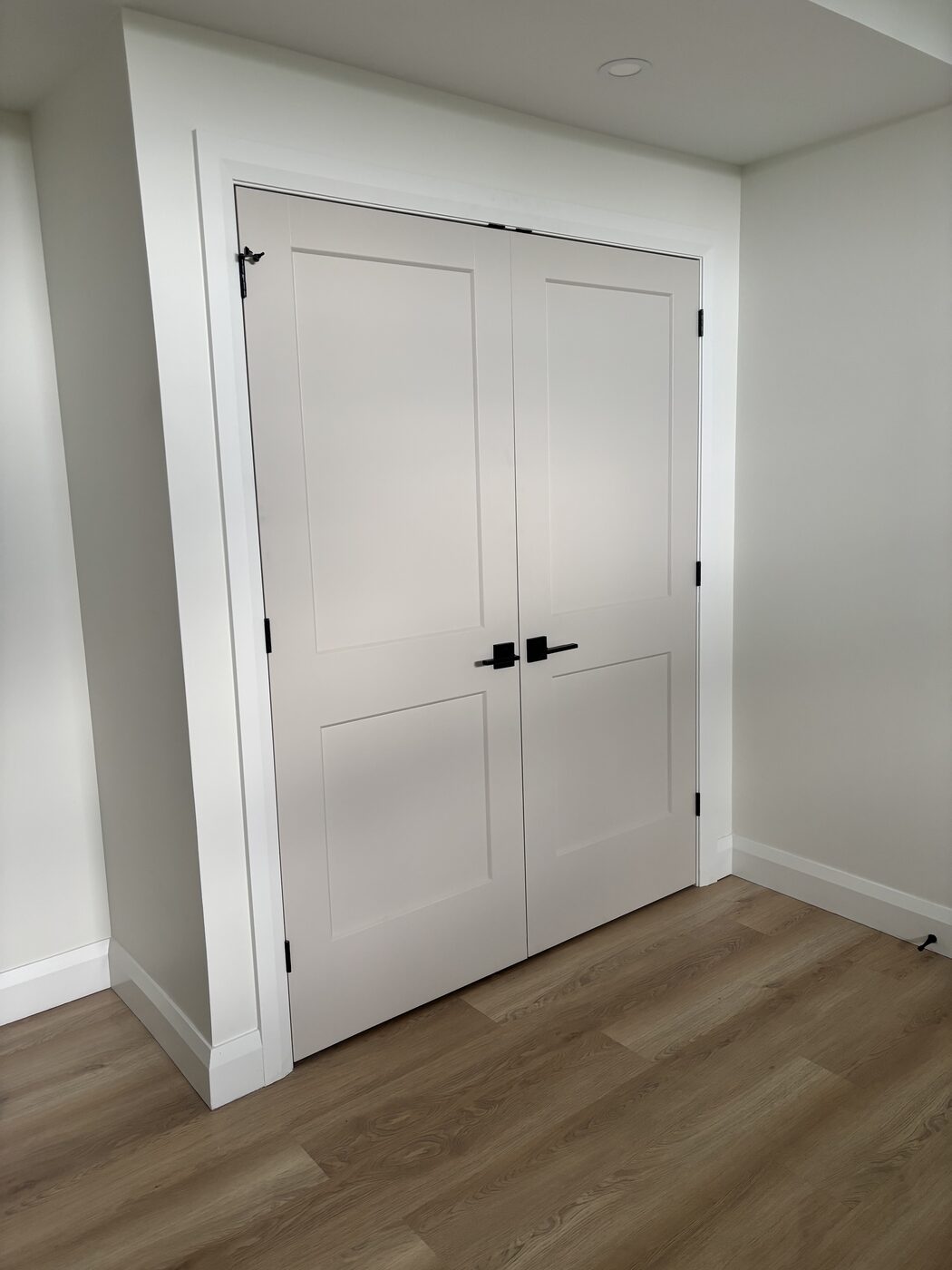
Interior doors look simple, but ordering the wrong size or configuration turns a straightforward swap into a frustrating one fast. Beyond width and height, it's worth accounting for jamb dimensions, door thickness, hinge placement, swing direction, floor clearance, and how the existing casing fits into all of it. Older houses are the least predictable here — openings settle out of square over the years and don't always match today's standard sizes. If you're not sure what you're actually working with, having the opening checked before buying a door is a lot cheaper than returning one that doesn't fit.
If you've got an interior door that's been bothering you and the outdoor list is finally off your plate, this is a good time to deal with it. Call (613) 265-3667 or email fixmydoornowottawa@gmail.com and we'll figure out whether it needs a new door or just an adjustment.
Got a sticking or dated interior door?
We'll tell you straight whether it needs a new slab, a full pre-hung unit, or just a hinge and strike adjustment — same-day across Ottawa and the Valley.
Call 613-265-3667 Get a Free Quote