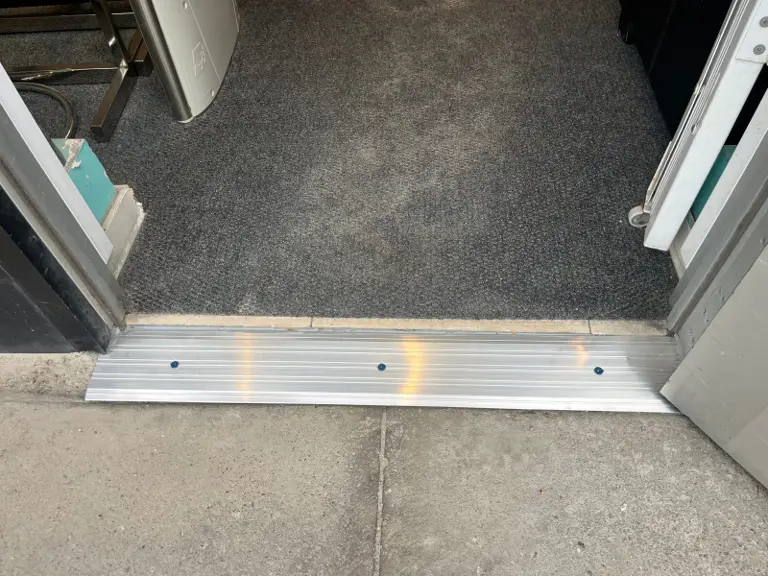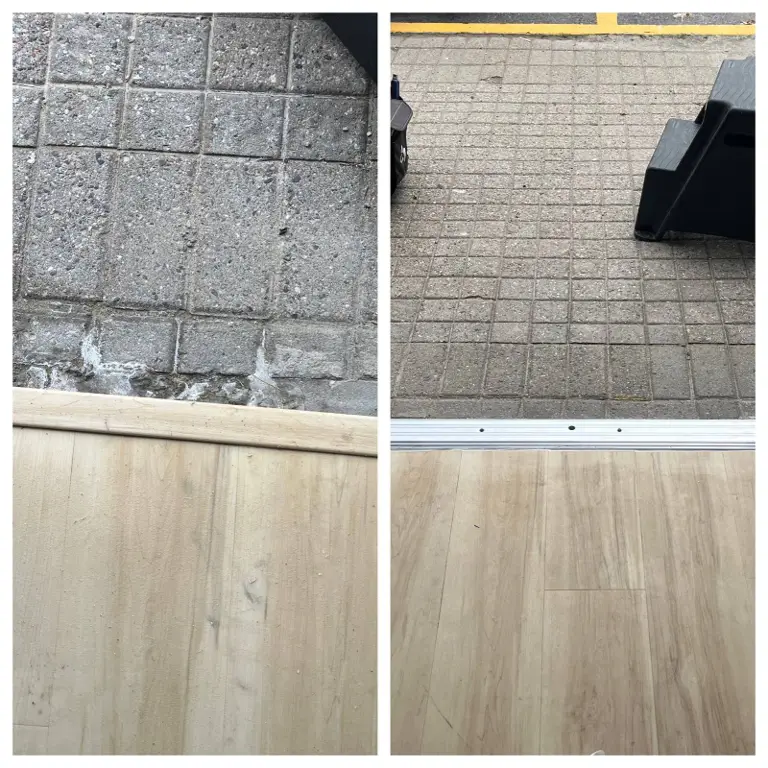

The aluminum threshold across this Pembroke storefront’s double-door entrance had corroded through in several places. It had holes along its length and broken edges, and it no longer sat firmly on what was underneath. We removed the old threshold, exposed and cleared the bed below it, and cut a new full-width aluminum threshold to the opening before fastening it down. The same Valley route covers door repair in Pembroke.
Threshold condition before the repair
A commercial entrance threshold takes more abuse than almost any other part of a door system. Foot traffic, hand trucks, road salt, meltwater and plows all end up on it. This one showed all of that: a ribbed aluminum surface corroded through in spots, broken edges, debris packed into the low points, and lift where the material underneath had given way.
A threshold in that state causes two problems at once. Water gets under it and into the substrate. And at a public entrance, a raised or broken edge is something people catch their feet on.
What we found under the old threshold
With the old threshold pulled, the bed underneath was in poor shape. Old foam insulation had broken down into loose clumps. There was crumbling white residue along the length of the opening, and the concrete edge had cracked and opened in places, leaving gaps that went down below the surface.
That is typical of a threshold that has been letting water through for several seasons. Every freeze pushes the damage a bit further.
Threshold replacement and installation details
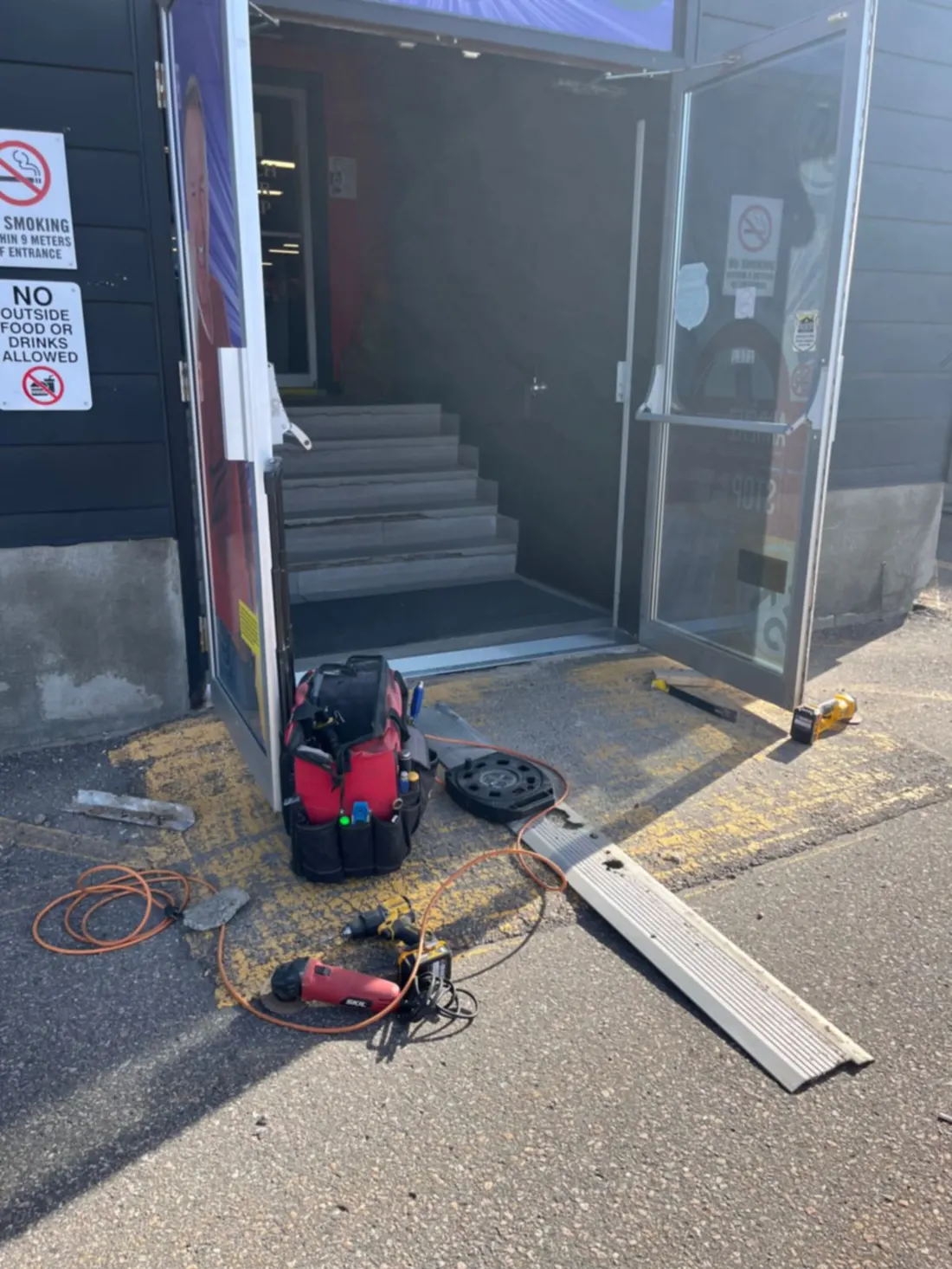
Both leaves stayed open while the sill bed was cleared and the new piece was cut. The old threshold sat beside the opening for length reference; drill, grinder and a full tool bag stayed on the asphalt so the cut and fasten could happen in one pass without breaking set-up.
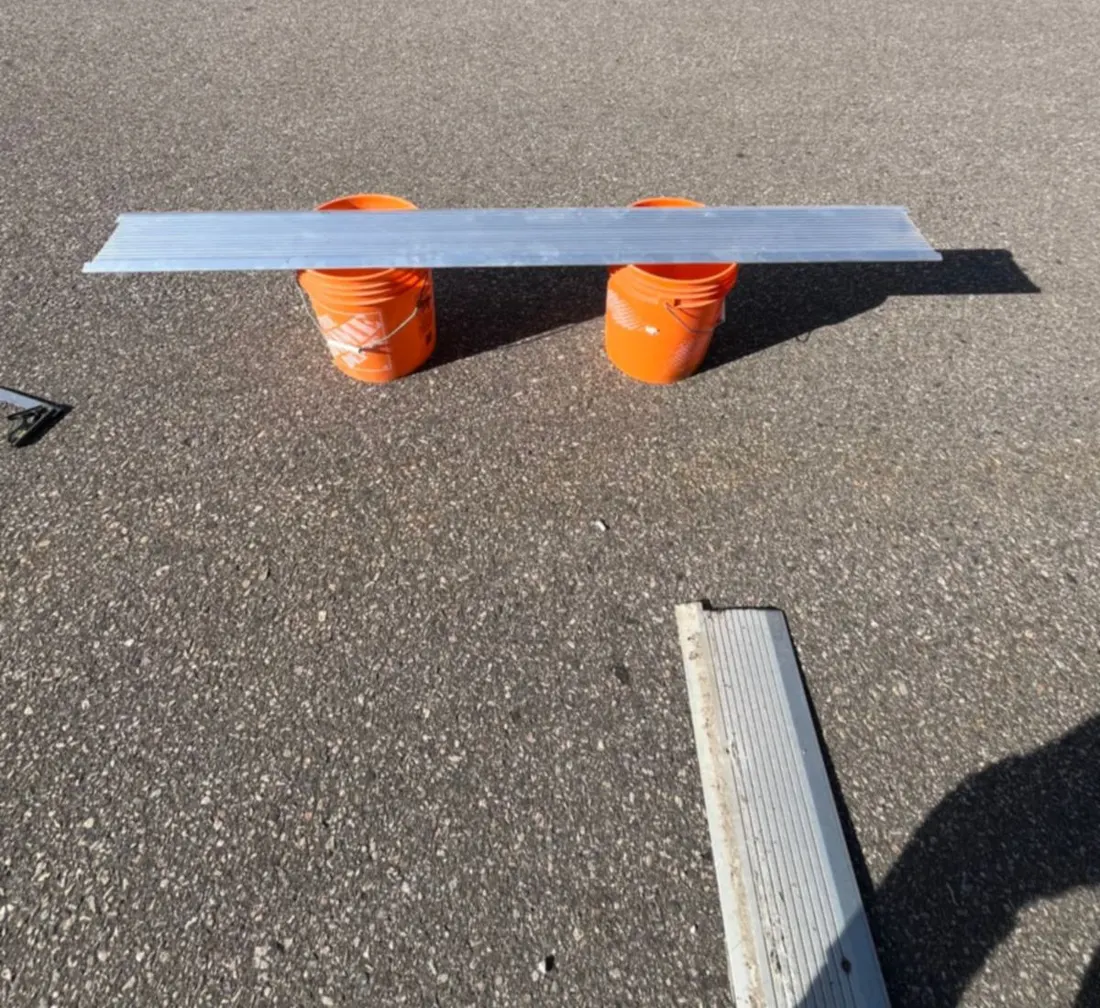
The new threshold is a single full-width aluminum piece with a ribbed surface for grip. We cut it to fit the opening before setting it. The bed had to be cleared of the broken-down material first — a threshold needs solid, even support along its whole length. If it bridges soft spots or voids, it flexes underfoot, the fasteners work loose, and you end up back where you started.
The new threshold was set across the opening and fastened down at regular intervals along its length. Citywide sill work of this kind sits under door threshold and sill repair.
Door clearance and closing considerations
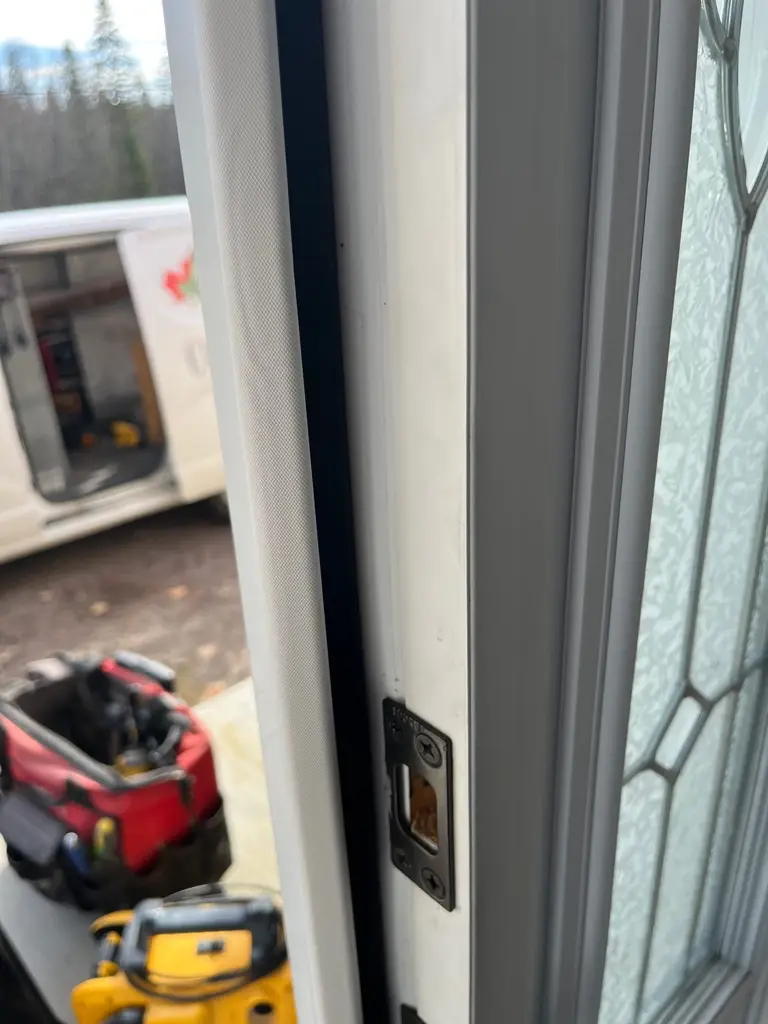
A new threshold changes the gap at the bottom of the doors, even if only slightly. On a commercial entrance, both leaves have to swing over it without dragging and still close fully against it. That matters for weather. It also matters for the closers and the lock: a door that rubs on the threshold may not latch on its own. The finished threshold sits flat and level across the doorway, with a clean transition to the walkway outside and the entry mat inside.
Completed work
- Corroded aluminum threshold removed
- Deteriorated material cleared from the threshold bed
- New full-width aluminum threshold cut to fit and installed
- Threshold fastened along its length
- Door swing and closing checked over the new threshold
Threshold at your entrance cracked, loose or letting water in?
Call or request a quote — we will tell you whether it is a repair or a replacement.
Commercial Threshold Questions
Why does a commercial threshold fail from the underside?
Once the aluminum surface corrodes or lifts, water and grit get under it. Freeze-thaw then breaks down foam packing and concrete at the sill bed, so the next threshold has nothing solid to sit on until that material is cleared.
Do you replace only the metal strip or rebuild the sill bed too?
Both matter. A new threshold on soft or voided packing flexes, loosens fasteners, and fails early. We clear broken-down foam and debris and set the new piece on even support along its length.
Will the doors still clear a new threshold?
We check swing and latch after the new sill is in. Both leaves have to clear without dragging and still close fully, or the closers and lock will fight the opening every cycle.